24 photos of leaders who rose to power by accident
Politics loves a plan, but history often prefers plot twists. Around the world, leaders have stepped in not after long campaigns, but after sudden deaths, assassinations, abdications, and constitutional curveballs. The rules vary: Britain handled the 1936 abdication through parliamentary acts; the Roman Praetorian Guard once decided on the spot; the Catholic Church convenes a conclave in the Sistine Chapel; and the United States clarified its line of succession with the 25th Amendment in 1967.
Those improvisations shaped real outcomes. Consider a midnight oath in rural Vermont in 1923, a swearing‑in aboard Air Force One in 1963, and an unprecedented resignation that elevated an unelected president in 1974. Elsewhere, Nigeria invoked a “doctrine of necessity” in 2010 to keep government running, and Tanzania made history with its first woman president in 2021. Each moment mixed protocol with emotion, turning contingency into direction—and sometimes, reform.
Claudius hiding behind a curtain: Rome’s most unlikely emperor
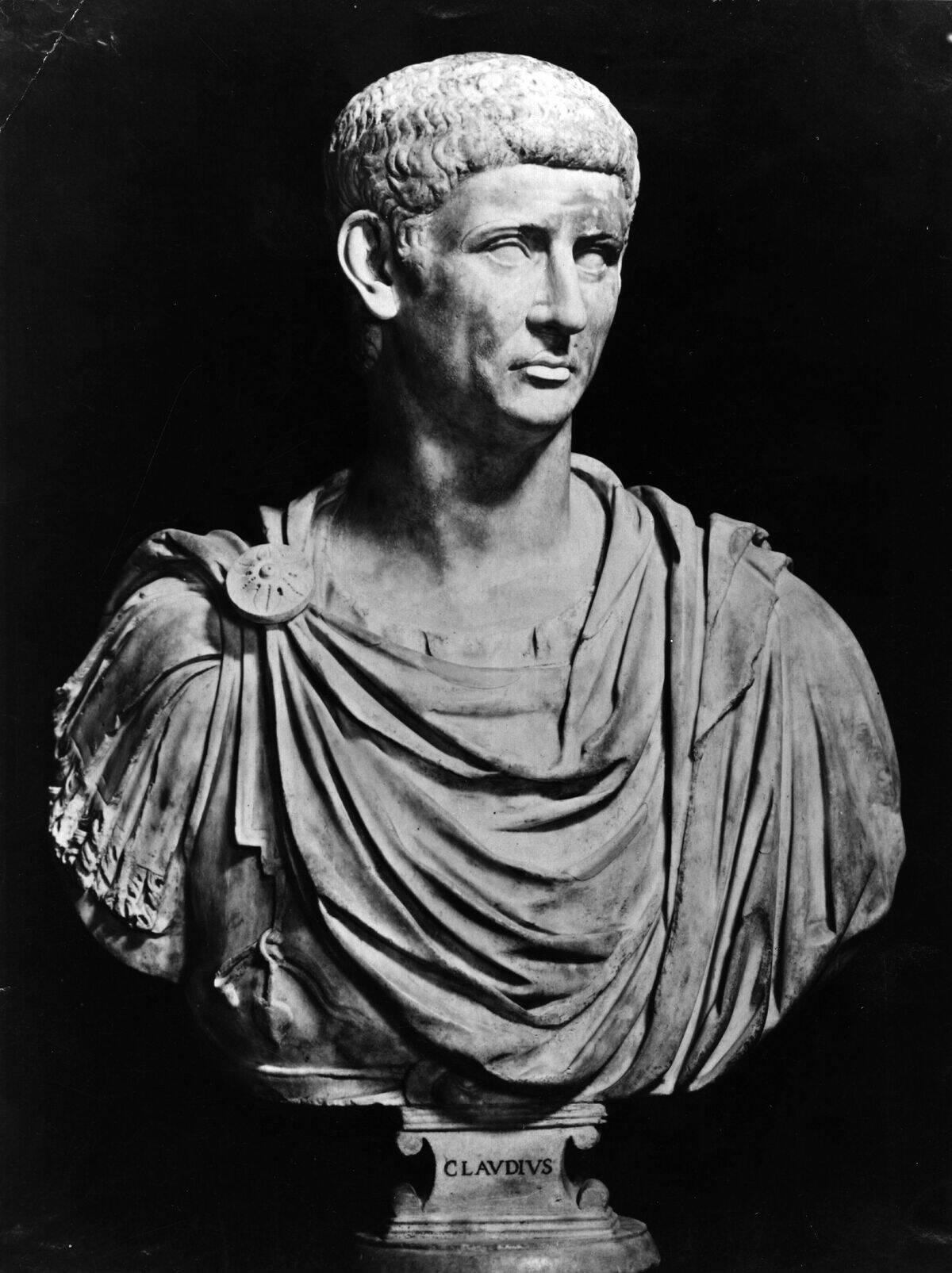
In 41 CE, after Caligula was assassinated inside the imperial palace, the historian Suetonius says soldiers found Claudius trembling behind a curtain. The Praetorian Guard proclaimed him emperor on the spot. Born in 10 BCE, long dismissed for a limp and a stammer, he was 50 when thrust into power. Despite elite sneers, Claudius proved capable, restoring senatorial order and expanding the civil service, often relying on freedmen administrators like Narcissus and Pallas.
His reign wasn’t small‑bore.
In 43 CE, he launched the conquest of Britannia under Aulus Plautius and even visited the island to receive submission. He built major aqueducts—the Aqua Claudia and Anio Novus—transforming Rome’s water supply. Judicially active, he heard cases himself. The palace drama never stopped: he executed his wife Messalina for treason and later married Agrippina the Younger. Claudius died in 54 CE, with many ancient sources hinting at poison, clearing the path for Nero.
John Tyler’s “His Accidency”: The first unplanned U.S. presidency
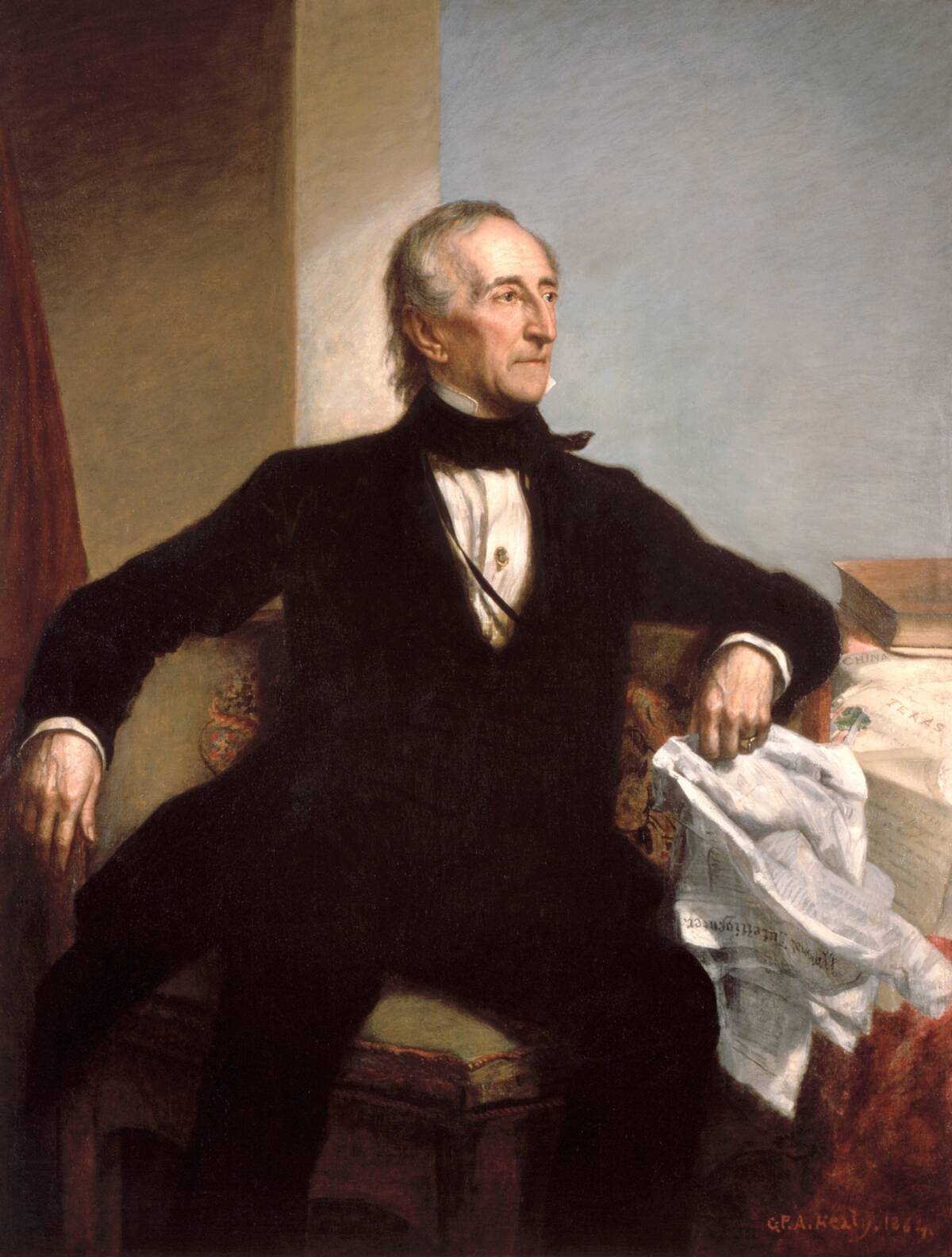
William Henry Harrison died on April 4, 1841—just 31 days into office—leaving Vice President John Tyler to navigate a constitutional gray area. Tyler insisted he was fully president, not an acting placeholder, setting a decisive precedent. Critics sneered “His Accidency,” but he moved fast: he took the oath in Washington on April 6 and kept the government running while rejecting congressional attempts to limit his authority.
The Whig Party soon expelled him after he vetoed bank bills in 1841.
Most of his Cabinet resigned (except Daniel Webster), and gridlock reigned. Yet Tyler’s term ended with a consequential move: he championed the annexation of Texas, securing a joint resolution Congress passed on March 1, 1845. Later, Tyler sided with the secessionists during the Civil War—an ex‑president who would serve in the Confederate House, a coda as complicated as his start.
Millard Fillmore steps up: The compromise era’s quiet captain
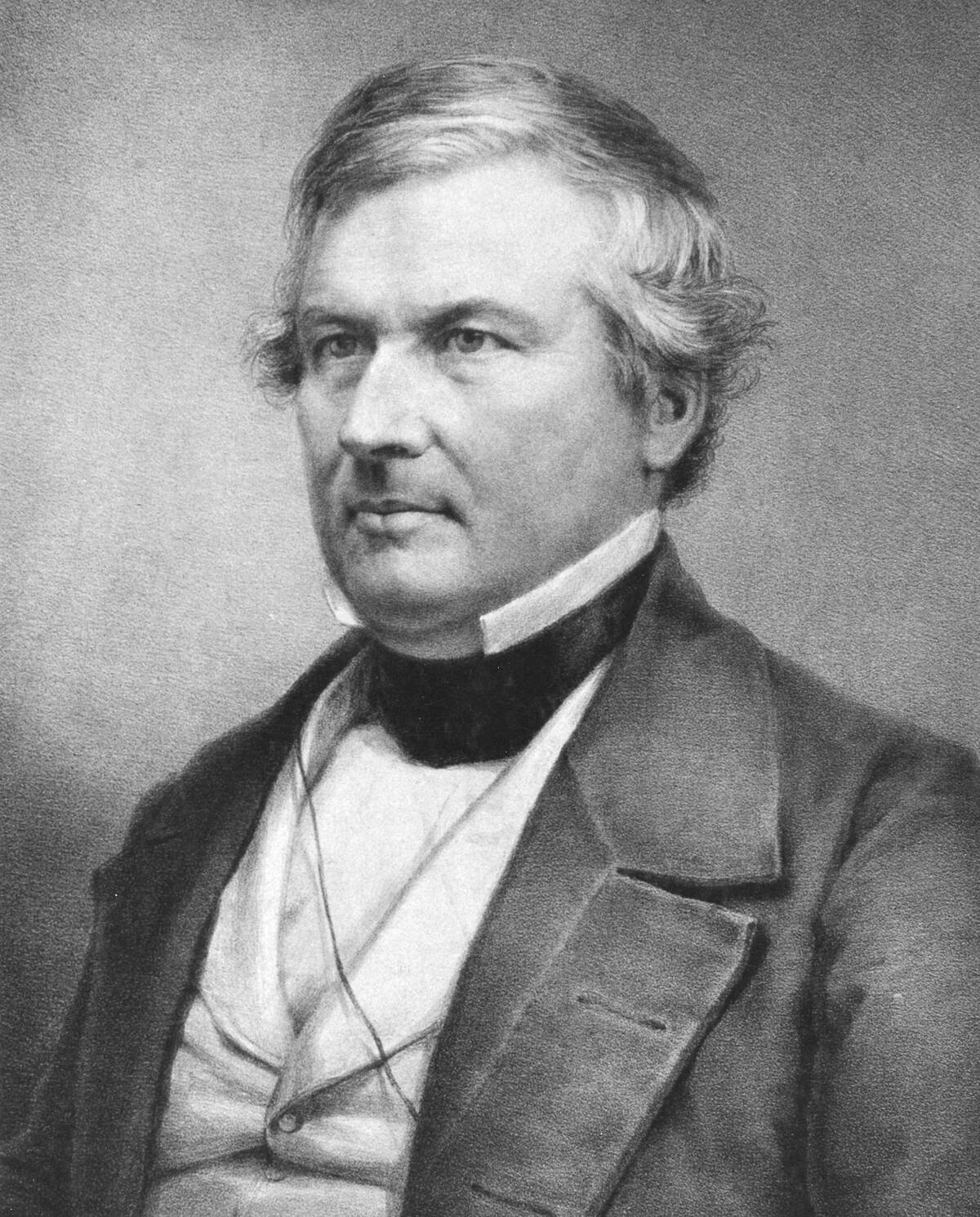
Zachary Taylor died on July 9, 1850, and Vice President Millard Fillmore took the oath that evening in the Capitol. The nation teetered over slavery’s expansion. Fillmore embraced the Compromise of 1850 after months of congressional wrangling, backing Henry Clay’s vision and Stephen Douglas’s legislative slicing. California entered as a free state, while territorial questions shifted to popular sovereignty—and the slave trade ended in Washington, D.C., though slavery itself there remained.
His signature on the Fugitive Slave Act of 1850, however, energized abolitionist resistance and personal liberty laws in the North. Abroad, Fillmore authorized Commodore Matthew C. Perry’s expedition to open Japan in 1852, a mission that delivered President Pierce’s letter in 1853 and reset Pacific relations. After office, Fillmore reemerged as the 1856 presidential candidate of the American (Know Nothing) Party, winning Maryland’s electoral votes but little else—a quiet captain in a noisy storm.
Andrew Johnson after Lincoln: Reconstruction by necessity
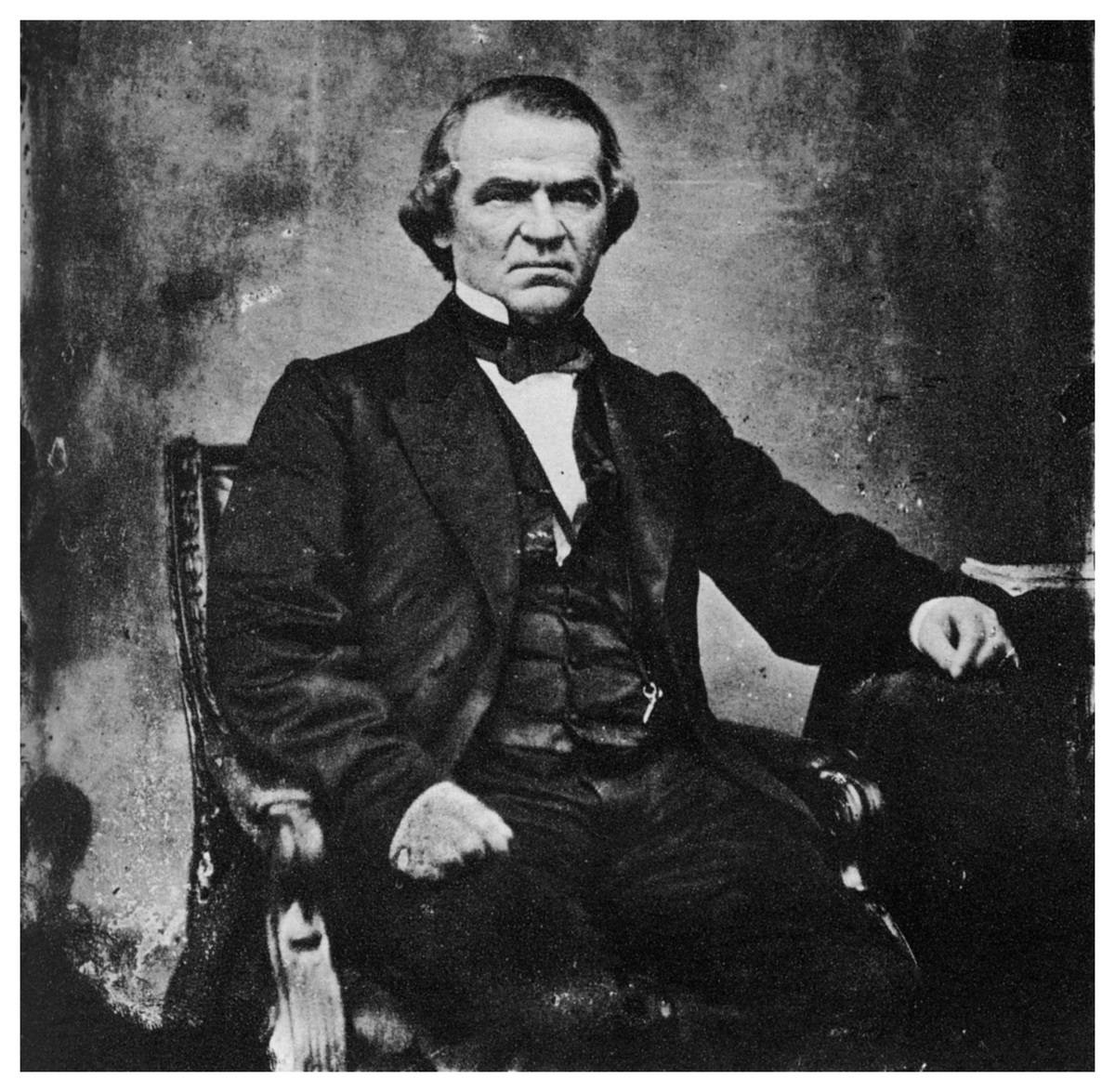
Abraham Lincoln was shot on April 14, 1865, dying early the next morning. Andrew Johnson took the oath on April 15 in a Washington boardinghouse parlor, suddenly responsible for stitching the country back together. A Tennessee Unionist and former tailor, Johnson favored rapid restoration for Southern states with limited protections for freedpeople, issuing broad amnesties and allowing “Black Codes” to take root across the South.
Congress balked. Johnson vetoed the Civil Rights Act of 1866, and Congress overrode him—the first major civil rights law in U.S. history. He survived impeachment in 1868 by a single Senate vote. Meanwhile, his administration negotiated the 1867 purchase of Alaska from Russia for $7.2 million. The “Swing Around the Circle” speaking tour of 1866 hurt his standing, and by 1869, the accidental president left office politically isolated, his lenient Reconstruction legacy fiercely debated ever since.
Chester A. Arthur surprised everyone: The patronage pro turned reformer
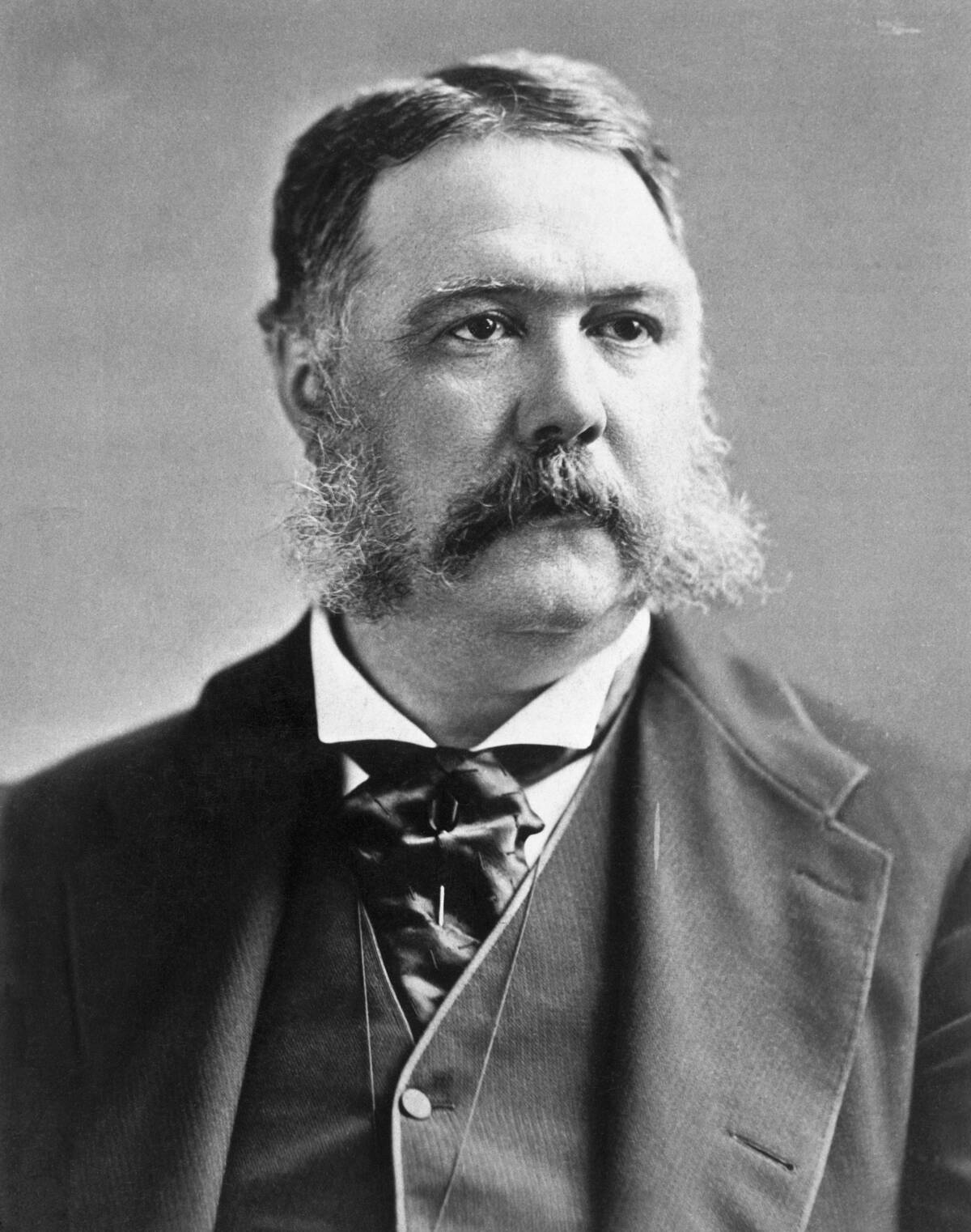
James A. Garfield was shot on July 2, 1881, and died on September 19 after months of infection. Overnight, the Stalwart insider Chester A. Arthur—once fired as New York’s customs collector by reformer Rutherford B. Hayes—became president. Sworn in at his Lexington Avenue home just after midnight on September 20, he faced a skeptical nation that feared spoils‑system politics would tighten their grip.
Instead, Arthur pivoted. He signed the Pendleton Civil Service Reform Act in 1883, beginning merit‑based federal hiring and curbing patronage. He also pushed for a “New Navy,” commissioning steel‑hulled vessels that modernized American sea power, and he vetoed the pork‑laden Rivers and Harbors Act of 1882 (Congress overrode him). Suffering from Bright’s disease, Arthur kept his illness private. By 1884, the surprise reformer had earned a quieter reputation: dignified, independent, and very different from the party boss many expected.
Theodore Roosevelt’s sudden saddle: After McKinley, a whirlwind
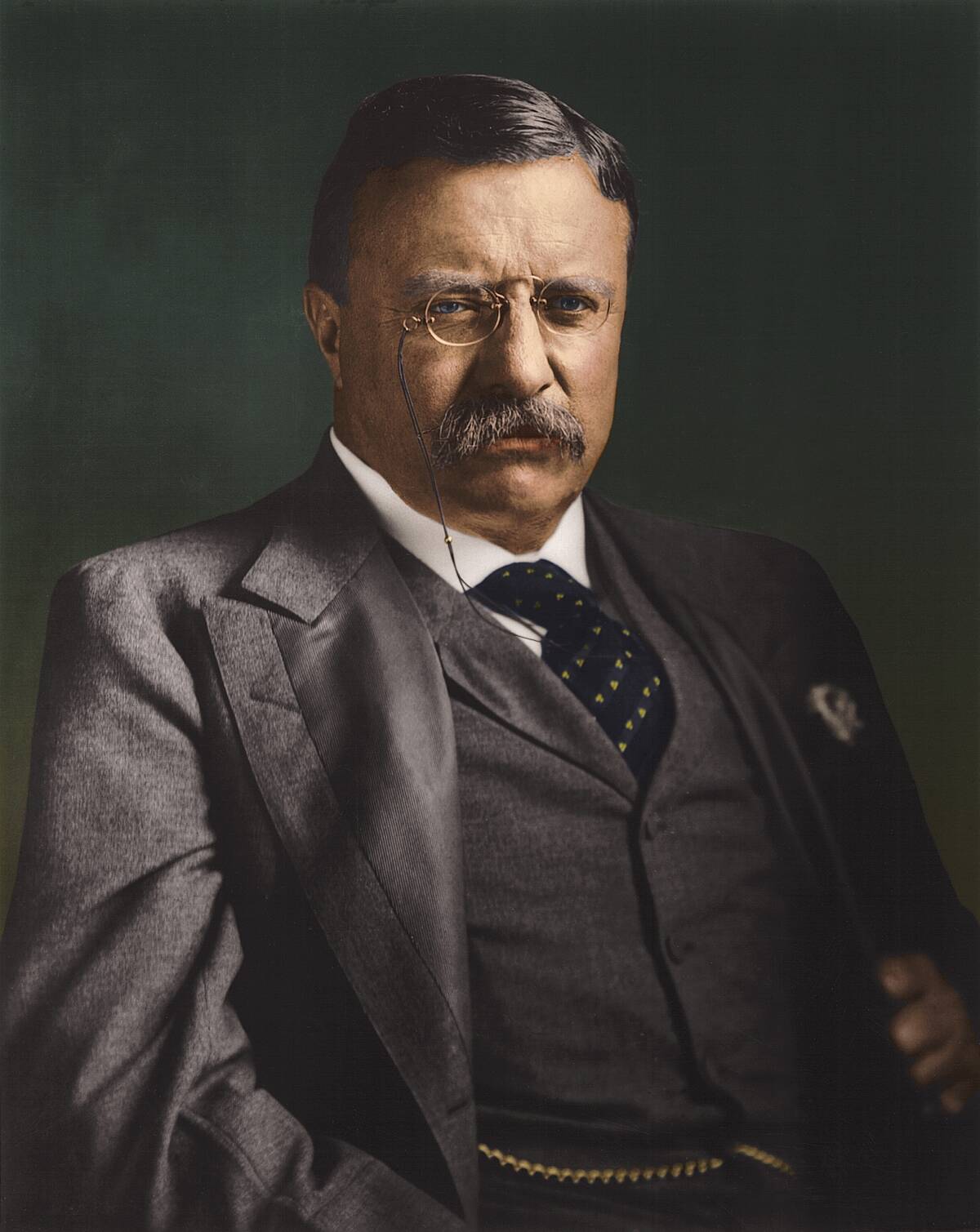
William McKinley was shot on September 6, 1901, and died eight days later. Theodore Roosevelt, 42, took the oath on September 14 in Buffalo’s Ansley Wilcox House, becoming the youngest U.S. president in history. The energetic former Rough Rider barreled into trust‑busting, invoking the Sherman Antitrust Act to challenge Northern Securities and signaling a new era of federal muscle against monopolies.
He championed conservation, creating national forests and wildlife refuges, and backed the Panama Canal’s construction after supporting Panama’s 1903 separation from Colombia. Roosevelt mediated the Russo‑Japanese War, earning the 1906 Nobel Peace Prize—the first awarded to an American. He also invited Booker T. Washington to dine at the White House in 1901, breaking social barriers. The accidental ascent turned into a two‑term storm of activism that reshaped the presidency’s scope.
Calvin Coolidge by lamplight: A midnight oath on the farm
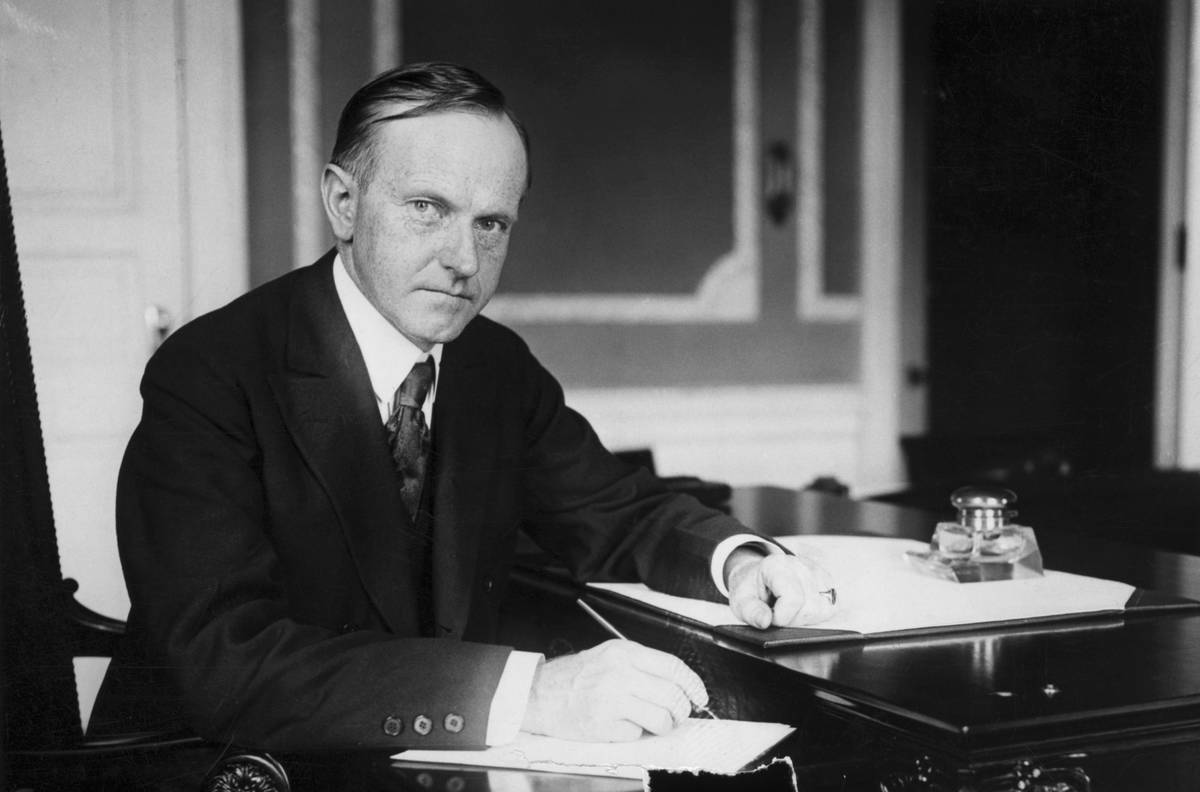
Warren G. Harding died suddenly on August 2, 1923, while traveling in California. At 2:47 a.m. on August 3, in a farmhouse parlor in Plymouth Notch, Vermont, Calvin Coolidge took the presidential oath by lamplight. His father—John C. Coolidge, a notary public—administered it. To remove any doubt, Coolidge took a second oath on August 21 in Washington from Judge Adolph A. Hoehling Jr., then got to work with characteristic frugality.
Prosperity marked much of his tenure. Coolidge slashed federal spending, paid down debt, and signed the Revenue Acts of 1924 and 1926 cutting taxes. In foreign affairs, the 1928 Kellogg–Briand Pact renounced war as national policy. Domestically, he signed the Immigration Act of 1924, sharply restricting quotas. Taciturn but steady, “Silent Cal” kept a small staff and delegated freely, presiding over a humming economy and a presidency born in the quietest of dawns.
Harry S. Truman’s steep learning curve: From VP to V‑Day decisions
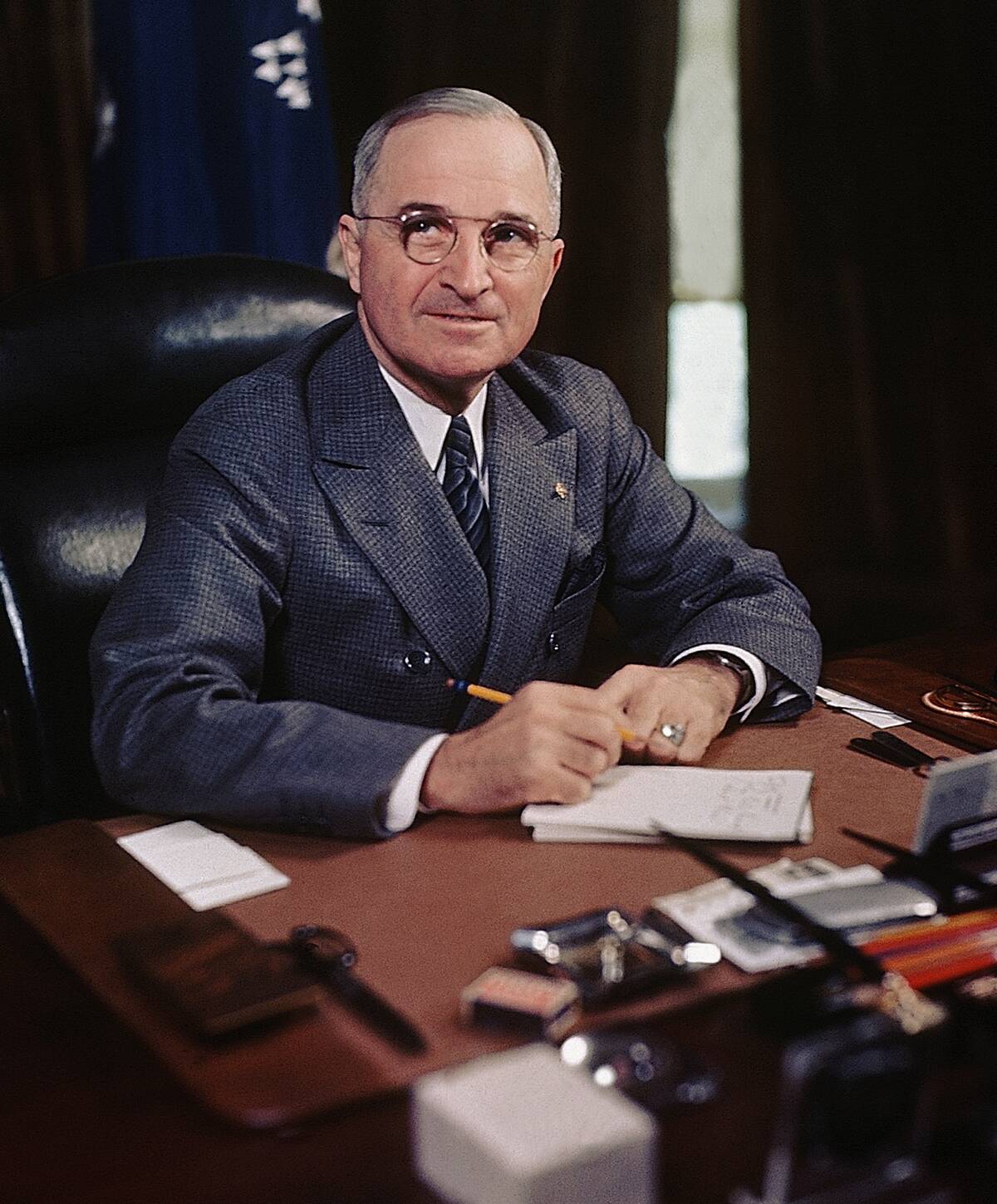
Franklin D. Roosevelt died on April 12, 1945, and within hours Harry S. Truman took the oath in the Cabinet Room. Briefed that day on the Manhattan Project, he had known little of the atomic program as vice president. The war in Europe ended on May 8 (V‑E Day), and Truman soon left for the Potsdam Conference, hashing out postwar terms with Churchill/Attlee and Stalin.
In August 1945, he authorized atomic bombs on Hiroshima (August 6) and Nagasaki (August 9), prompting Japan’s surrender and V‑J Day announcements. He recognized the importance of institutions, helping shape the United Nations. The decisions cascaded into the Cold War: occupation policies in Germany and Japan, and the early outlines of what became the Truman Doctrine and Marshall Plan. It was a crash course in global leadership, passed under pressure few leaders ever face.
Lyndon B. Johnson aboard Air Force One: Power in a moment of grief
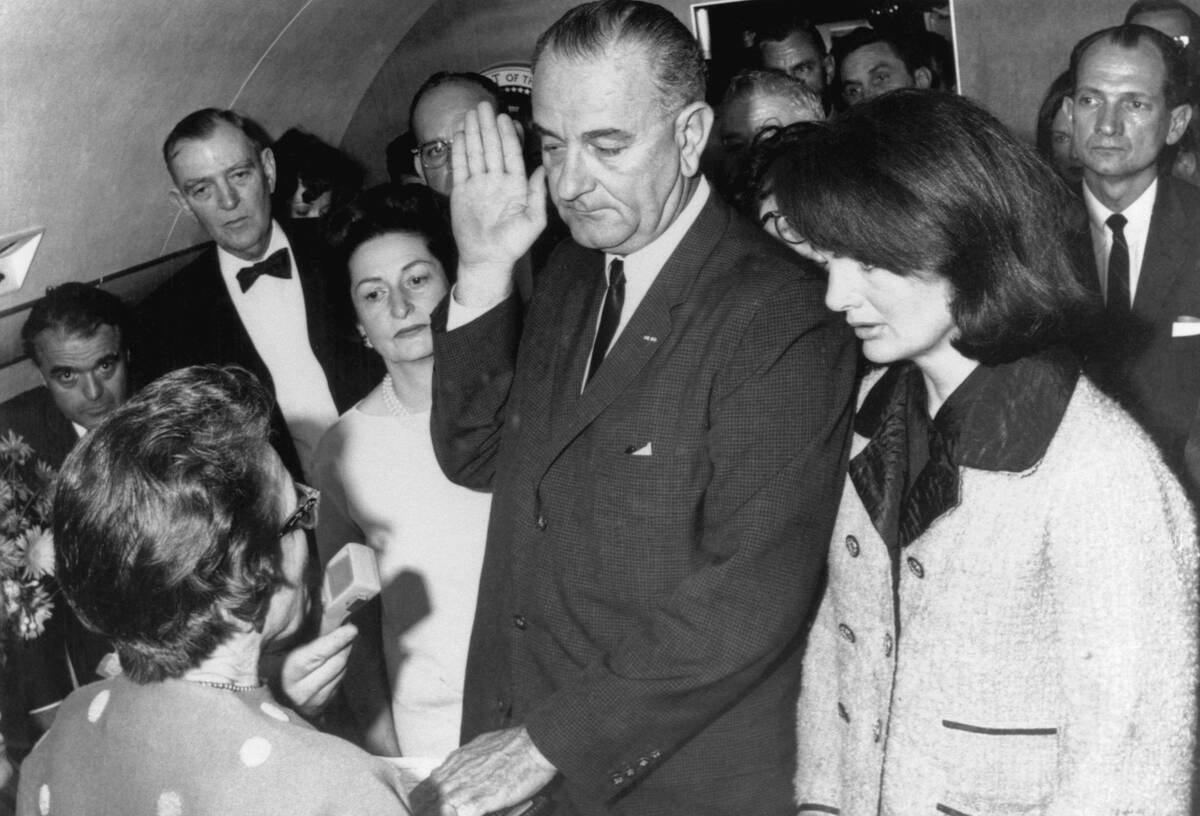
On November 22, 1963, two hours after John F. Kennedy was shot in Dallas, Lyndon B. Johnson took the oath aboard Air Force One. Judge Sarah T. Hughes administered it; Jacqueline Kennedy stood beside him in her bloodstained suit. The Bible couldn’t be found, so a Catholic missal from Kennedy’s desk served. The photograph became an indelible image of constitutional continuity amid shock.
Johnson then pushed an ambitious domestic agenda: the Civil Rights Act of 1964 and the Voting Rights Act of 1965 remade American law. Medicare and Medicaid arrived in 1965. Yet Vietnam deepened under his watch, with major troop deployments beginning in 1965 and the Tet Offensive rattling confidence in 1968. The accidental president’s legislative prowess delivered towering reforms, even as the war consumed political capital and the national mood.
Gerald Ford, unelected but in charge: Healing after Watergate

Spiro Agnew resigned in October 1973; Gerald Ford became vice president on December 6 under the 25th Amendment, confirmed by both houses of Congress. When Richard Nixon resigned amid Watergate on August 9, 1974, Ford became the only U.S. president never elected to national office. He declared, “Our long national nightmare is over,” and tried to steady institutions frayed by scandal.
A month later, Ford granted Nixon a “full, free, and absolute pardon” (September 8, 1974), a controversial act he said spared the country prolonged division. Internationally, he signed the 1975 Helsinki Accords, promoting human rights as a Cold War metric. Two assassination attempts—by Lynette “Squeaky” Fromme (September 5, 1975) and Sara Jane Moore (September 22, 1975)—failed. Ford lost narrowly in 1976, but his calm caretaker role shaped how democracies land after a political crash.
King George VI becomes “the spare who cared”: Duty after an abdication
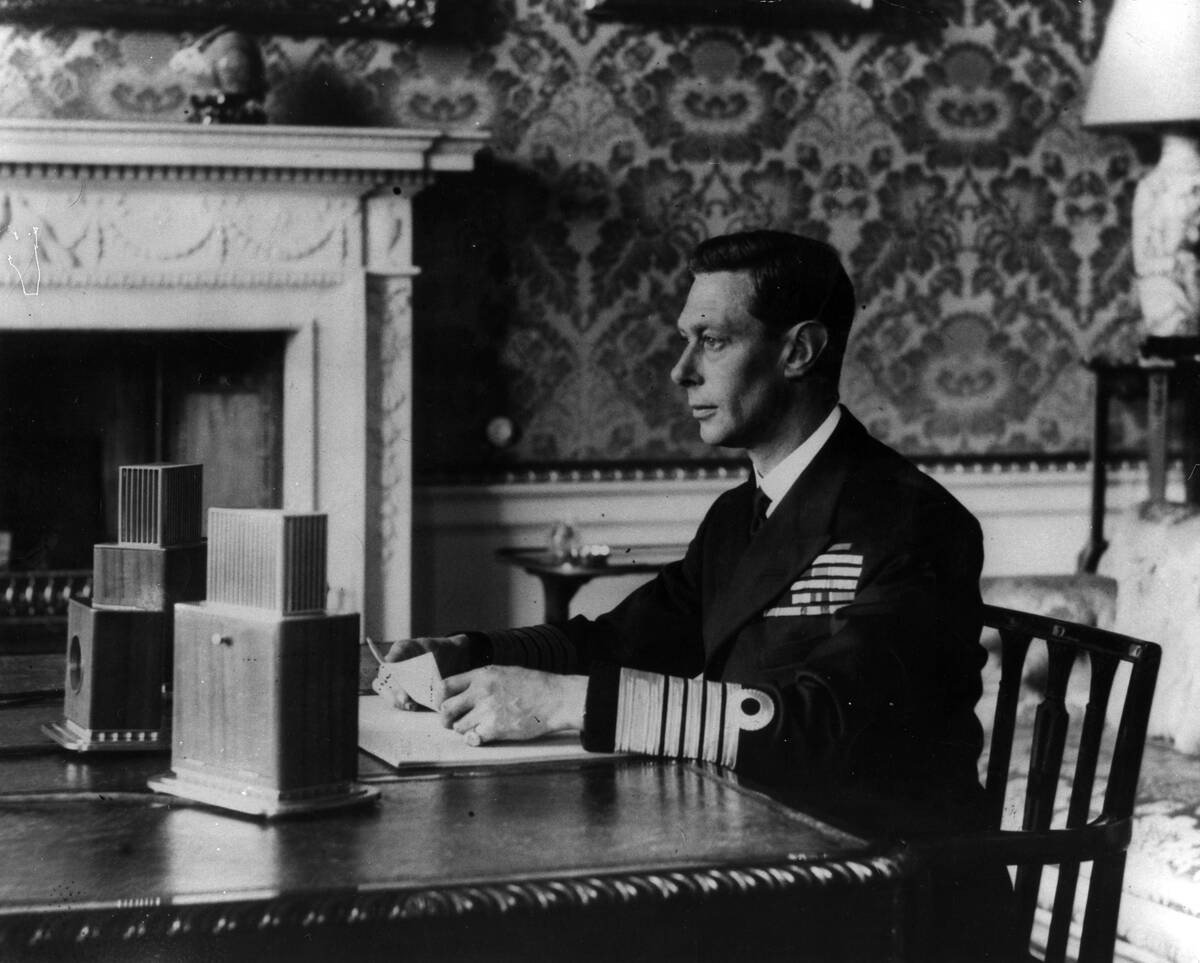
Edward VIII abdicated on December 11, 1936, choosing marriage over monarchy. His brother, Albert—reluctant and shy—became King George VI. He managed a stammer with intensive speech therapy, as dramatized decades later. The 1937 coronation steadied a shaken institution, and by 1939, he and Queen Elizabeth undertook the first state visit by a reigning British monarch to the United States, building bonds just before war.
During the Blitz, the royal couple stayed in London despite bombings at Buckingham Palace, embodying national resilience. George VI created the George Cross in 1940 to honor civilian bravery; in 1942, he awarded it to Malta collectively. His reign saw India’s independence in 1947 and the redefinition of the Commonwealth. A “spare” turned sovereign, he anchored the crown through war and social change until his death in 1952.
Indira Gandhi, the “compromise” who wasn’t: Chosen after Shastri’s death
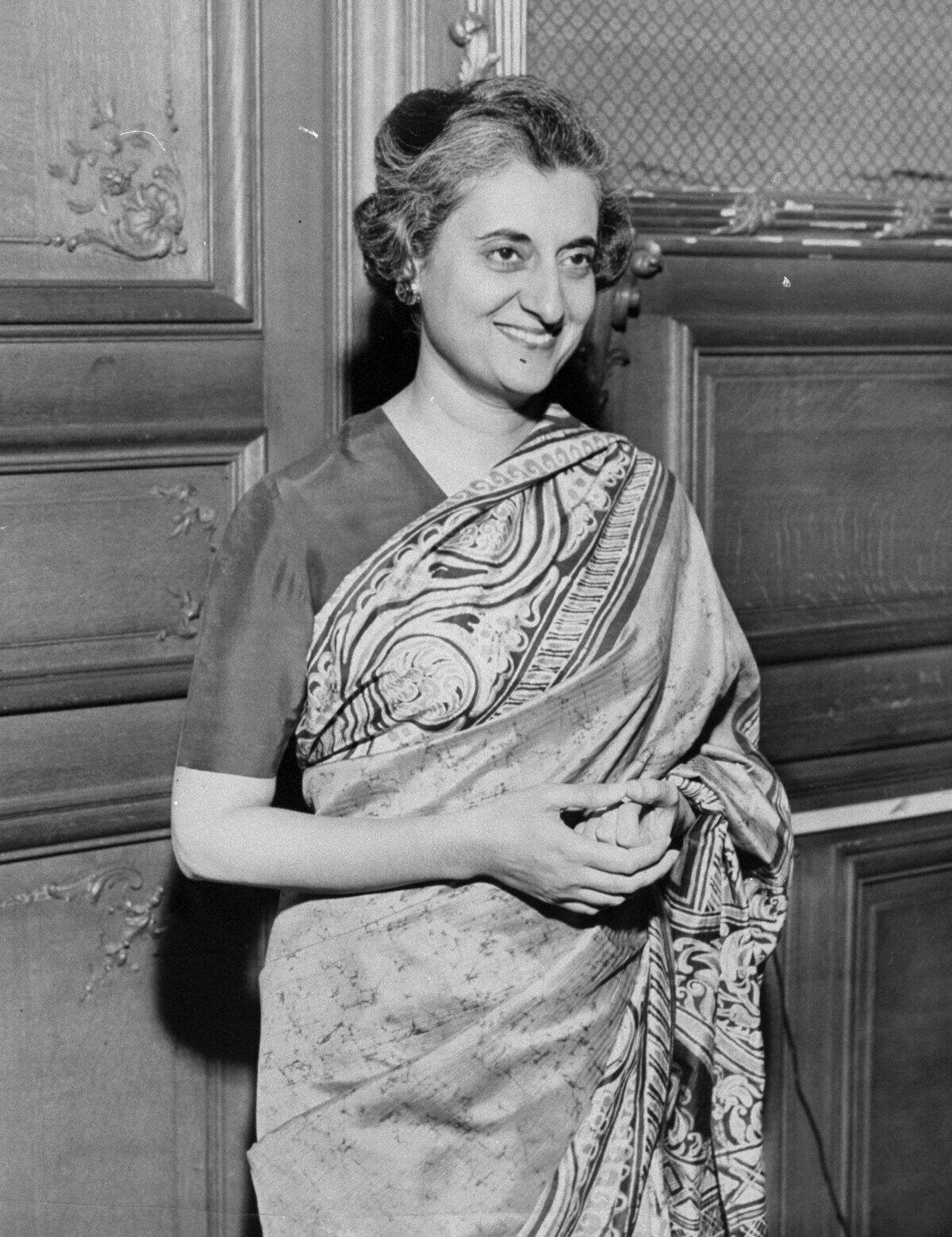
Prime Minister Lal Bahadur Shastri died suddenly in Tashkent on January 11, 1966, after signing a peace declaration with Pakistan. Congress leaders chose Indira Gandhi as a perceived compromise to bridge factions. She took office on January 24, 1966. Early headwinds were fierce: drought, rising prices, and a 1966 rupee devaluation intended to boost exports but unpopular at home.
The “goongi gudiya” (mute doll) label didn’t last. She nationalized major banks in 1969 and steered India through the 1971 war that led to Bangladesh’s independence, winning a decisive military and diplomatic victory. The 1974 Pokhran‑I nuclear test asserted technological capability. Later controversies, including the 1975–77 Emergency, would define debate about her power. But her ascent, born of crisis, quickly turned into assertive leadership that reshaped India’s political landscape.
Anwar Sadat’s unexpected turn: Nasser’s successor rewrites policy
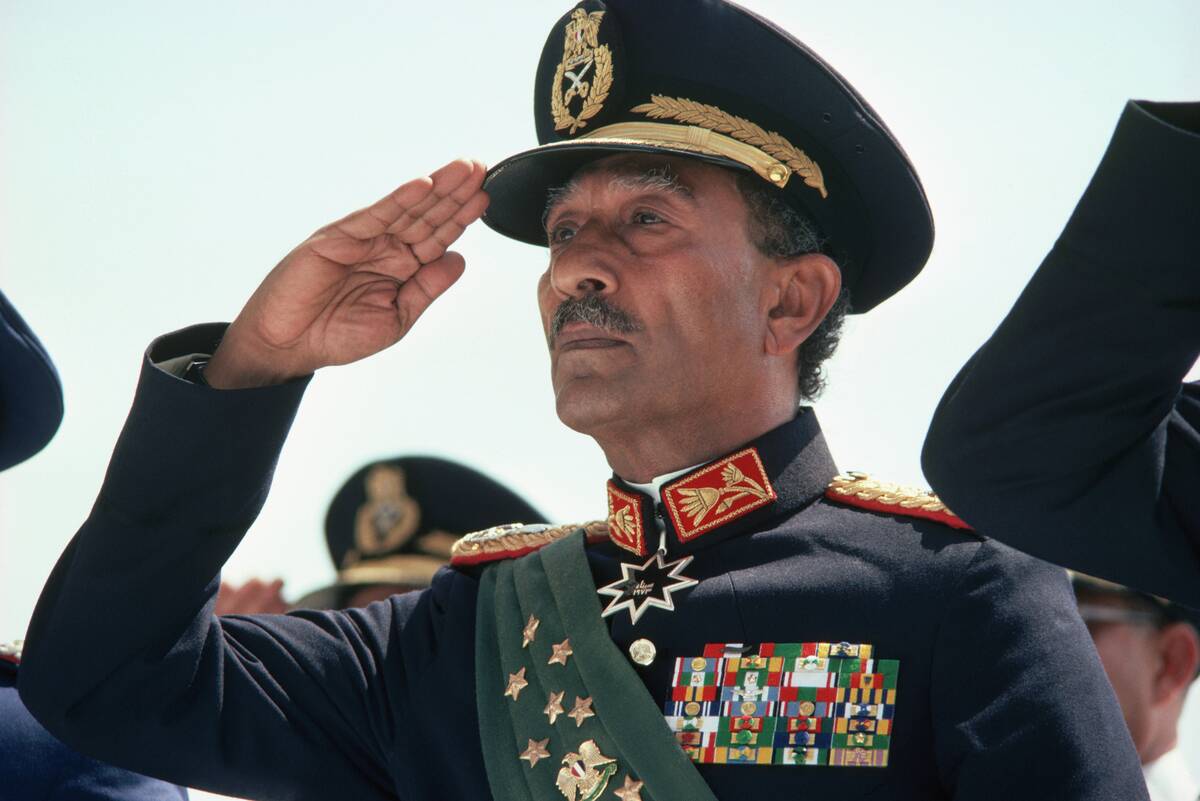
Gamal Abdel Nasser died on September 28, 1970. Anwar Sadat, seen by many as a transitional figure, assumed Egypt’s presidency and soon surprised doubters. In May 1971, his “Corrective Revolution” purged rivals and consolidated control. He shifted economic thinking with early infitah (opening) signals and repositioned Egypt beyond rigid Soviet alignment.
In October 1973, Sadat launched a coordinated war with Syria across the Suez Canal and Golan Heights, recasting Egypt’s military credibility. Then he pivoted to peace: a dramatic 1977 visit to Jerusalem led to the Camp David Accords in 1978, earning him and Menachem Begin the Nobel Peace Prize. The 1979 Egypt–Israel treaty redrew regional geopolitics. Sadat was assassinated on October 6, 1981, during a military parade—an end as jolting as his bold resets.
Goodluck Jonathan’s quiet rise: Nigeria’s VP in the hot seat
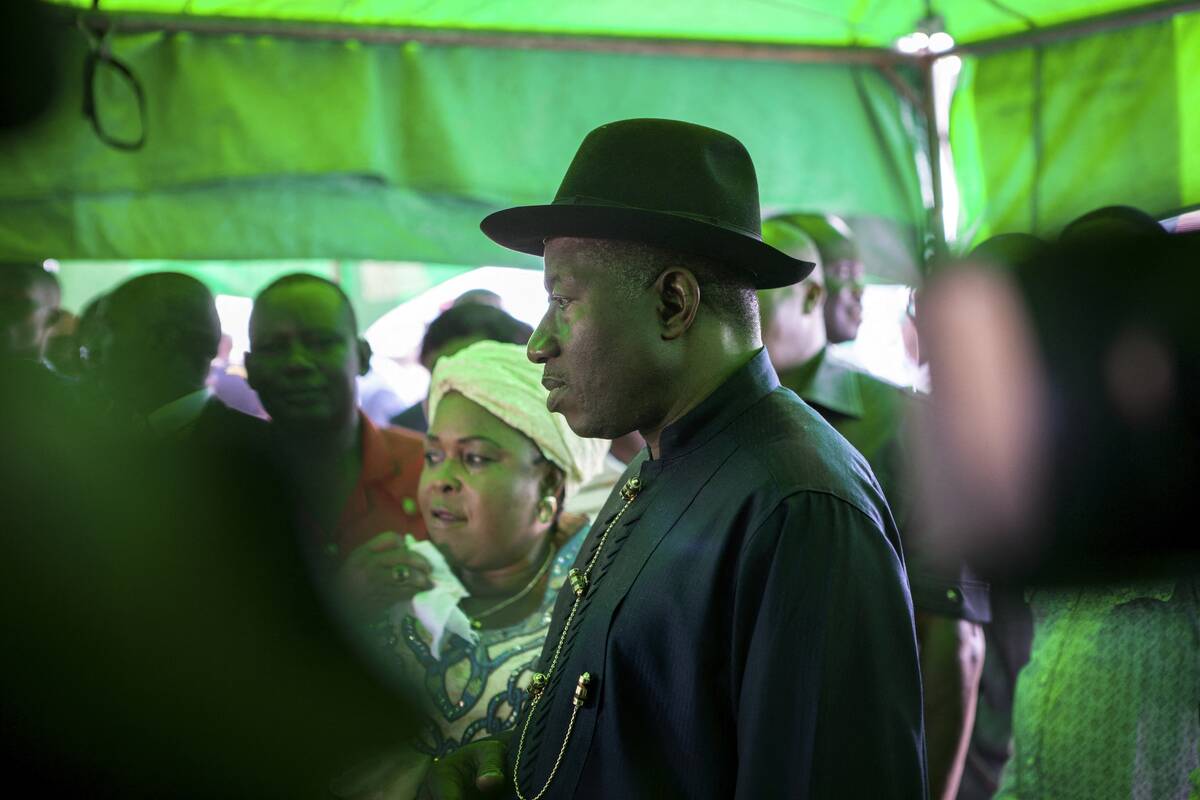
With President Umaru Musa Yar’Adua absent for months, Nigeria’s National Assembly invoked a “doctrine of necessity” on February 9, 2010, naming Vice President Goodluck Jonathan acting president. After Yar’Adua’s death on May 5, Jonathan was sworn in as president. He moved to stabilize cabinet and security portfolios and charted a smoother electoral path ahead of the 2011 polls.
In 2011, he won a full term and signed the Freedom of Information Act (May 28), a landmark transparency law. Boko Haram’s insurgency escalated, posing a relentless security test. Economically, his administration pursued power‑sector privatization and oversaw a 2014 GDP rebasing that made Nigeria Africa’s largest economy on paper. In 2015, Jonathan conceded defeat to Muhammadu Buhari by phone—Nigeria’s first peaceful transfer between rival parties, a modest but meaningful democratic milestone.
B. J. Habibie’s brief, pivotal moment: Indonesia’s transition begins
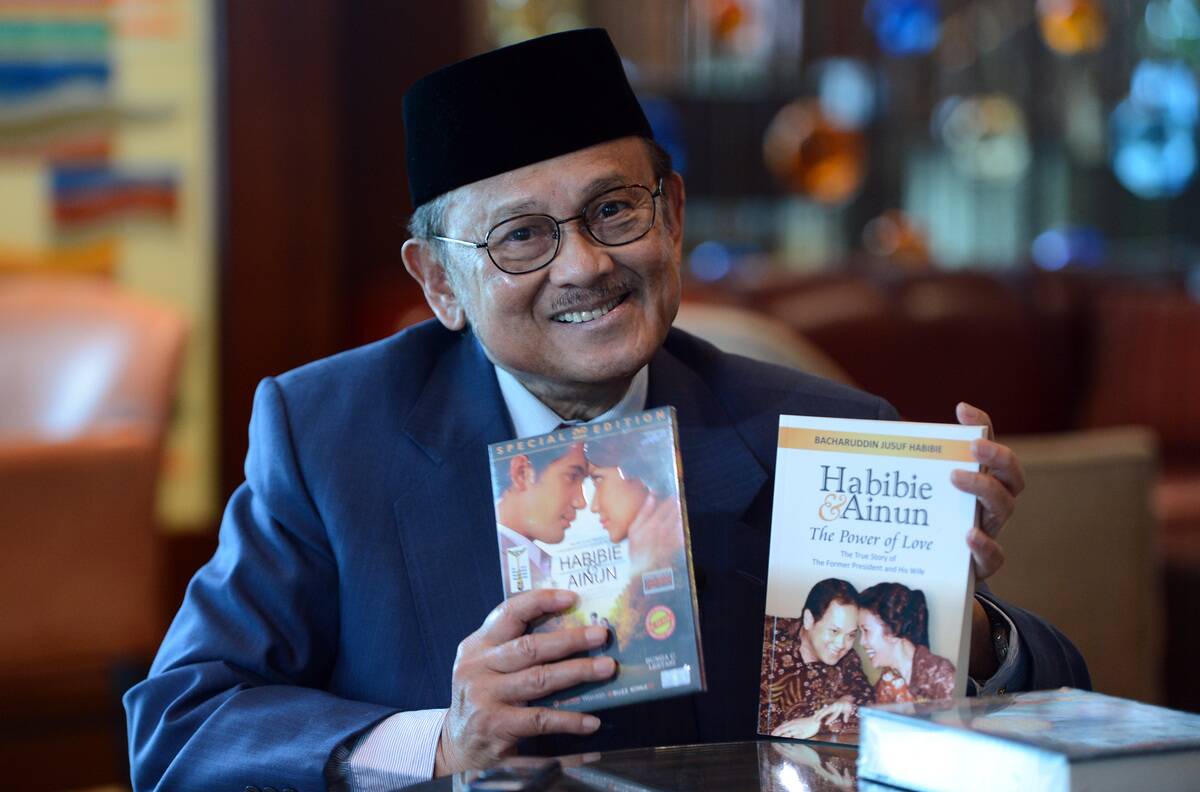
Suharto resigned on May 21, 1998, after the Asian financial crisis and mass protests. His vice president, B. J. Habibie, took over and set Indonesia on a rapid reformasi track. Political prisoners were freed, new parties legalized, and press restrictions eased under a 1999 media law, opening the public sphere after decades of tight control.
Economically, his team stabilized the rupiah and worked with the IMF, while politically he proposed a referendum in East Timor. The August 30, 1999 vote chose independence, followed by violence and an international peacekeeping mission. Indonesia held its first free parliamentary elections in June 1999. When the MPR evaluated his accountability speech, it declined to reappoint him, and he left office on October 20, 1999. Short tenure, big hinge: a presidency that opened democratic doors.
Gloria Macapagal Arroyo takes the helm: A constitutional handoff in crisis
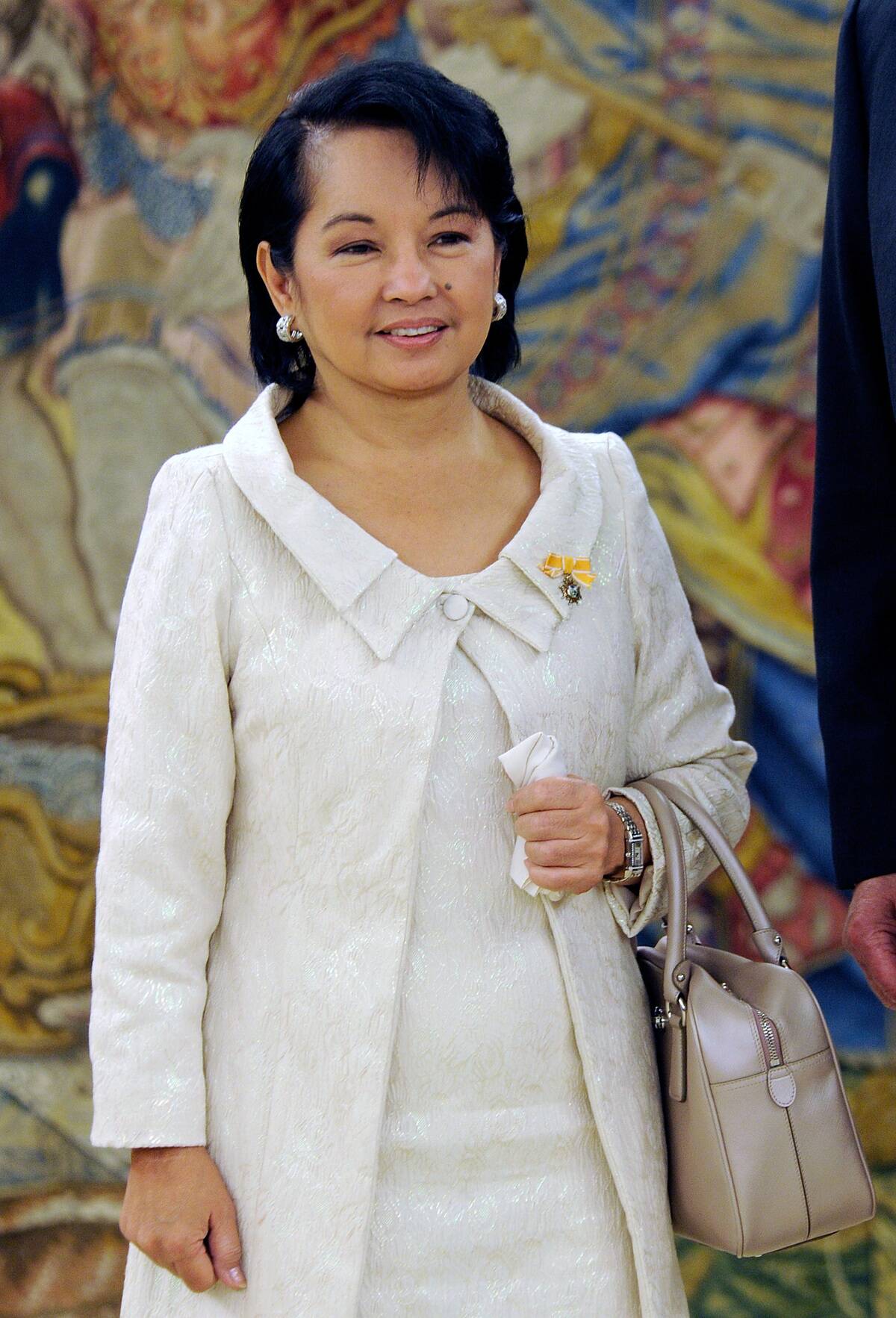
The Philippines entered a whirlwind in January 2001 as mass protests (EDSA II) followed corruption allegations against President Joseph Estrada. On January 20, the Supreme Court swore in Vice President Gloria Macapagal Arroyo as president, citing Estrada’s inability to govern. A constitutional handoff, yes—but amid real turmoil that demanded quick stabilization of the bureaucracy and markets.
Arroyo served through 2010, navigating coup rumors, insurgencies, and global shocks. She signed the Anti‑Money Laundering Act in 2001 to meet international standards and, in 2006, approved the law abolishing the death penalty. Growth accelerated mid‑decade, aided by remittances and business‑process outsourcing. Her tenure later faced legal battles, but the succession moment itself set a precedent: institutions, not the streets alone, finalize Philippine political transitions.
Joseph Kabila at 29: A son steps into the presidency of DRC
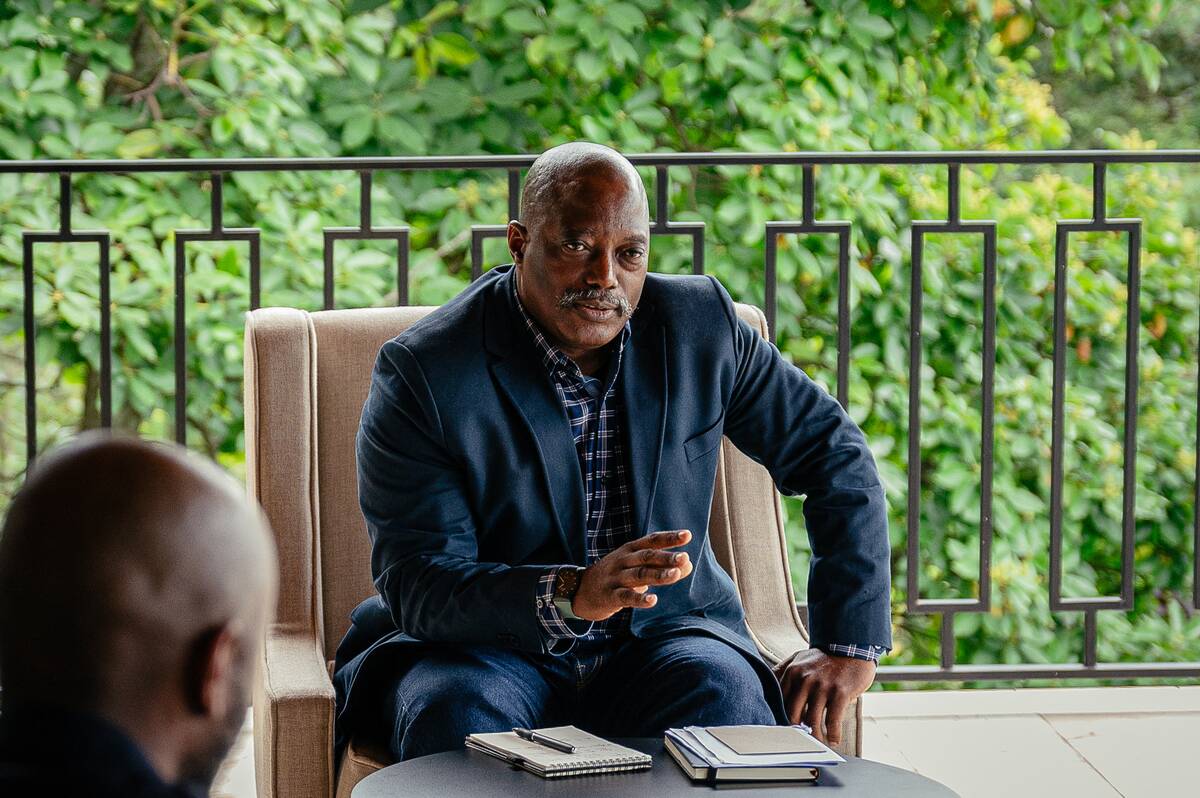
Laurent‑Désiré Kabila was assassinated on January 16, 2001, amid the Second Congo War. Days later, his 29‑year‑old son Joseph Kabila assumed the presidency of the Democratic Republic of the Congo. Young and relatively unknown, he quickly sought international backing, reopening lines to neighbors and the UN to cool a conflict that involved multiple African states.
Talks produced the 2002 Sun City Agreement, laying groundwork for a transitional government. UN peacekeepers (MONUC, later MONUSCO) expanded operations. DRC held its first multiparty presidential elections in 2006; Kabila won the runoff, though violence flared in the east. Security reforms and mining contracts remained flashpoints. His sudden ascent didn’t end Congo’s turmoil, but it enabled a pivot from all‑out regional war toward a contested, uneven political normalization.
Samia Suluhu Hassan makes history: Tanzania’s first woman president
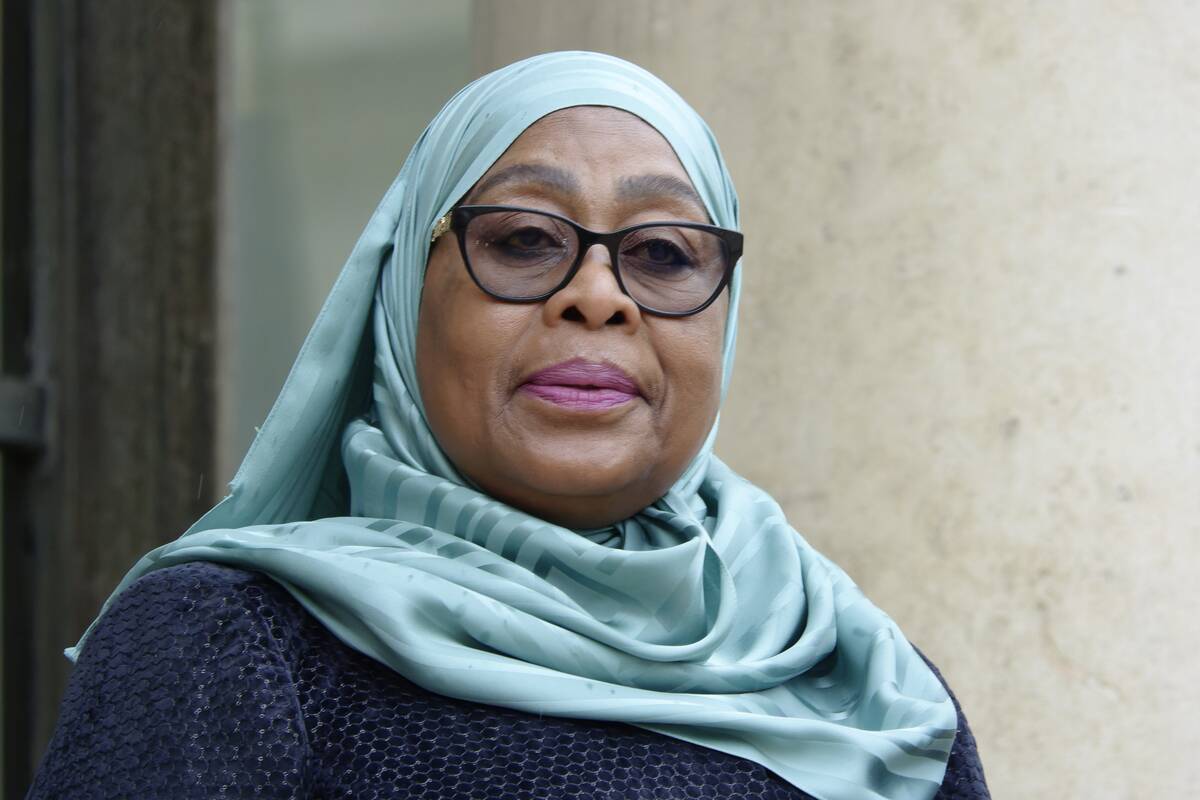
President John Magufuli’s death was announced on March 17, 2021. Two days later, Vice President Samia Suluhu Hassan took the oath, becoming Tanzania’s first woman president and the first from Zanzibar to hold the union’s top job. She promised continuity with a calmer tone, immediately signaling shifts on pandemic policy and governance style.
Her government revived COVID‑19 data reporting and set up a scientific task force, and it eased some media restrictions.
In September 2021, Tanzania secured about $567 million in IMF emergency support to cushion the pandemic’s blow. She appointed Stergomena Tax as the country’s first female defense minister that same month. Diplomacy warmed, investment pitches resumed, and the historic symbolism of her office matched a substantive recalibration at home.
Guy Scott’s short, surprising stint: Zambia’s interim head of state
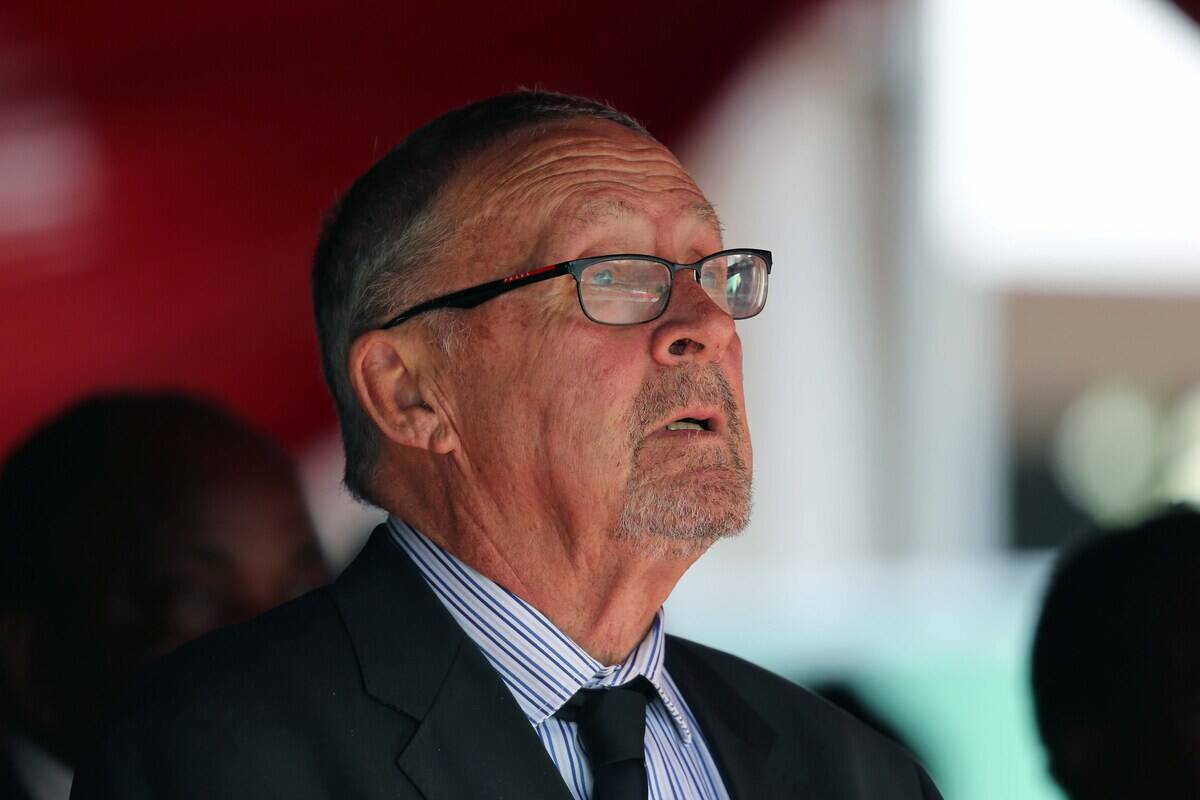
When President Michael Sata died on October 28, 2014, Vice President Guy Scott became acting president the next day. Born in Livingstone to Scottish parents, he was the first white African head of state since South Africa’s F. W. de Klerk left office in 1994. The constitution barred him from running in the subsequent election because his parents weren’t Zambian by birth.
Scott’s role was caretaker but consequential: he dismissed the ruling party’s secretary‑general amid factional fights and set a January 2015 election timetable. He handed power to Edgar Lungu after the vote and left office on January 25, 2015. Brief tenure, global headlines, and a reminder that succession clauses—however arcane—shape who can hold on after they step in.
Adolfo Suárez picked to change Spain: The unlikely architect of transition
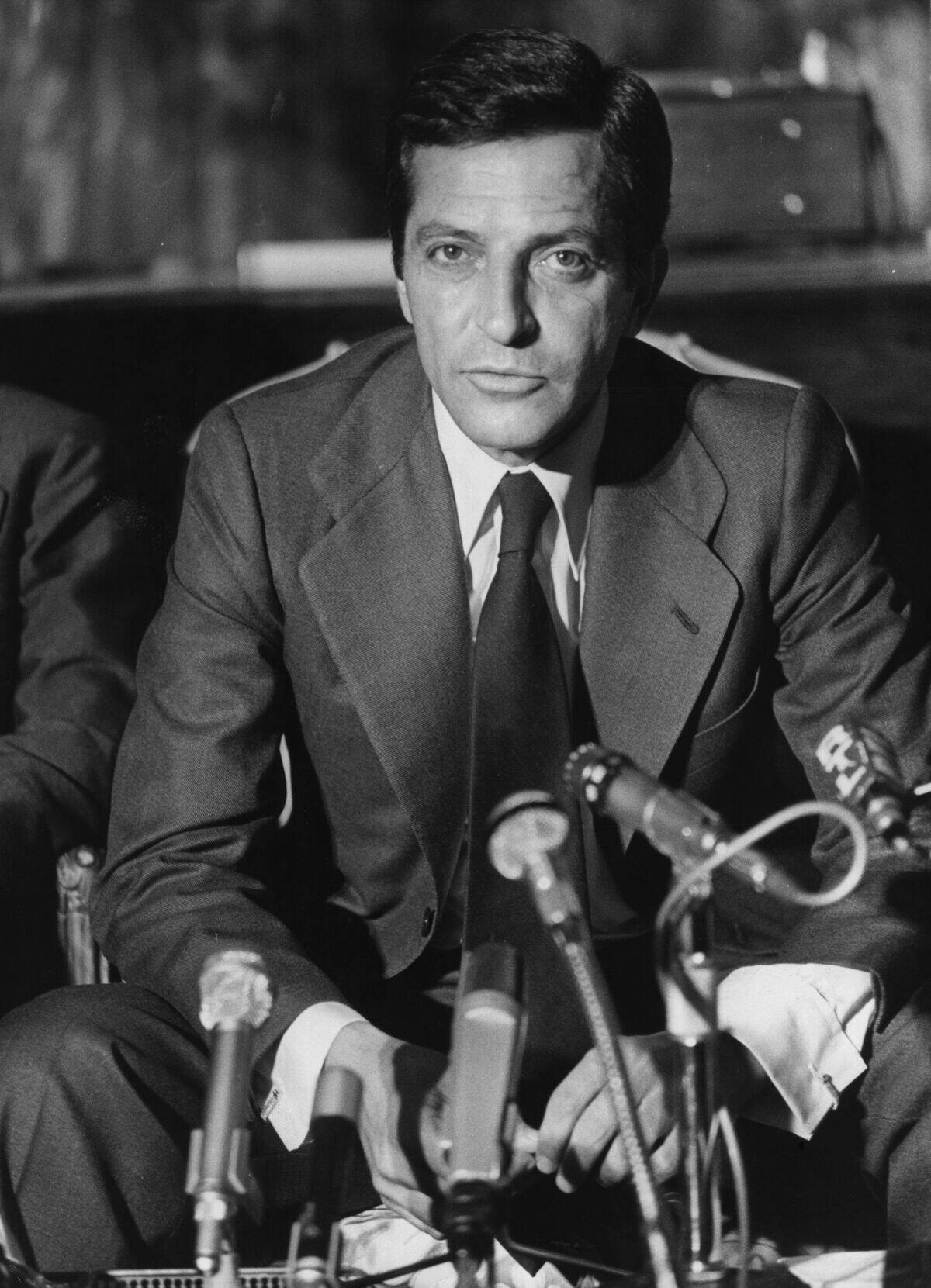
Spain emerged from Franco’s dictatorship in 1975 with uncertainty and a young king, Juan Carlos I. In July 1976, the king appointed Adolfo Suárez—an obscure former regime official—as prime minister. Suárez moved faster than expected: the Political Reform Act won approval that year, dismantling Francoist structures through legal means.
He legalized political parties, including the Communist Party in 1977, and held the first democratic elections in June 1977.
The Moncloa Pacts that autumn aligned parties and unions around economic stabilization. Suárez steered the 1978 Constitution to ratification, creating a parliamentary monarchy. He resigned in early 1981, and days later stood calmly in parliament during the failed 23‑F coup, a symbol of the fragile democracy he’d midwifed.
Jacinda Ardern’s overnight promotion: From deputy to leader before an election

On August 1, 2017, just weeks before an election, New Zealand’s Labour leader Andrew Little resigned. His deputy—37‑year‑old Jacinda Ardern—became party leader the same day after a single day as deputy, igniting “Jacindamania” and a polling surge. She reframed the campaign around housing, child poverty, and climate action with an upbeat, plain‑spoken style.
After the September vote produced no majority, Ardern formed a government with New Zealand First and the Greens and was sworn in on October 26, 2017, becoming the world’s youngest serving female head of government at the time. She later gave birth in 2018 while in office, the first New Zealand leader and among very few globally to do so. An unexpected promotion turned into a defining premiership.
Kgalema Motlanthe keeps calm: South Africa’s steady interim
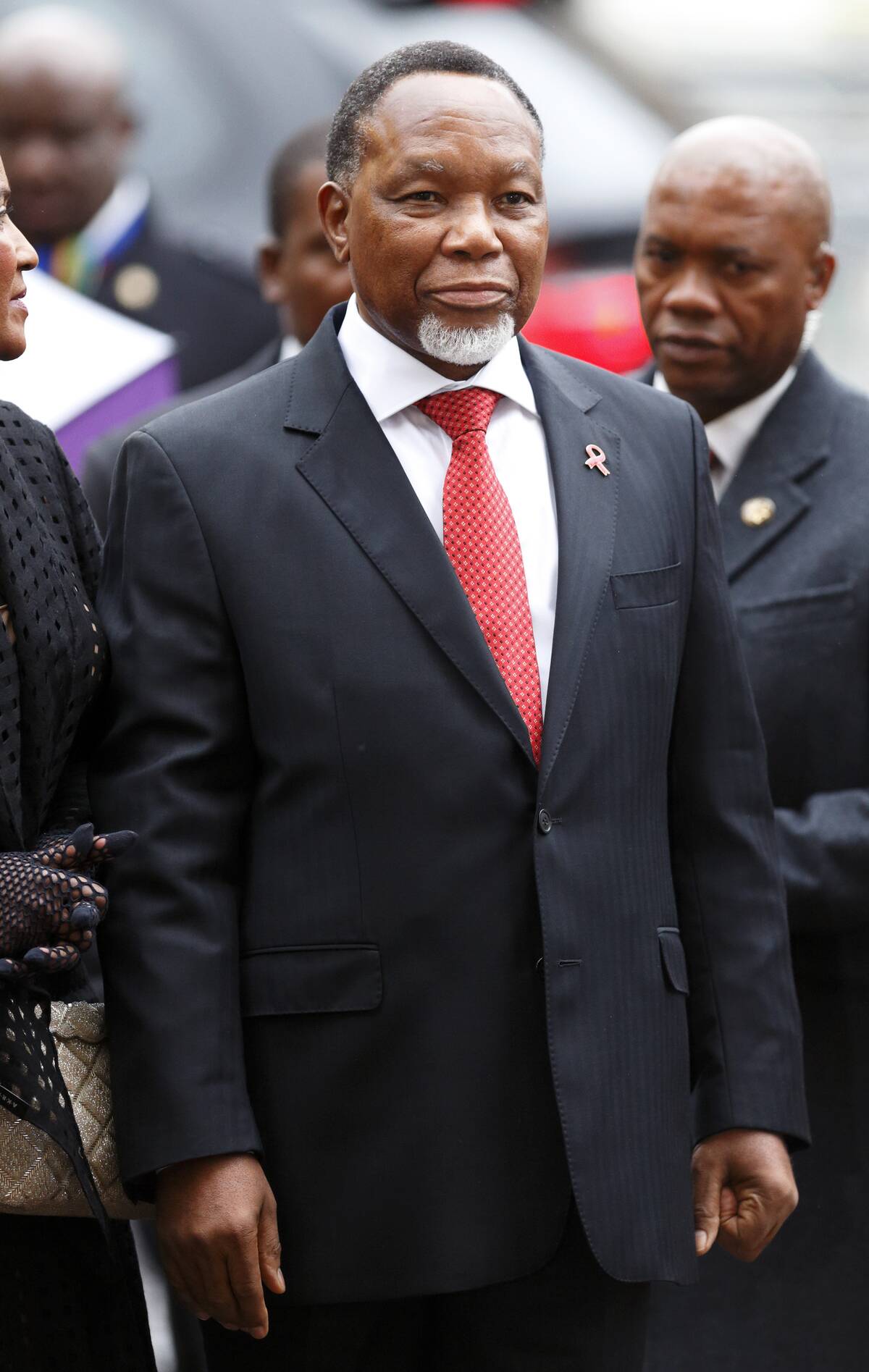
Thabo Mbeki resigned in September 2008 after a party revolt. Parliament elected Kgalema Motlanthe president on September 25 to serve until the 2009 election. A former unionist and ANC secretary general, he projected cool competence as global markets reeled from financial crisis and domestic politics ran hot ahead of Jacob Zuma’s expected ascent.
Motlanthe focused on continuity: he retained Trevor Manuel to reassure investors, strengthened health messaging as South Africa reoriented HIV/AIDS policy, and kept the bureaucracy humming. He left office on May 9, 2009, when Zuma was sworn in, then served as deputy president. Not every leader must make big waves; some keep the ship straight when it matters most.
Pope John XXIII, the “caretaker” who opened windows: Vatican’s surprise reformer
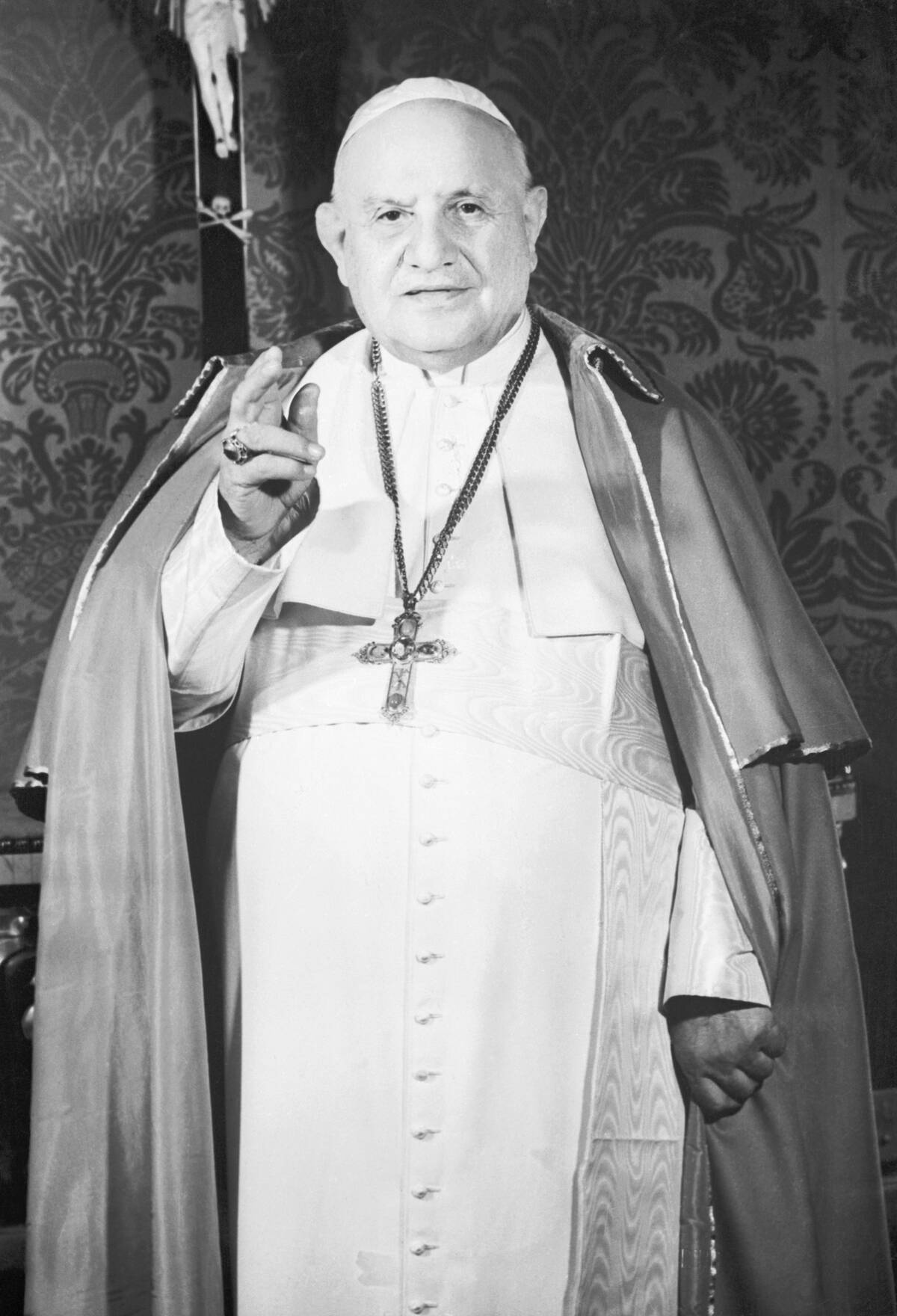
Cardinals elected Angelo Roncalli on October 28, 1958, expecting a short, steady papacy after Pius XII. Taking the name John XXIII, the affable Italian soon startled the world: on January 25, 1959, he announced the Second Vatican Council to renew the Church’s engagement with modernity.
The decision upended the “caretaker” label within months.
Vatican II opened on October 11, 1962, reframing liturgy, ecumenism, and the role of laity. John issued the encyclical Pacem in Terris in 1963, addressing peace and human rights in plain, global terms. He died on June 3, 1963, before the council concluded, and was canonized in 2014. A gentle pastor with a reformer’s courage, he opened the windows and let in a gust.
King Gyanendra’s second coronation: Nepal’s monarchy after tragedy
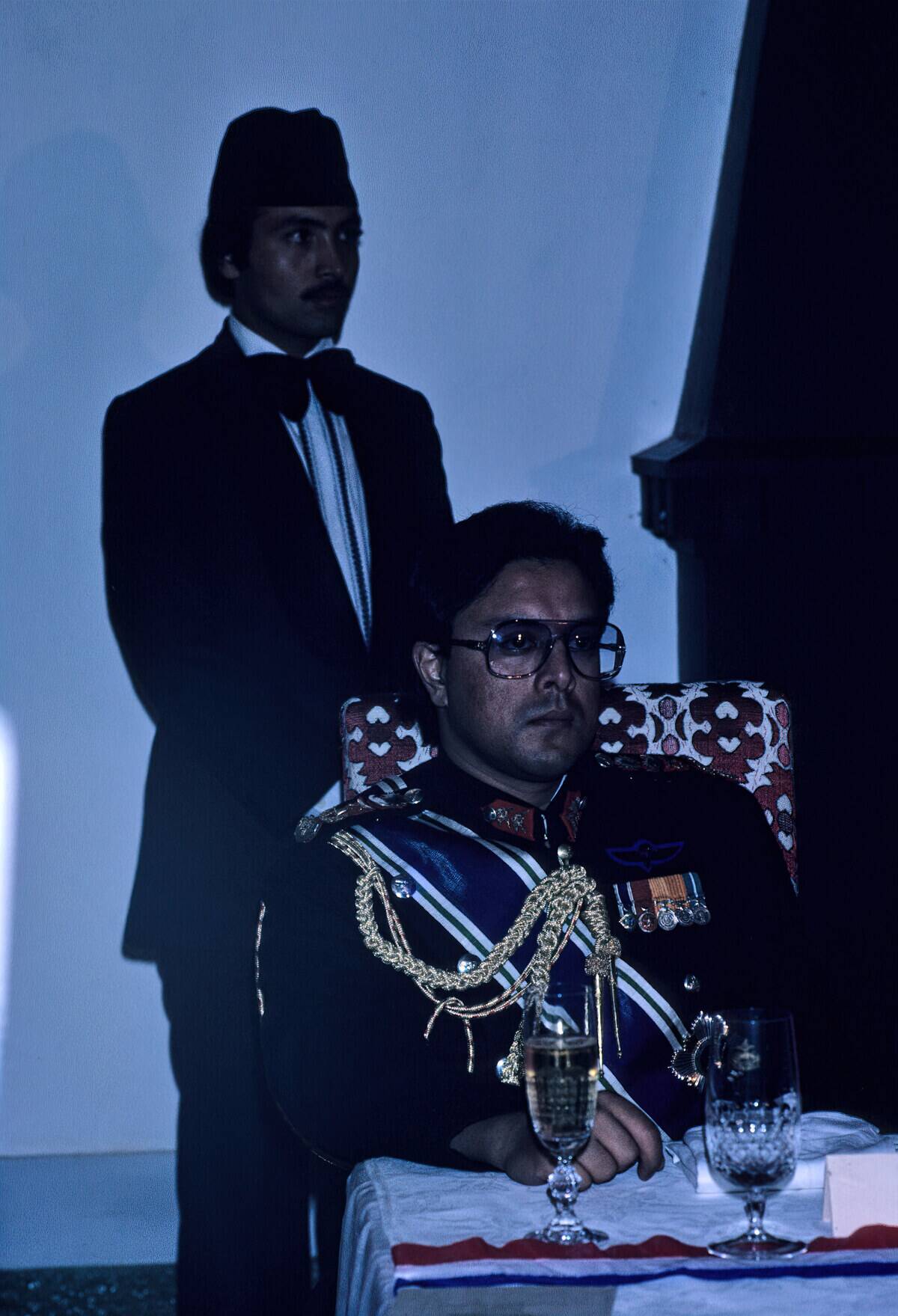
On June 1, 2001, Crown Prince Dipendra shot and killed King Birendra and much of Nepal’s royal family before dying himself. Gyanendra—who had briefly been king as a child in 1950 during a political crisis—was proclaimed monarch again and crowned on June 4, 2001. The nation, already facing a Maoist insurgency, reeled from grief and various rumors.
Gyanendra dismissed parliament in 2002 and, in February 2005, seized direct rule, citing the insurgency. Pro‑democracy protests surged in 2006, forcing him to restore the legislature. A peace deal with Maoists followed, and the Constituent Assembly abolished the monarchy in 2008. Gyanendra’s second reign, born of tragedy, became a case study in how absolute moves can accelerate the end of a throne.