14 Photos of home kitchens from the 1950s
Step into the 1950s kitchen, a vibrant hub of family life and culinary creativity. This era was marked by a blend of practicality and style, where the kitchen wasn’t just a place to cook but a social center.
With post-war prosperity, families were eager to embrace modern conveniences and stylish designs. The kitchens of this decade reflect a unique charm, blending functionality with a splash of color and innovation that still captivates us today.
The Heart of the Home: Kitchen Layouts of the 1950s
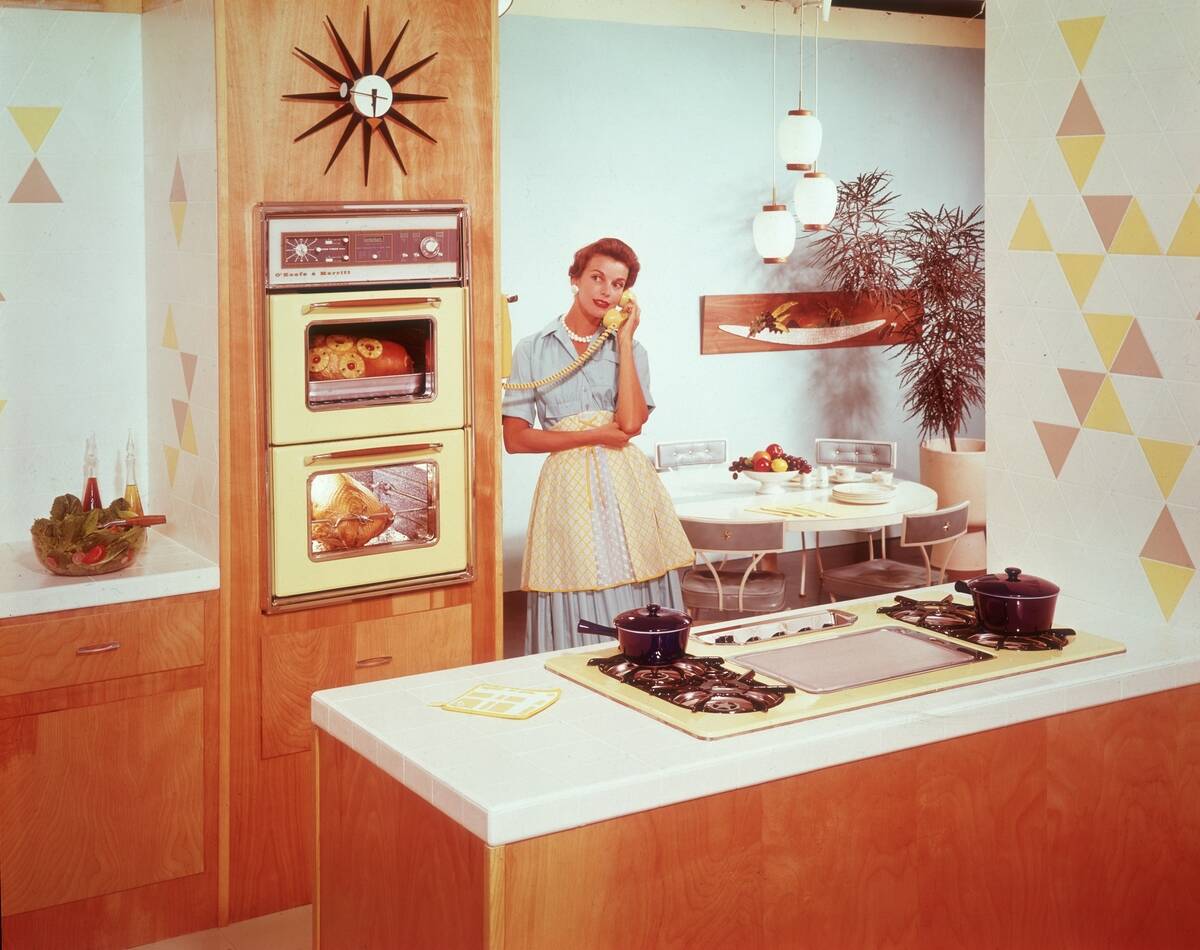
In the 1950s, kitchen layouts were designed with efficiency in mind, often featuring the classic work triangle. This concept connected the stove, sink, and refrigerator, minimizing steps and maximizing convenience.
Open floor plans were rare, as kitchens were more compartmentalized. The focus was on utility, with built-in cabinetry and plenty of storage to accommodate the latest kitchen gadgets. These layouts set the stage for the modern kitchens we know today.
Colorful Cabinets: A Pop of Pastel
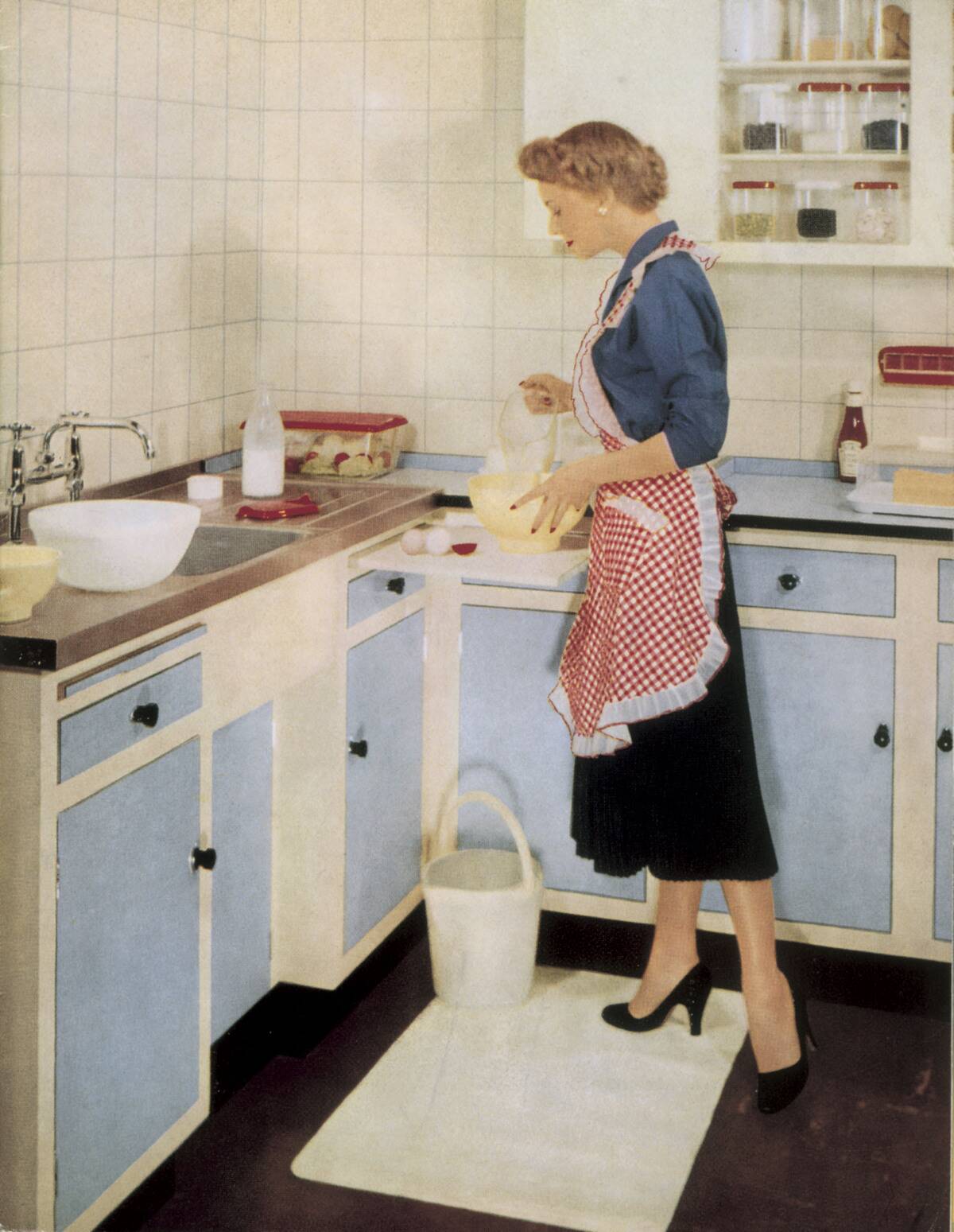
Cabinets in the 1950s were a delightful explosion of color, with pastel shades like mint green, butter yellow, and baby blue reigning supreme. This trend was inspired by the optimism of the era and the desire to bring cheer into the home.
Steel cabinets were also popular, offering durability and a sleek look. These colorful cabinets were often paired with chrome hardware, adding a touch of modernity to the kitchen’s aesthetic.
The Rise of the Eat-In Kitchen
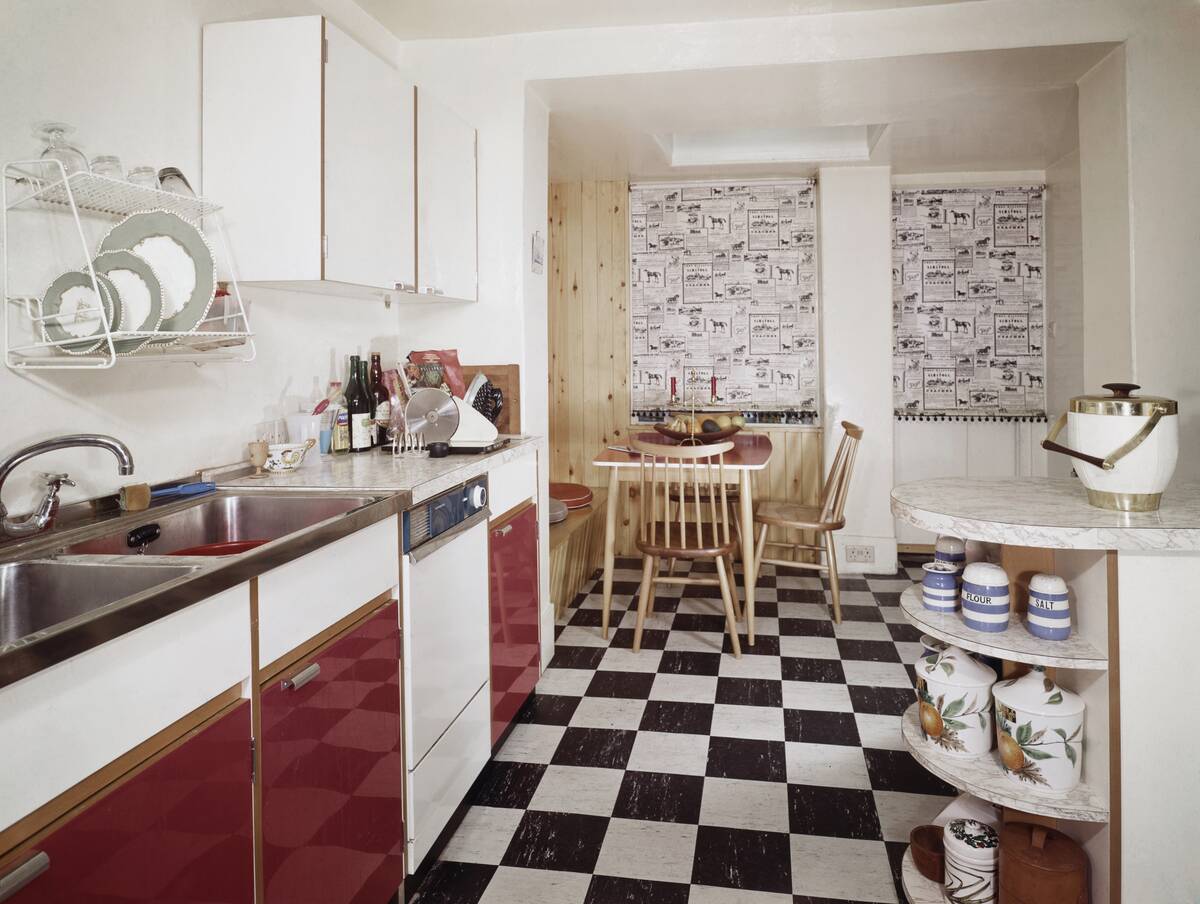
The 1950s saw the emergence of the eat-in kitchen, a concept that brought the family together for meals in a more casual setting. This was a departure from the formal dining room, reflecting a shift towards more relaxed family interactions.
The eat-in kitchen often featured a small table or breakfast nook, making it a cozy spot for quick meals or a cup of coffee. This trend highlighted the kitchen’s role as a central gathering place in the home.
Retro Appliances: The Iconic Fridge
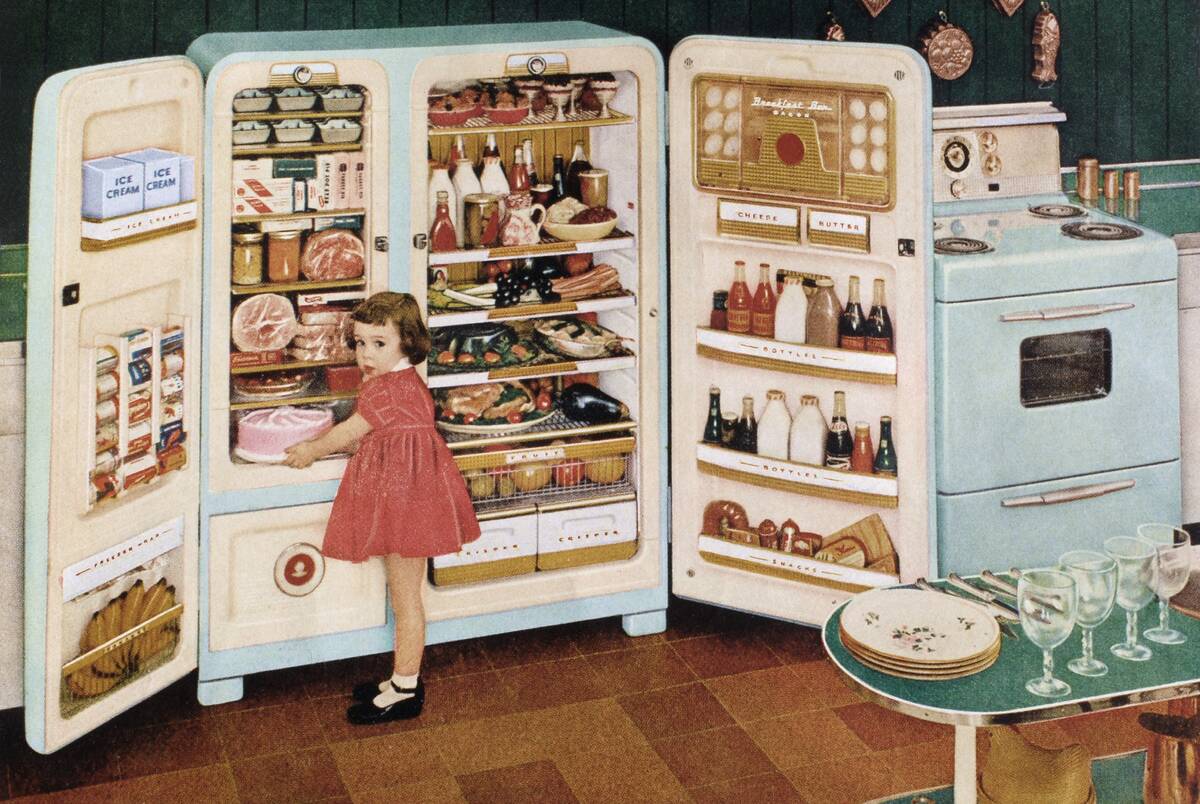
The refrigerator became a kitchen staple in the 1950s, with its rounded edges and chrome accents. Brands like General Electric and Frigidaire led the way, offering models in a variety of colors to match the vibrant cabinets.
These fridges were smaller than today’s models but packed with features like freezer compartments and adjustable shelves. The iconic fridge was not just a practical appliance but also a symbol of modernity and convenience.
The Classic Oven and Stove Combo
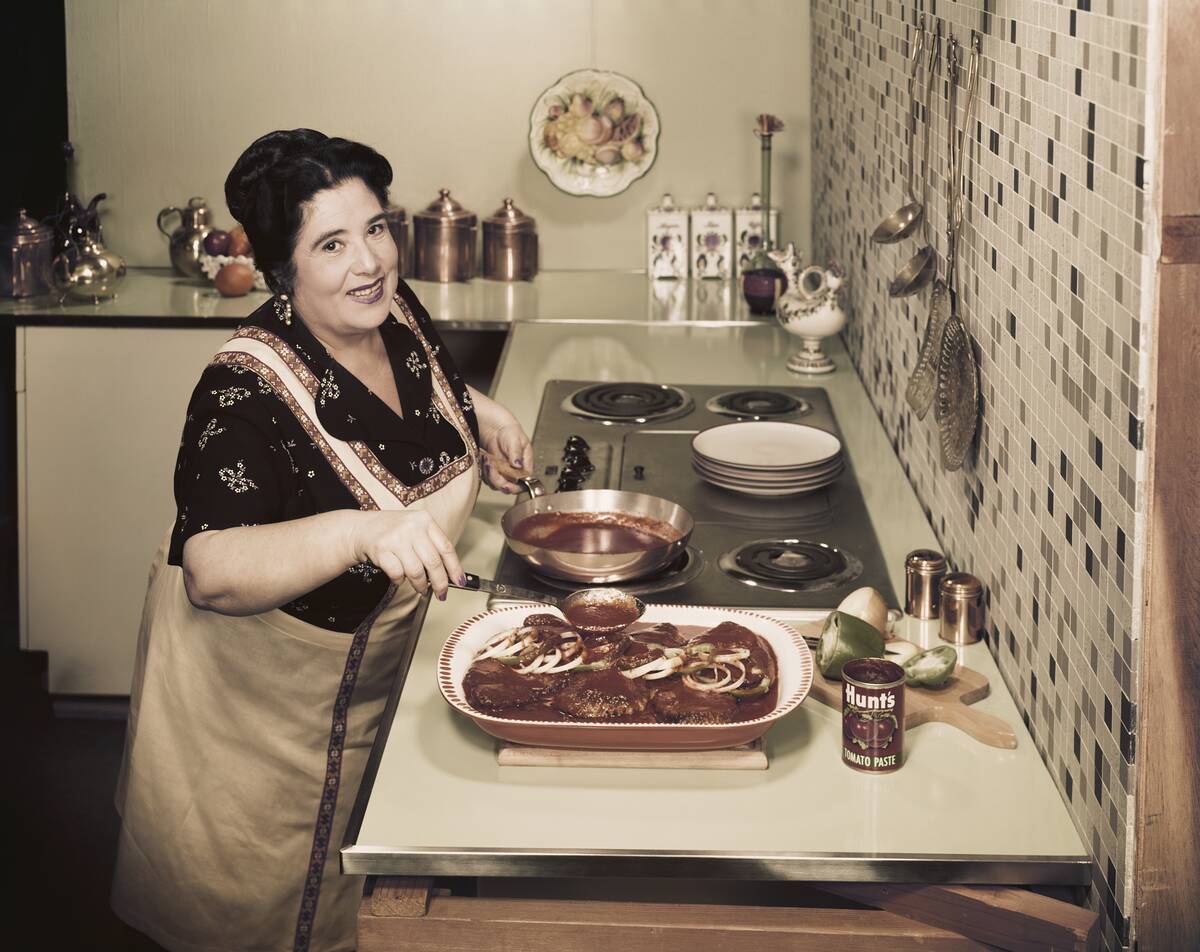
In the 1950s, the oven and stove combo was a must-have in every kitchen, often built into the cabinetry for a seamless look. Gas and electric models were available, with electric stoves gaining popularity due to their ease of use.
These appliances were designed with style in mind, featuring sleek lines and chrome details. The combination of functionality and design made the oven and stove combo a centerpiece in the kitchen.
Formica Countertops: The Trendy Surface
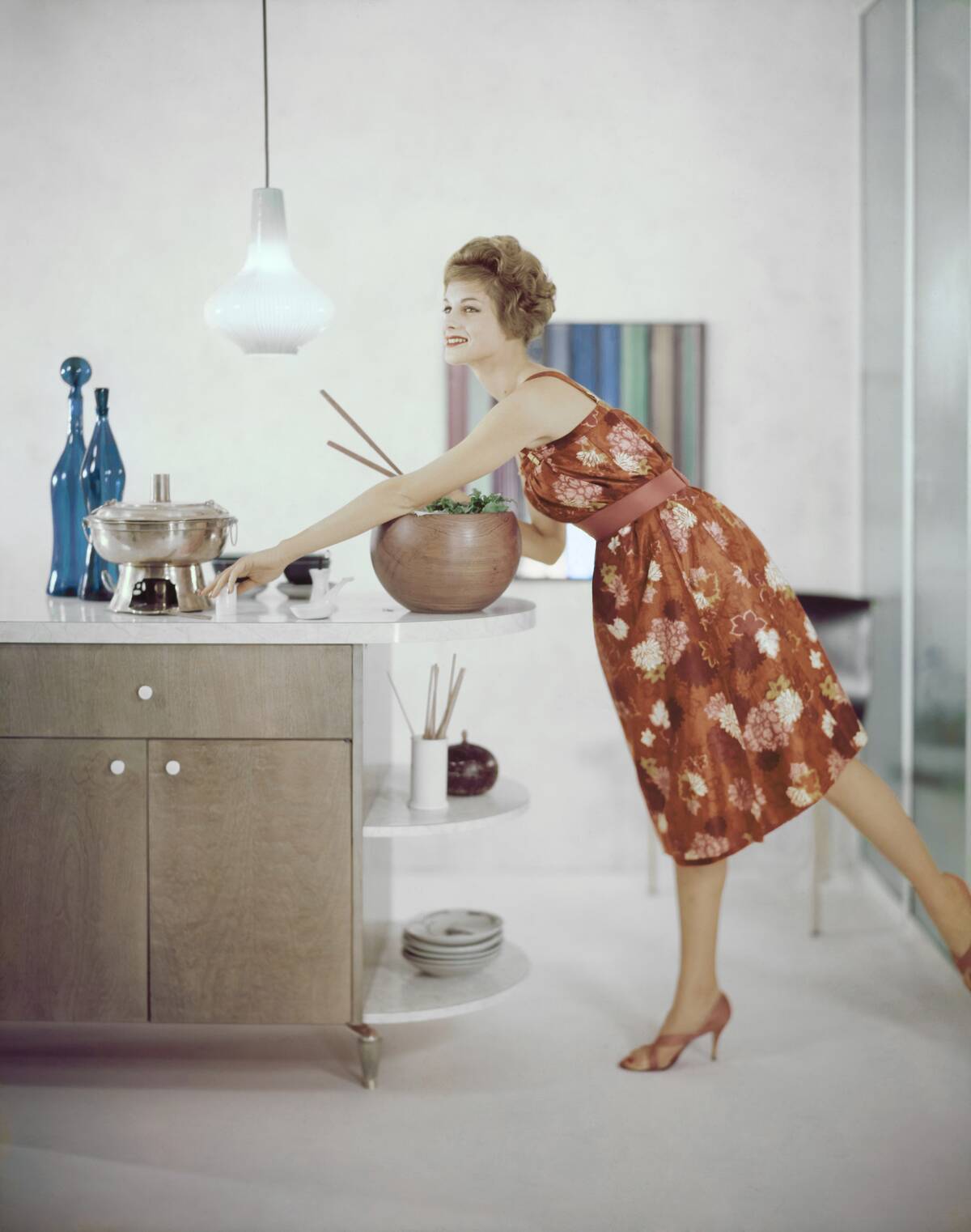
Formica countertops were all the rage in the 1950s, known for their durability and ease of maintenance. Available in a wide range of colors and patterns, they offered homeowners the chance to customize their kitchens.
The material was resistant to stains and heat, making it a practical choice for busy households. Formica’s affordability and versatility made it a popular option, and its retro appeal continues to charm homeowners today.
Vintage Sinks: Double Basins and Drainboards
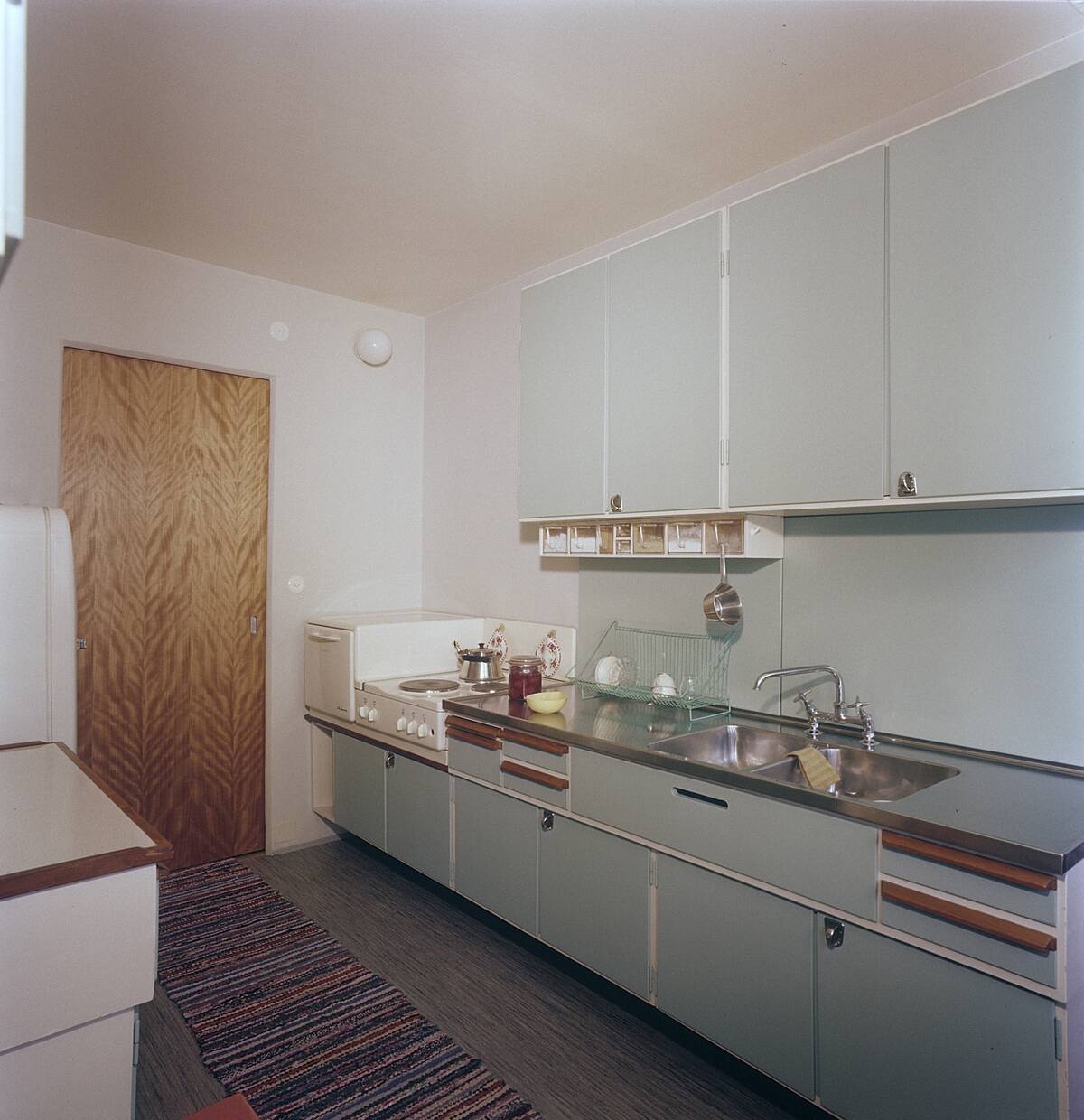
The double basin sink with integrated drainboards was a common feature in 1950s kitchens. These sinks were typically made of porcelain or stainless steel, offering both functionality and style.
The design allowed for efficient dishwashing, with one basin for washing and the other for rinsing. Drainboards provided extra space for drying dishes, making the kitchen workflow smoother. This practical design is still appreciated in modern kitchens.
The Breakfast Nook: A Cozy Corner
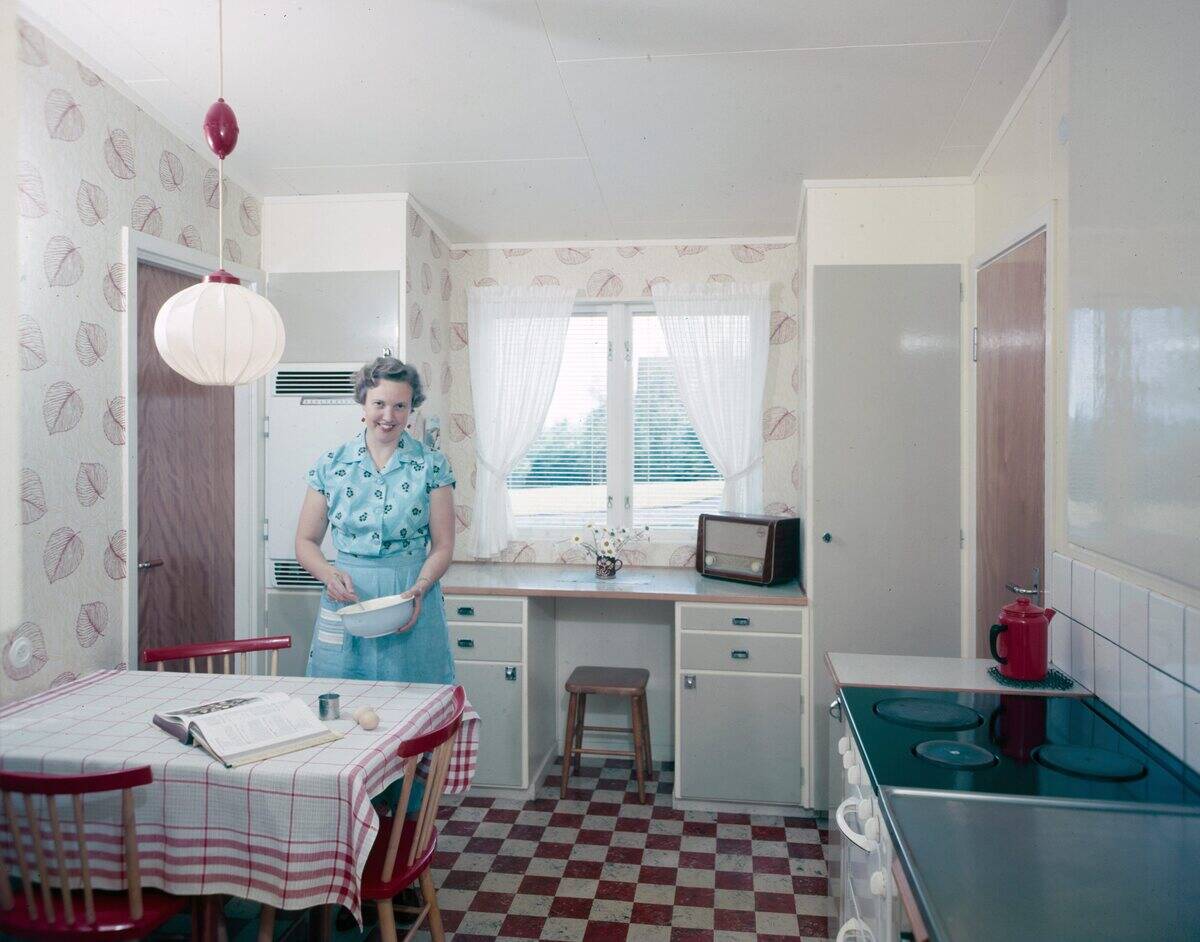
A breakfast nook was a charming addition to many 1950s kitchens, providing a cozy spot for family meals. Often tucked into a corner, these nooks featured built-in benches and a small table.
The design was both space-saving and inviting, encouraging casual dining and conversation. The breakfast nook became a beloved feature, offering a warm and welcoming atmosphere that many homeowners still seek today.
Linoleum Floors: Patterns and Practicality
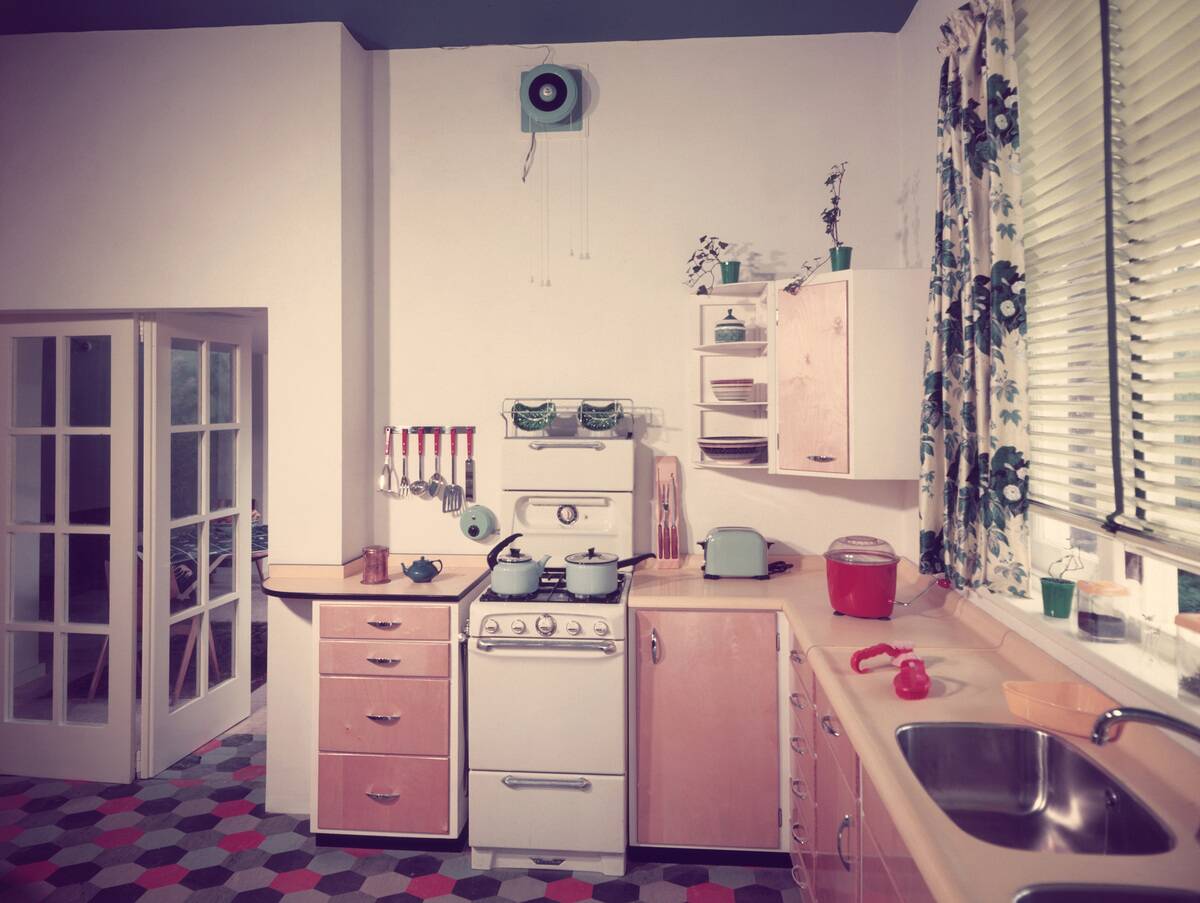
Linoleum flooring was a practical choice for 1950s kitchens, known for its durability and easy maintenance. Available in a variety of patterns and colors, it allowed homeowners to add a personal touch to their kitchens.
The material was water-resistant and comfortable underfoot, making it ideal for busy households. Linoleum’s affordability and versatility made it a popular choice, and its retro charm continues to appeal to those seeking a vintage look.
The Ubiquitous Bread Box
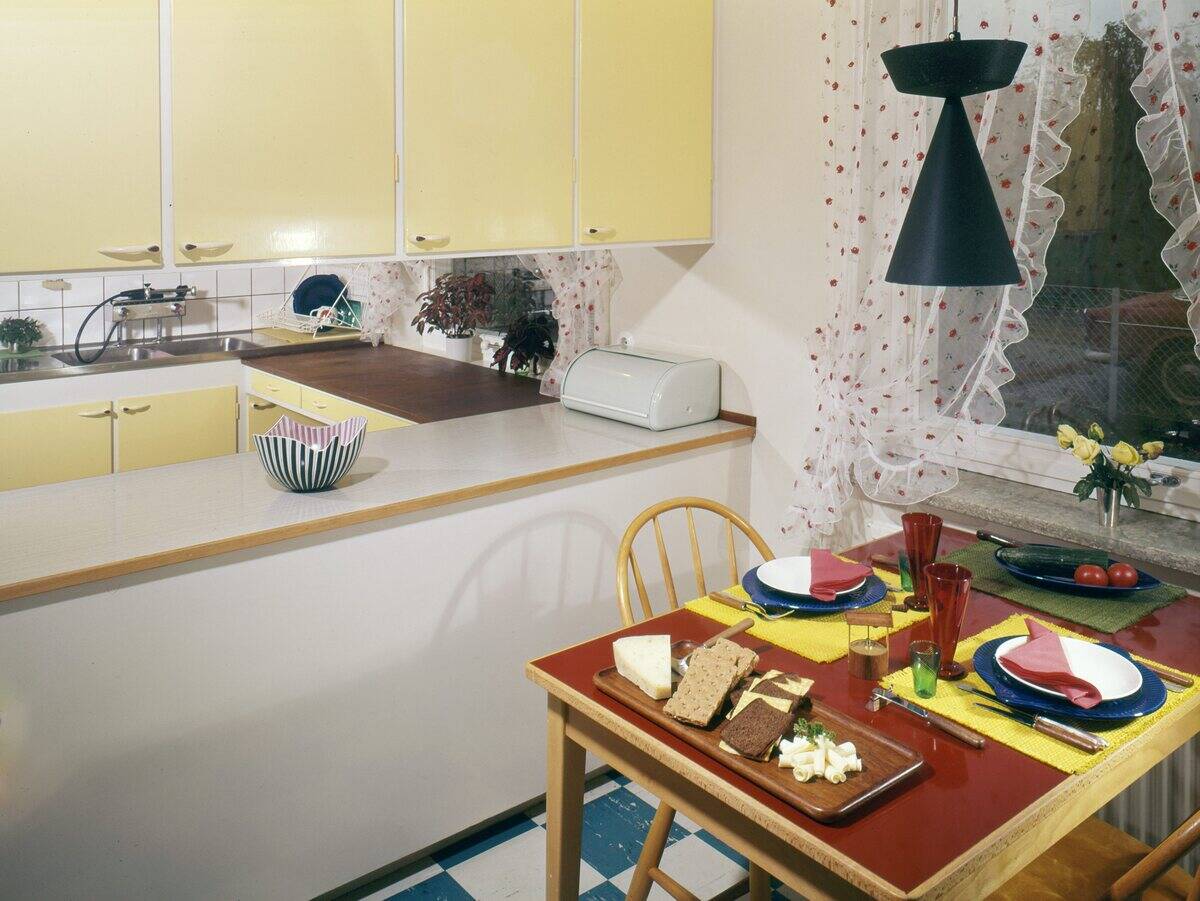
The bread box was a staple in 1950s kitchens, designed to keep bread fresh and free from pests. Made from materials like metal or wood, these boxes often featured decorative designs that added a touch of charm to the kitchen.
The bread box was both a practical storage solution and a stylish accessory, reflecting the era’s focus on combining functionality with aesthetics. Today, the bread box remains a nostalgic reminder of simpler times.
Charming Kitchen Curtains and Drapes
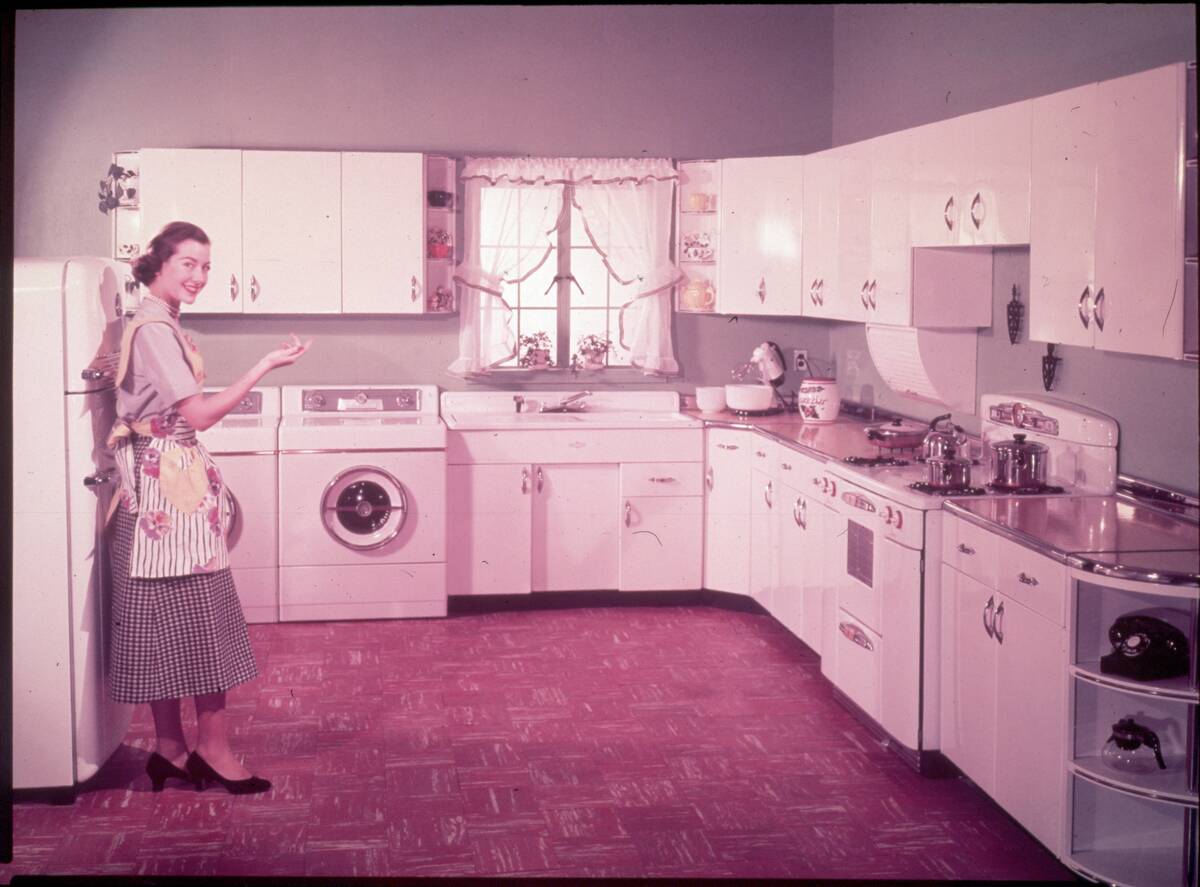
Kitchen curtains and drapes in the 1950s were often bright and cheerful, adding a splash of color to the room. Patterns like gingham, polka dots, and florals were popular choices, reflecting the era’s love for playful designs.
These window treatments provided privacy and softened the room’s appearance, creating a warm and inviting atmosphere. The charm of 1950s kitchen curtains continues to inspire those seeking a touch of vintage flair in their homes.
The Role of the Kitchen Radio
The kitchen radio was a beloved fixture in 1950s homes, providing entertainment and news while meals were prepared. Compact and stylish, these radios often sat on the countertop or a shelf, within easy reach.
Families tuned in to their favorite programs, enjoying music, news, and storytelling. The kitchen radio was more than just a source of sound; it was a connection to the wider world, bringing a sense of community into the home.
Popular Kitchen Gadgets of the 1950s
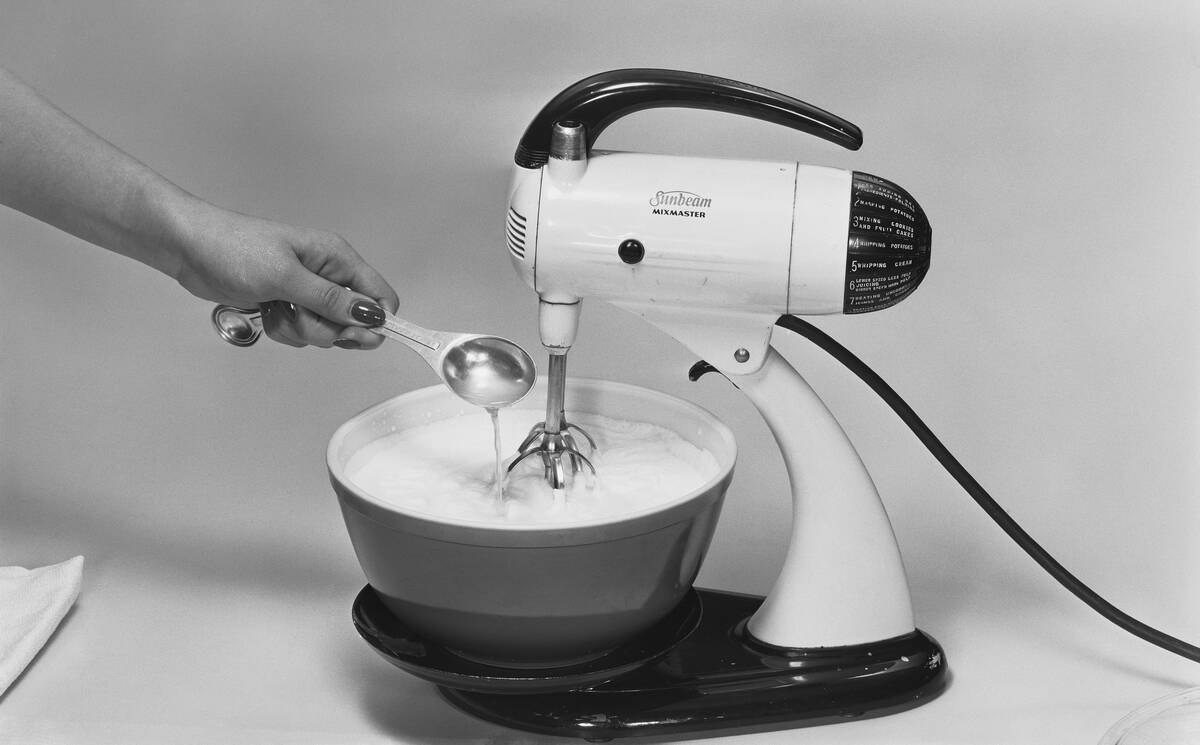
The 1950s saw a surge in innovative kitchen gadgets, designed to make cooking and baking easier. Electric mixers, blenders, and toasters became common, offering convenience and efficiency.
These gadgets were often brightly colored, matching the vibrant kitchen decor. The rise of these appliances reflected the era’s focus on modernity and progress, as families embraced new technologies to simplify their daily routines. Many of these gadgets remain kitchen staples today.
The Influence of Television on Kitchen Design
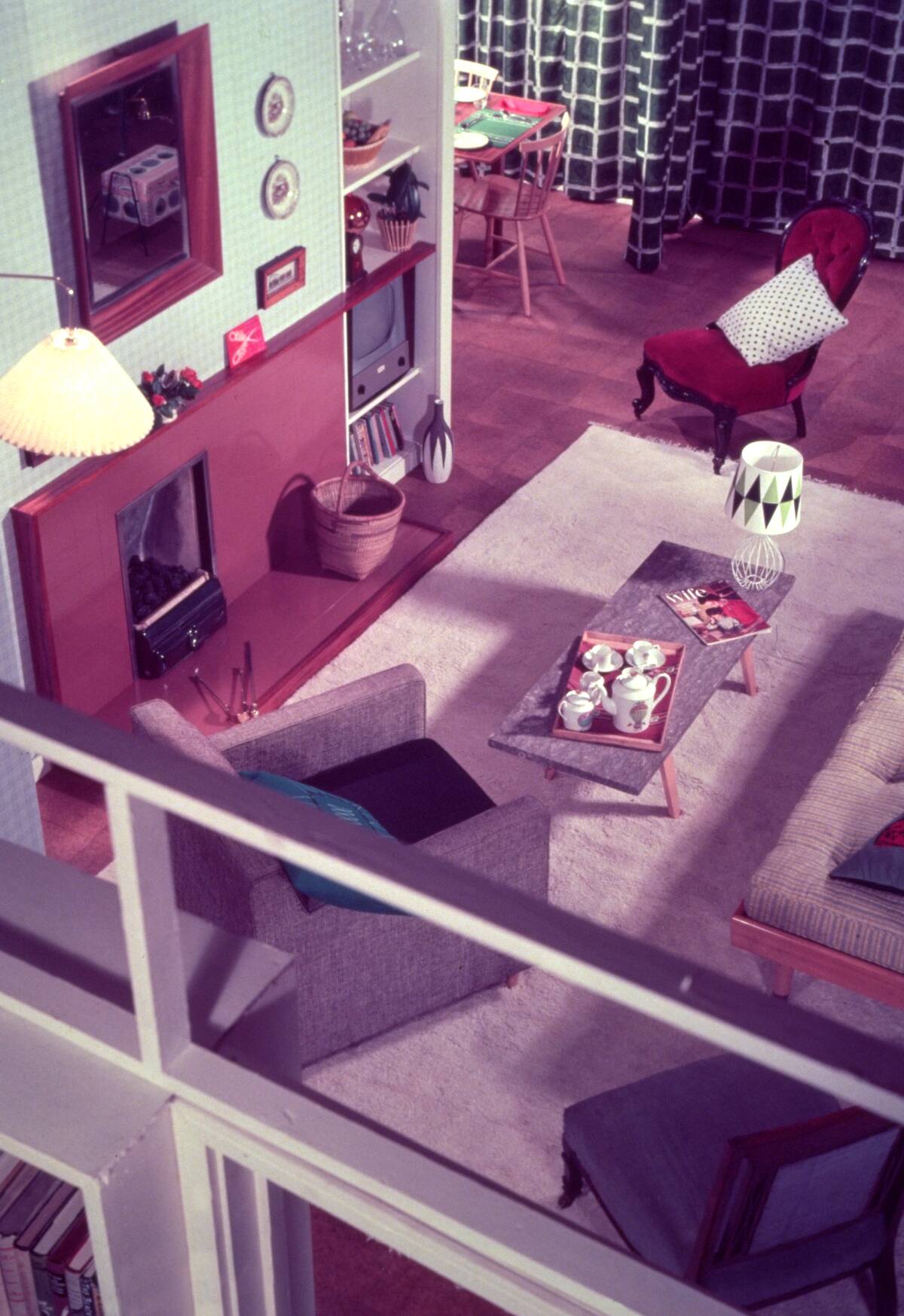
Television began to influence kitchen design in the 1950s, as families gathered to watch their favorite shows. Open floor plans became more desirable, allowing for better sightlines from the kitchen to the living room.
This shift reflected the growing importance of television as a central part of family life. Kitchens were designed to accommodate this new form of entertainment, blending functionality with a focus on social interaction and leisure.




