Photos of what childhood looked like 100 years ago
Picture roughly the 1910s–1920s, when chores and chalk dust framed most days. In 1920, the U.S. census showed—for the first time—that more Americans lived in towns and cities than on farms, yet millions of families still raised chickens, hauled water, and heated with wood or coal. By 1918, every state had compulsory schooling laws, so most kids spent at least part of the year in class.
Clothes were mended, bread was homemade, and entertainment often meant a front stoop, a fiddle, or a neighbor’s porch swing.
Money went further, but there wasn’t much of it in most pockets. A nickel bought a soda at the drugstore, and a matinee might be a dime for children in many towns. Electricity was changing home life fast—about a third of American homes had it in 1920, and roughly two-thirds by 1930—though rural families often still read by kerosene lamp. Whether in a tenement or a farmhouse, kids learned early to pitch in and make fun out of simple stuff.
Home Sweet Home: Farmhouses, Tenements, and Everything Between
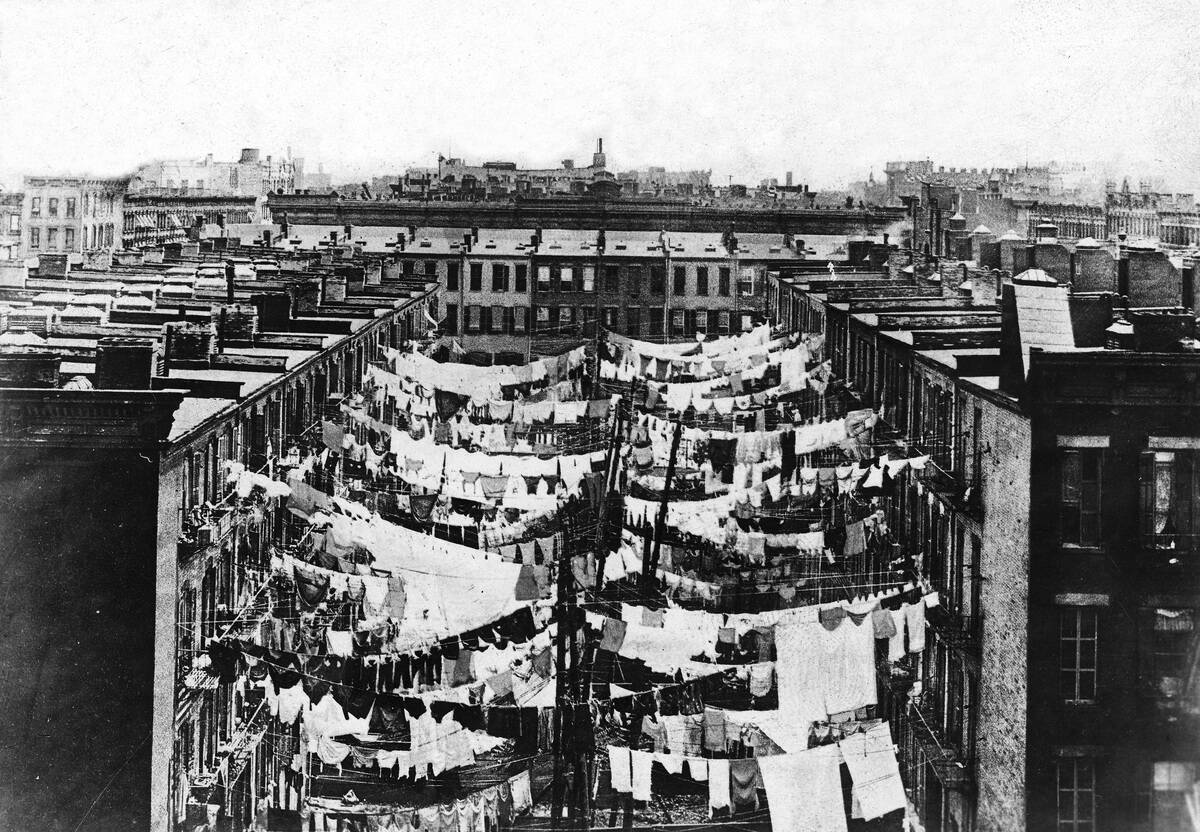
City kids squeezed into tenements where hallways echoed and windows faced air shafts. New York’s 1901 Tenement House Act pushed for better light, ventilation, and fire escapes, but many apartments still shared bathrooms down the hall and relied on coal stoves or steam radiators. In cold-water flats, a tub might sit in the kitchen, covered with a board to double as a work surface.
Reformers measured rooms with yardsticks; mothers measured pennies against rent, laundry soap, and a loaf from the corner bakery.
Country homes traded crowds for distance. Farmhouses leaned on wells, hand pumps, and windmills for water, and an outhouse for privacy. Electricity lagged: in 1930, only about 10 percent of U.S. farms were wired, so light came from kerosene lamps and heat from wood or coal stoves. Big porches, root cellars, and summer kitchens were practical features, and canning shelves gleamed with rows of Mason jars. Space was wider, but daily work—milking, kindling, and garden chores—was never far away.
Morning Routines: From Roosters to Radiators
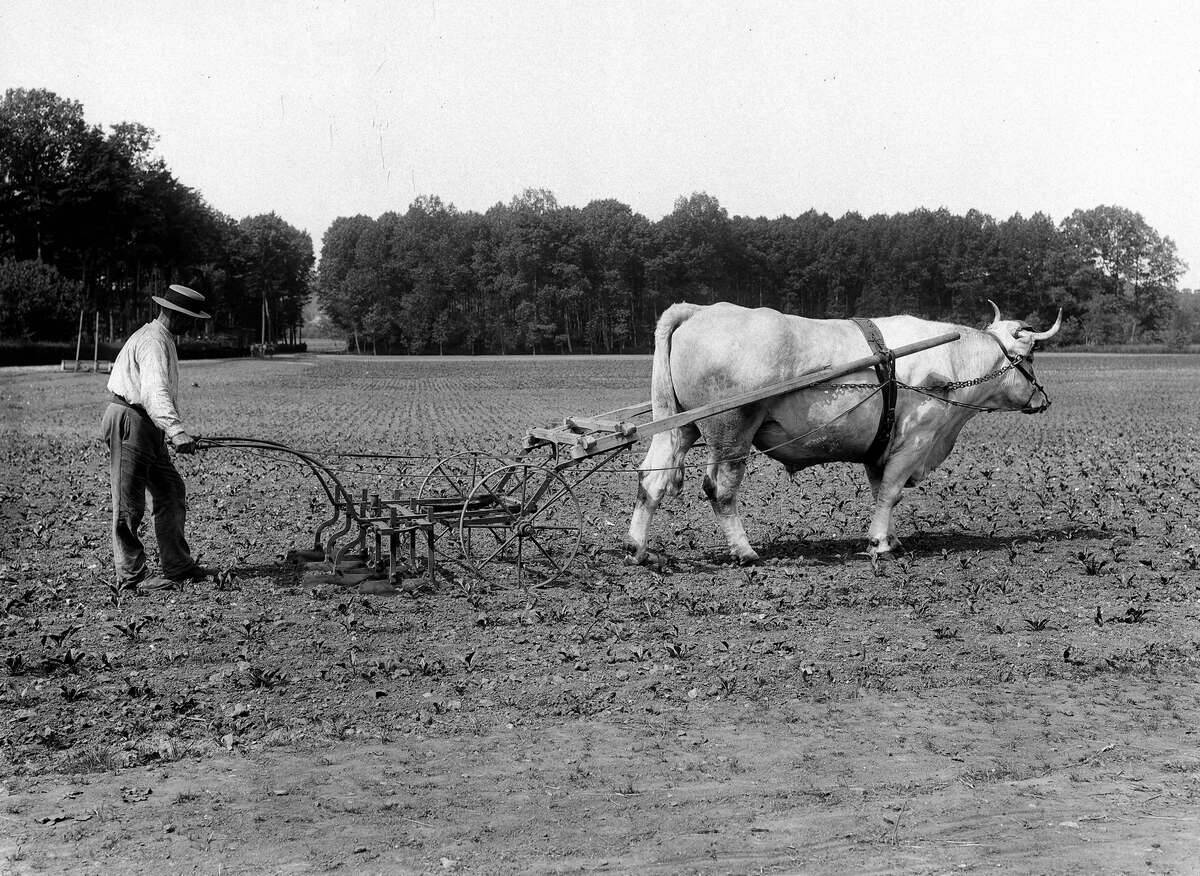
On farms, the day often started with the rooster and a chill. Kids pulled on wool socks, lit kindling, and helped milk before breakfast—cows don’t wait for school bells. Water came from a pump, carried in pails that left crescents on small hands. In winter, someone coaxed the stove to life before frost left the windowpanes. Bread, oatmeal, or fried mush hit the table fast, and a brisk walk—sometimes a mile or more—delivered sleepy scholars to a one-room schoolhouse.
City mornings sounded different: clanking radiators, a streetcar’s bell, a newsboy’s call. Heat usually came from a coal-fired boiler in the basement, with lump coal delivered down a sidewalk chute. Wind-up alarm clocks ticked reliably, and a tin basin, soap, and a stiff towel handled washing up. Breakfast might be toast and jam or eggs if they were cheap that week. With books wrapped in a strap, kids navigated stoops, corner grocers, and traffic to reach brick schools that rang their own stern bells.
What Kids Wore: Knickers, Pinafores, and Hand-Me-Downs
A century ago, a lot of boys wore knickers—baggy knee pants—paired with long stockings held up by garters and a flat cap pulled low. Sturdy lace-up shoes took the scuffs, and suspenders kept things where they should be. Girls often slipped a white pinafore over a dress to protect it from spills and slate dust, with hair tied back in ribbons. Winter meant wool sweaters and mackinaws; Sunday meant best shoes and a stern warning to keep them clean.
Clothes weren’t disposable; they were investments.
Many families sewed at a treadle Singer, following paper patterns—Simplicity started selling them in 1927—while older siblings’ clothes got let down, taken in, or patched. Socks were darned with eggs (the wooden kind), and elbows met tidy squares of fabric. Laundry day saw bluing bottles on the washstand and lines crisscrossing the yard. A new coat might come mail-order; a new hat might be the old one, re-trimmed. Fashion bent to budgets, and resourcefulness was the season’s constant.
School Days: One-Room Schoolhouses and Chalk-Dusted Fingers
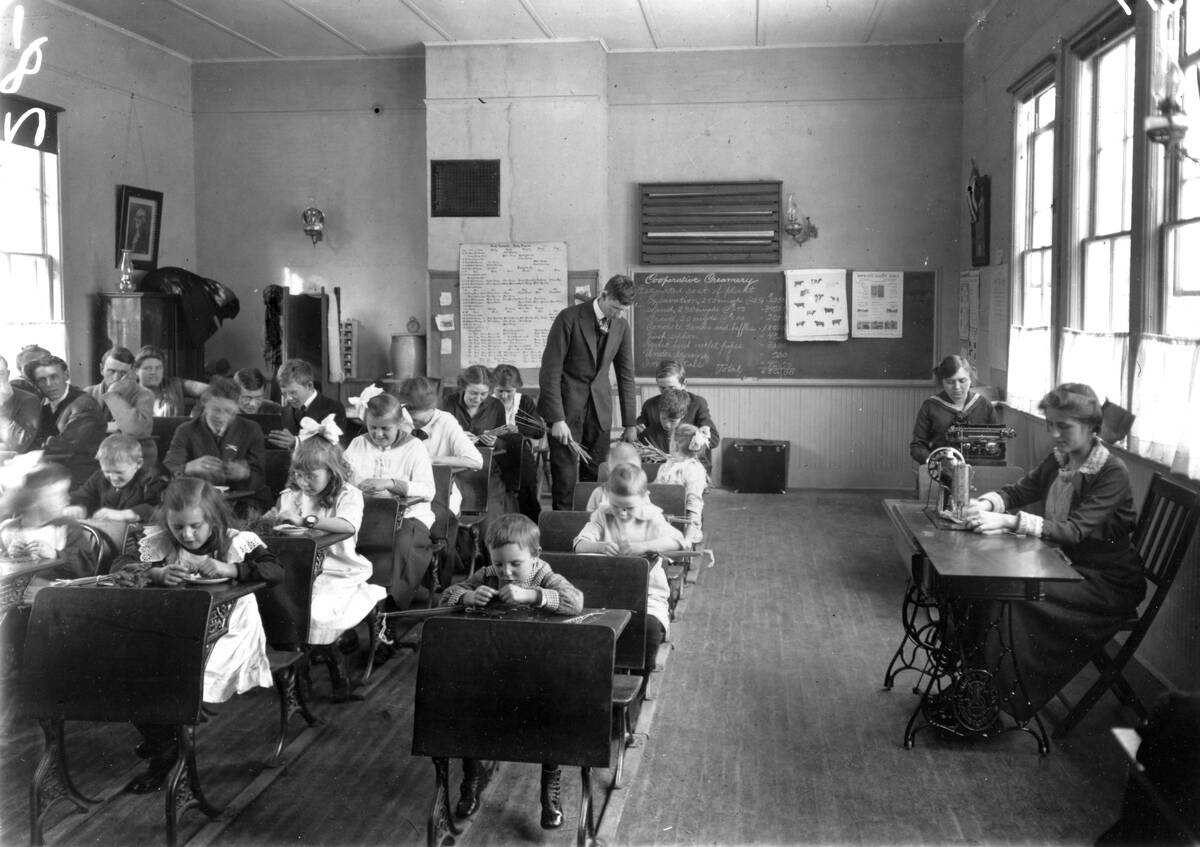
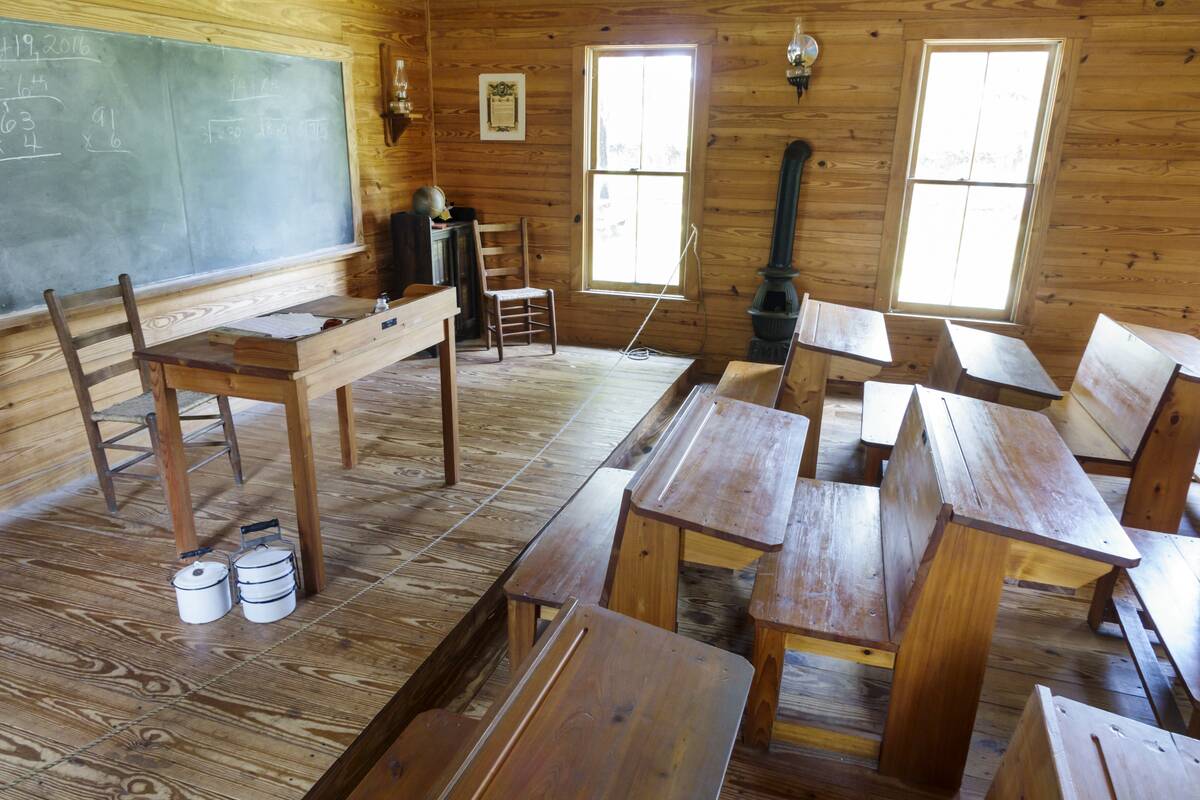
Rural schools often put eight grades under one roof. A bell on a post called everyone in, a potbelly stove crackled at the center, and a single teacher juggled phonics for first graders with fractions for eighth. A water pail and a shared dipper stood by the door—later replaced in many places by individual cups for health’s sake—and outhouses waited out back. Attendance rose and fell with harvests, but the blackboard united the room in sums, sentences, and a daily schedule.
In towns and cities, graded classrooms sorted kids by age and subject. Inkwells bored into desktops claimed their share of splatters, and long corridors lined with maps smelled faintly of chalk and oil soap. By 1918, all states had compulsory education laws, and more districts moved toward nine- or twelve-year systems. Coatrooms-held a tangle of mufflers and galoshes, and principals enforced rules with a look. From spelling lists to civics lessons, school became a steady rhythm in most children’s weeks.
Reading, Writing, and Recitation: How Learning Looked
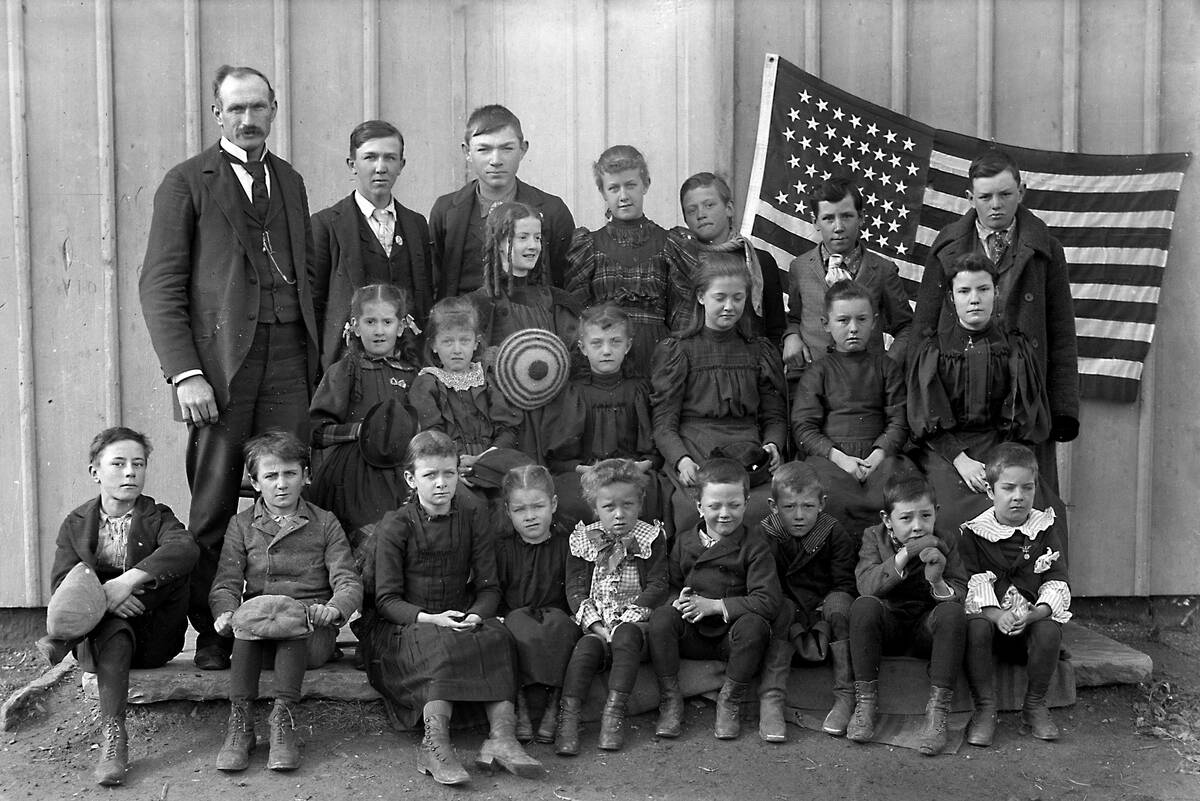
Lessons leaned on recitation: students stood, read aloud, and answered on the spot. Penmanship mattered, and the Palmer Method—smooth, muscular strokes—trained millions of wrists at slanted desks. Slate tablets saved paper for beginners; copybooks carried loops and flourishes for keeps. Arithmetic drills came rapid-fire, and the teacher’s pointer tapped time against the blackboard’s wooden frame. Memorized poems, dates, and definitions lodged in young minds beside multiplication tables and the names of rivers.
Readers varied by region.
McGuffey’s series still turned up in some rural rooms, while newer basal readers—like the Elson or Beacon series—made steady inroads. Geography unfurled on pull-down wall maps, and spelling bees filled Friday afternoons with friendly rivalry. Many schools began the day with the Pledge of Allegiance, which had entered classrooms decades earlier, and patriotic songs stayed popular after 1918. Science kits were modest, but simple experiments—seed sprouts in jars, litmus papers, magnets—brought a little laboratory magic to wooden desks.
Recess and Street Games: Marbles, Jacks, and Hoop Rolling
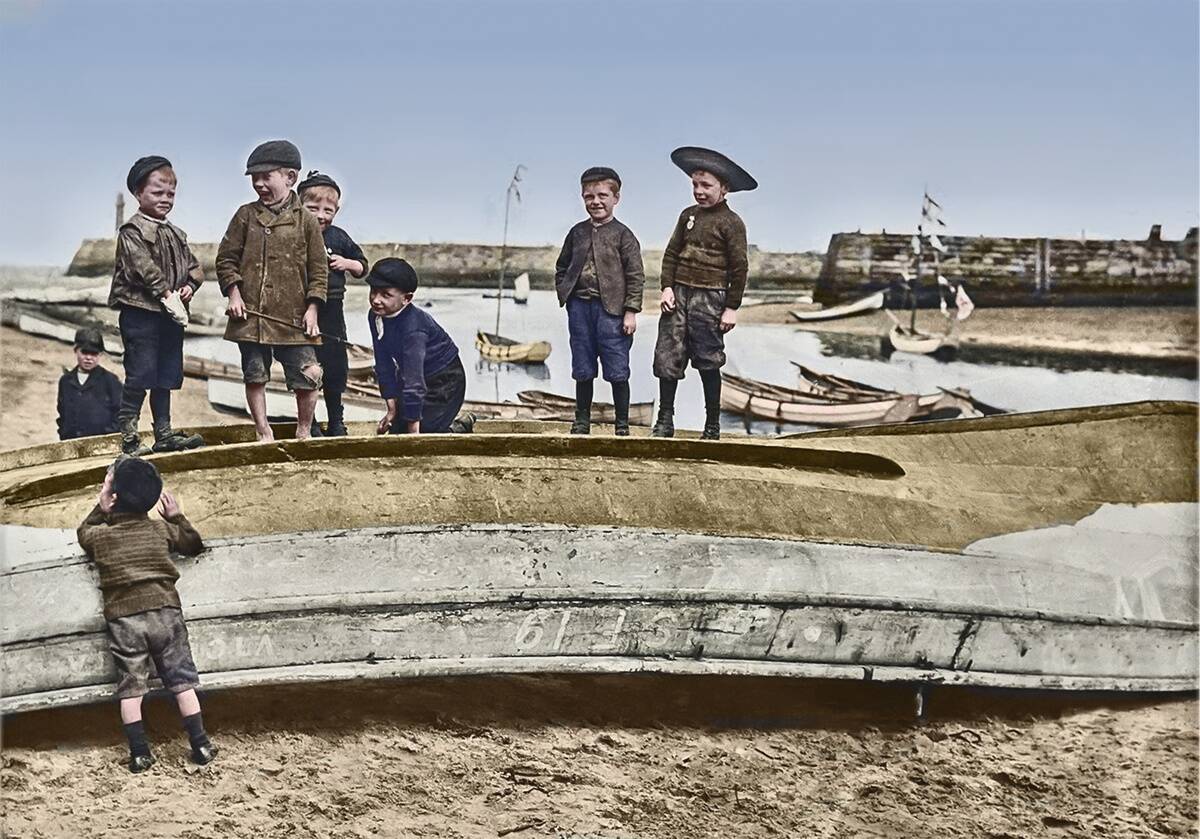
When the bell released them, kids spilled into dirt yards and cobbled streets with pockets jingling. Marbles meant circles chalked on the ground; in Ringer, you knuckled down and shot to knock opponents’ glassies from the ring—sometimes for keepsies. Jacks (jackstones) bounced between palm and small rubber ball, and hopscotch ladders scuffed up sidewalks. Hoop rolling—chasing a metal or wooden hoop with a stick—turned balance and speed into pure bragging rights.
Play followed the seasons. Winter brought sleds—Flexible Flyers for the lucky—and snow fort skirmishes. In crowded neighborhoods, stickball turned a broom handle and a pink rubber ball into a field of dreams, with manhole covers for bases. Clamp-on roller skates tightened with a metal key rattled over cracks, and jump ropes slapped out rhymes in time. A ball of string, a pocketknife for whittling, or a found box could fuel an afternoon. Imagination did the heavy lifting, with very little price tag.
Toys and Treasures: Tin Soldiers, Rag Dolls, and Catalog Dreams
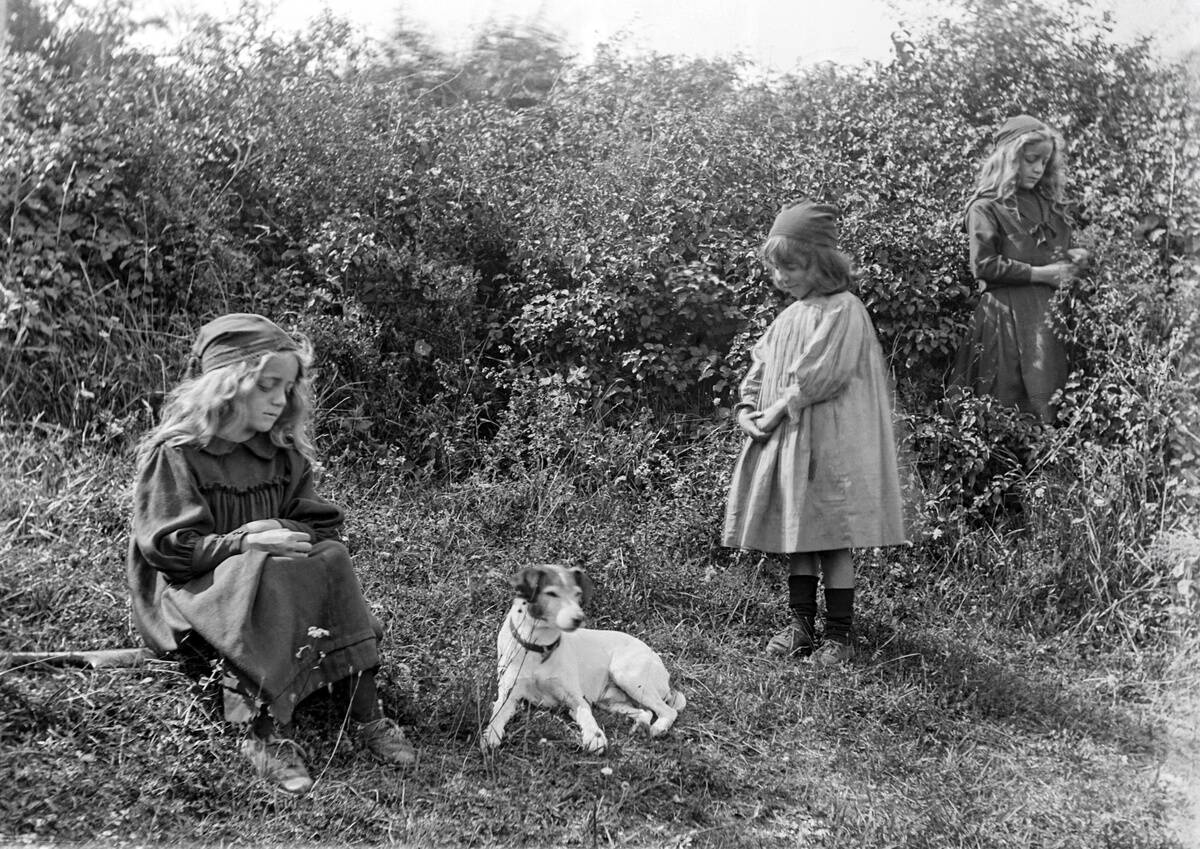
Toy chests had fewer batteries and more tin. Britains made glossy tin soldiers that marched across rugs, while home-sewn rag dolls survived love and laundering. Raggedy Ann, introduced in the 1910s, gained devoted friends fast. Builders begged for an Erector Set (launched 1913 by A. C. Gilbert) or Tinkertoy (1914) to raise bridges on the parlor floor, and Lionel electric trains—circling a loop beneath the tree—turned holidays into whistle-tooting spectacles.
The thick Sears, Roebuck and Montgomery Ward catalogs doubled as wish books and doorstops. Parcel Post’s 1913 debut made mail-order magic reach even remote farms, and kids circled pages for birthdays as carefully as accountants tally ledgers. A “new” toy might arrive secondhand from a cousin; a homemade slingshot or corn-husk doll cost time instead of dollars. Banks pitched Christmas Club accounts for saving dimes. The treasure wasn’t always big: a kaleidoscope, a top, or a fresh pack of crayons felt like a parade in a box.
Entertainment Hour: Radio Dramas, Silent Films, and Nickel Treats
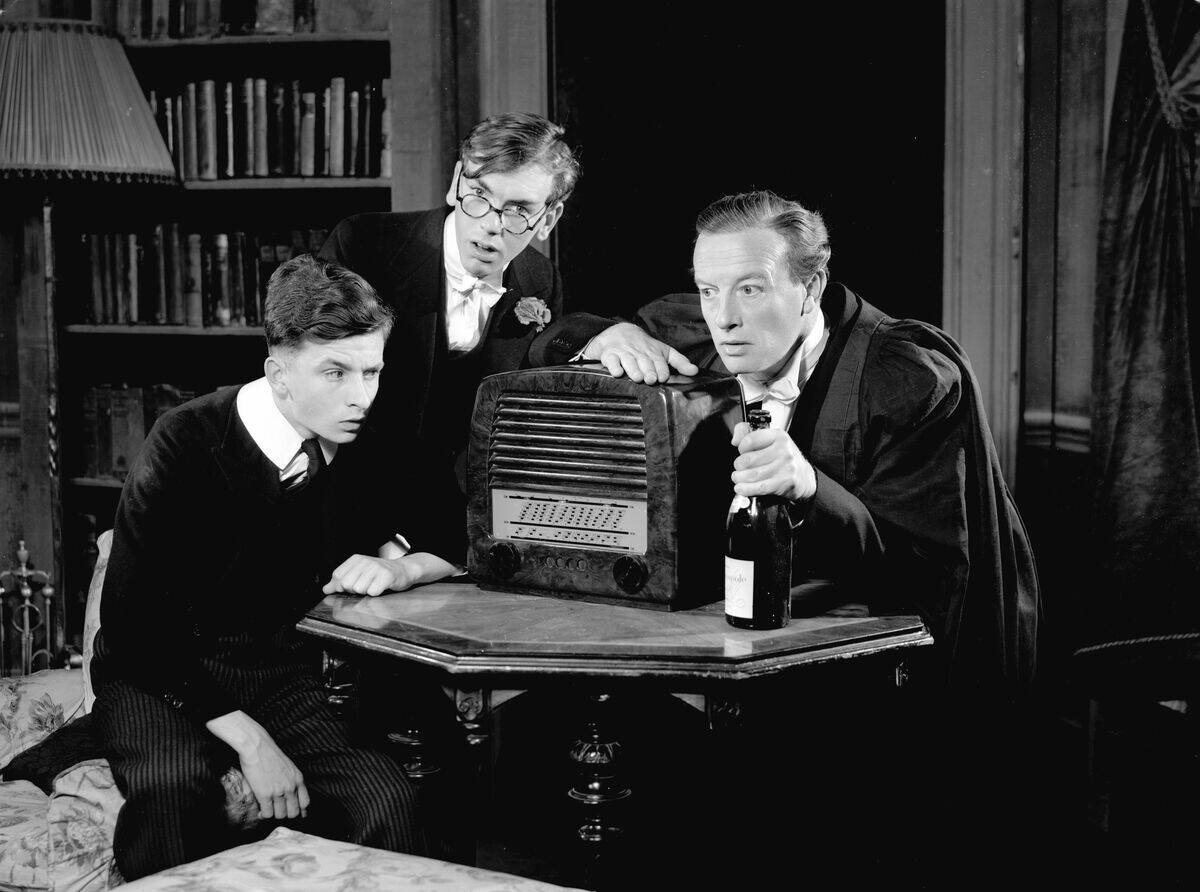
Radio arrived like lightning in a box. Pittsburgh’s KDKA went on the air in 1920, and kids with crystal sets learned to tune a cat’s-whisker detector until voices leapt from headphones. By 1930, roughly four in ten U.S. households owned a radio, and families gathered for music, sports, and variety hours; the World Series hit the airwaves in 1921. A good antenna strung to a rooftop, a glowing dial, and a hush in the parlor—suddenly the wider world lived at home.
Movies offered another doorway.
Chaplin, Keaton, and Harold Lloyd turned silent pratfalls into belly laughs, and Saturday matinees rolled newsreels, cartoons, and a feature for a few coins. The Jazz Singer in 1927 ushered in talkies, and picture palaces replaced earlier nickelodeons with velvet seats and Wurlitzer organs. Afterward, a nickel might buy a striped candy stick or a soda at the drugstore fountain. Show times and sugar—two words guaranteed to brighten a week.
Chores O’Clock: Water Pails, Washboards, and Wood Stoves
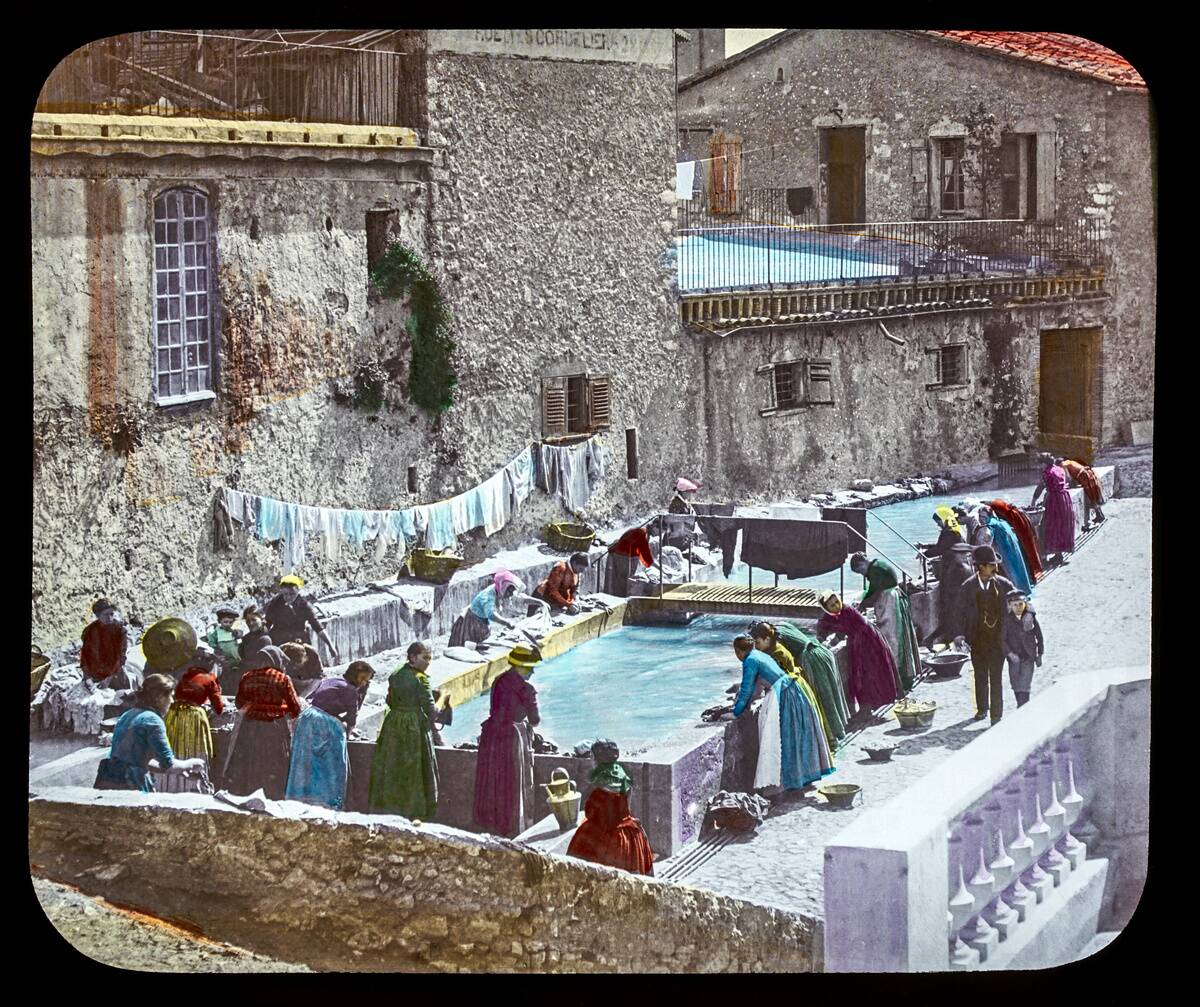
Work clocked in early. If a house lacked indoor plumbing, someone toted water from a pump and kept a kettle simmering on the stove for dishpans and baths. Coal bins needed shoveling and scuttles filled; ashes had to be carried outside before the next fire. Kindling was split, lamps were trimmed, and stove lids lifted with a blackened tool that left crescents on palms. Even in town, steps, stoops, and sidewalks got swept before play.
Laundry day was a production.
Clothes soaked in a tub with lye or a popular laundry soap, then faced a corrugated washboard and a strong pair of hands. A wringer squeezed out water; lines stretched from porch to post in tidy sailboats of shirts. Irons heated on the stove, set upright like little anvils between passes. In summer, the iceman’s tongs clamped 25- or 50-pound blocks for the icebox; families propped a card in the window to signal how much to deliver.
What’s for Dinner: Garden Veggies, Lunch Pails, and Soda Fountains
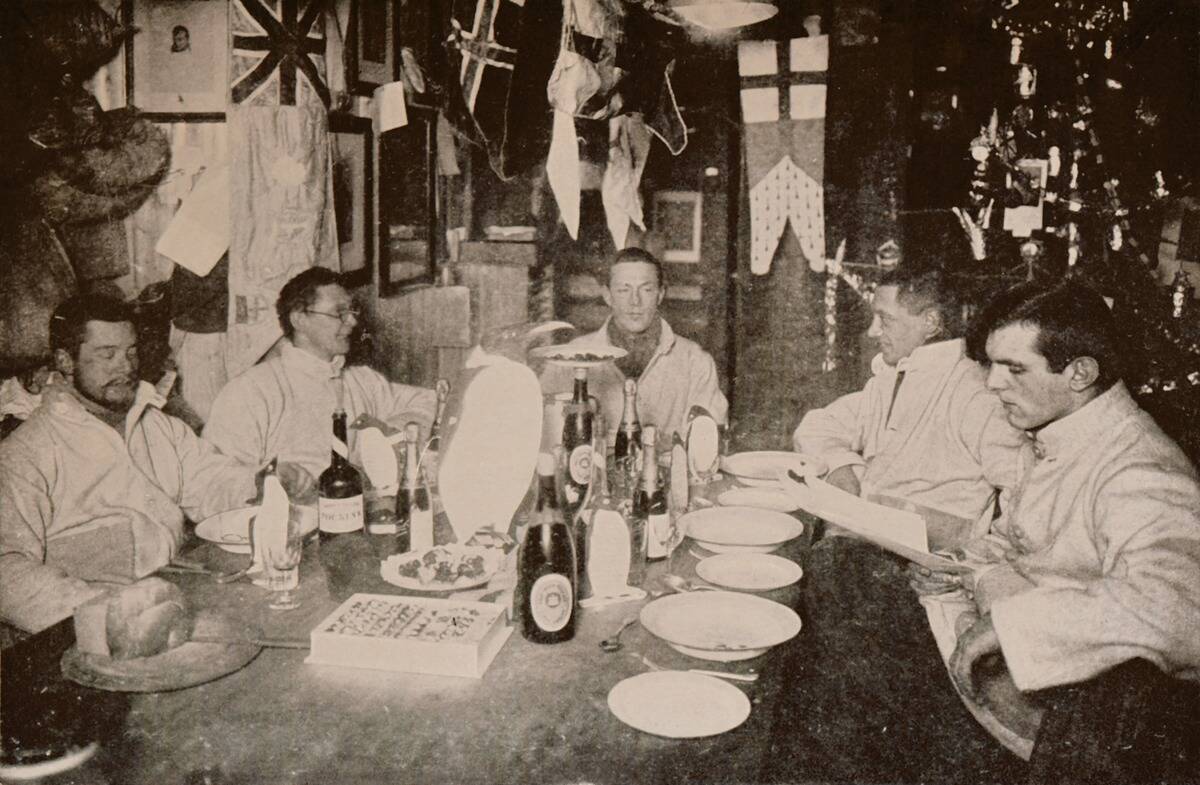
Kitchen calendars were seasonal. Gardens yielded beans, beets, and carrots that moved to jars under paraffin or zinc lids; Ball made them by the box. Potatoes and cabbages kept in root cellars, and Sunday might mean a roast chicken if times were good. Breakfasts leaned on oatmeal, cornmeal mush, or biscuits with gravy. School lunches rode in tin pails or waxed paper: thick bread with butter or peanut butter, a hard-boiled egg, maybe an apple, and a thermos if you were lucky.
Sweets and sips clustered at the drugstore fountain. Coca‑Cola famously stayed a five‑cent treat well into mid‑century, and phosphates, cherry syrups, and malted milks foamed in tall glasses. Milk showed up in clinking bottles on the doorstep, cream glinting at the neck, and ice cream socials raised church funds and spirits alike. Public school lunch experiments—in places like Boston and Philadelphia—had begun decades earlier and spread in the 1910s–1920s, serving simple hot meals when pennies and time ran short at home.
Getting Around: Walking Shoes, Streetcars, and Hand-Me-Down Bikes
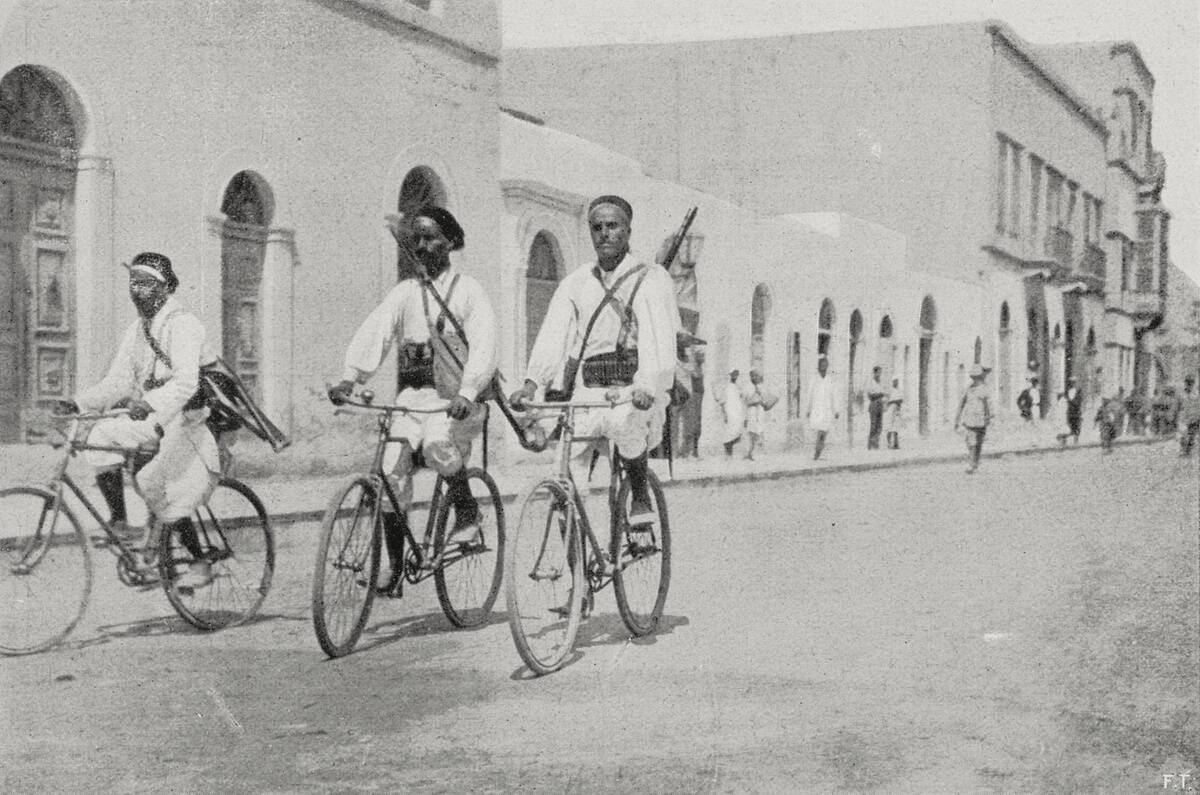
Feet did the heavy lifting. Many kids walked to school, to the grocer, and to the library, measuring distance by the number of front stoops passed. In cities, streetcars stitched neighborhoods together. For a few cents and a paper transfer, kids clanged across town on wooden seats, dodging the conductor’s eye if they tried to hop on late. Open-platform cars were fading but not gone, and safety patrols and stern parents preached the gospel of looking both ways.
Bicycles were freedom on two wheels.
Coaster brakes and chain guards kept Sunday clothes safer, and hand-me-down frames wore new life under fresh oil and a patched inner tube. Small repair kits—vulcanizing rubber with a match and a tin—rescued many a ride. In the country, horse-drawn wagons and winter sleighs still lingered beside the rising hum of Model Ts on dusty roads. Whether pedaling, walking, or taking the trolley, a kid learned the city map by heart the hard and happy way.
Work and Pocket Money: Newsboys, Errands, and Allowances
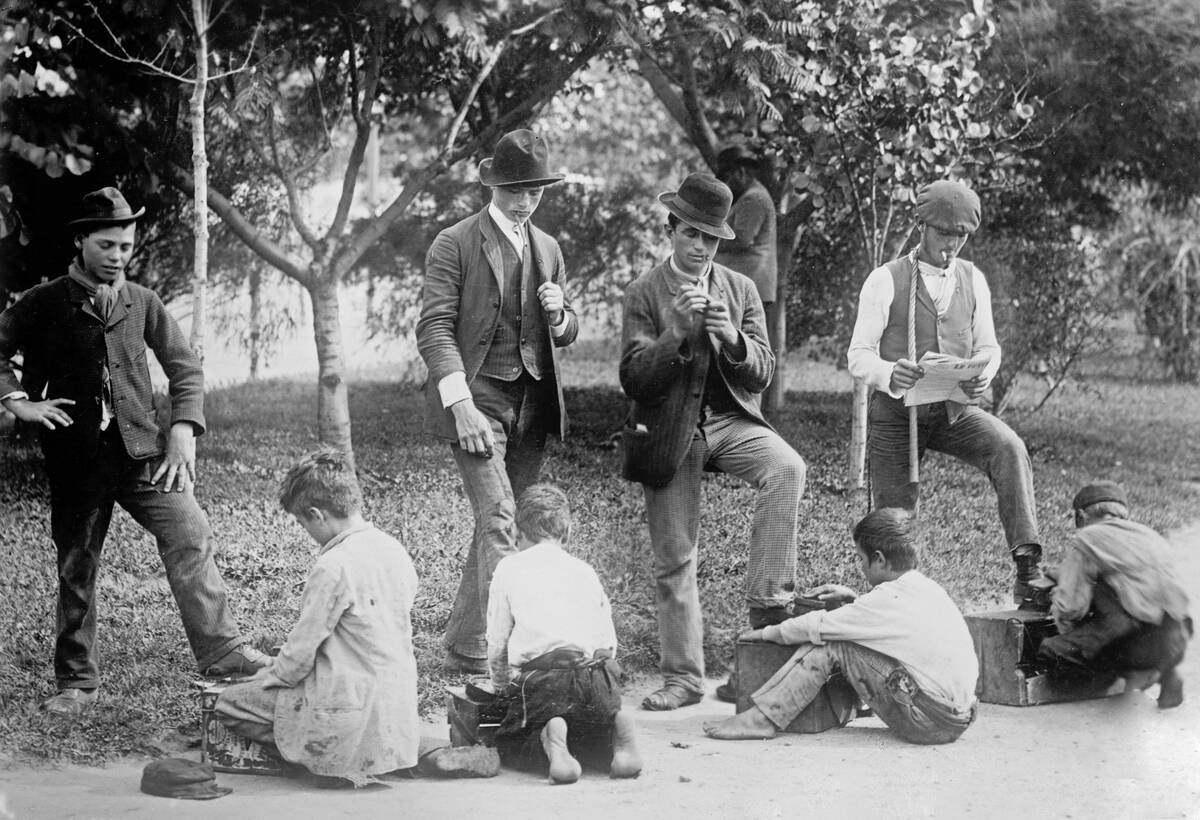
Jobs sized themselves to small hands. Newsboys—or kids with paper routes in quieter towns—rose early or hustled after school, shouting headlines and counting change. Grocers paid for errands, shoeshine stands lined busy corners, and farm kids earned coins by gathering eggs or thinning rows. Child labor hadn’t vanished: in 1910, about 18 percent of American children ages 10 to 15 were in the labor force, though laws and schooling requirements were steadily tightening the rules.
Pay was modest but meaningful. Pennies and nickels added up to marbles, a movie, or a soda.
Some children sold seeds or magazines door to door, while others delivered the weekly Grit newspaper. School savings banks and Christmas Club accounts encouraged tucking coins away, and ledgers practiced arithmetic as much as thrift. Allowances, when they existed, often came with a chore chart and a stern lecture. Money taught quick math, careful fingers, and a sense that small efforts stacked into treats.
Manners and House Rules: “Yes, Ma’am” and Early Bedtimes
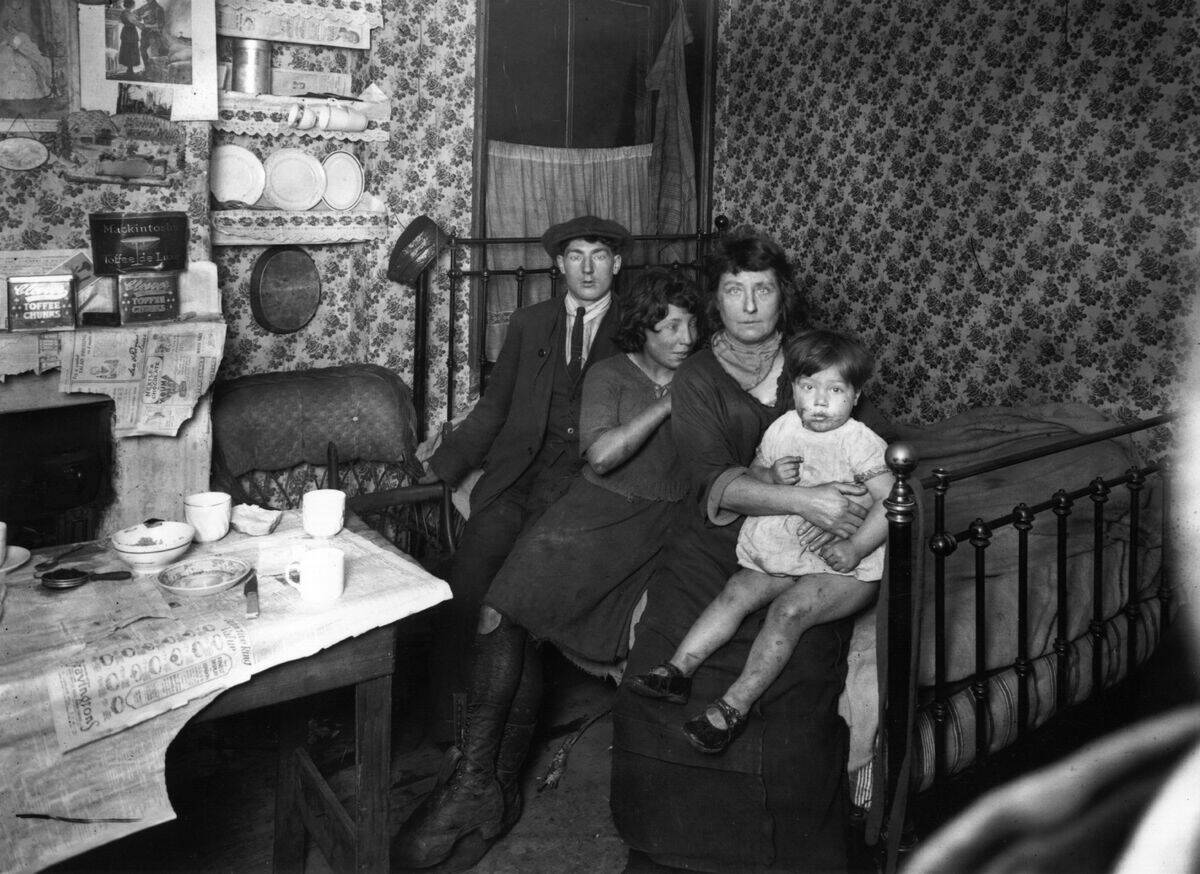
Politeness was a daily drill. Kids addressed adults as Mr., Mrs., or Miss, answered yes, ma’am and yes, sir, and rose when visitors entered the room. Elbows off the table, napkin in lap, and no interrupting—every meal doubled as an etiquette class. Sunday best wasn’t just for church; it was for showing respect. Thank-you notes followed gifts, and parents expected a firm handshake, a straight back, and a quiet voice in company.
Rules enforced rhythms. Curfews clicked on with the streetlights, and play usually waited until chores were done. Emily Post’s 1922 Etiquette became a bestseller, signaling how much families cared about proper conduct. In many homes, bedtime skewed early, especially where kerosene lamps and coal budgets discouraged late nights. Households ran on routine: shoes polished on Saturday, hair ribbons pressed, and stories swapped from the porch swing before someone called lights out and meant it.
Health and Home Remedies: Cod Liver Oil and Country Doctors
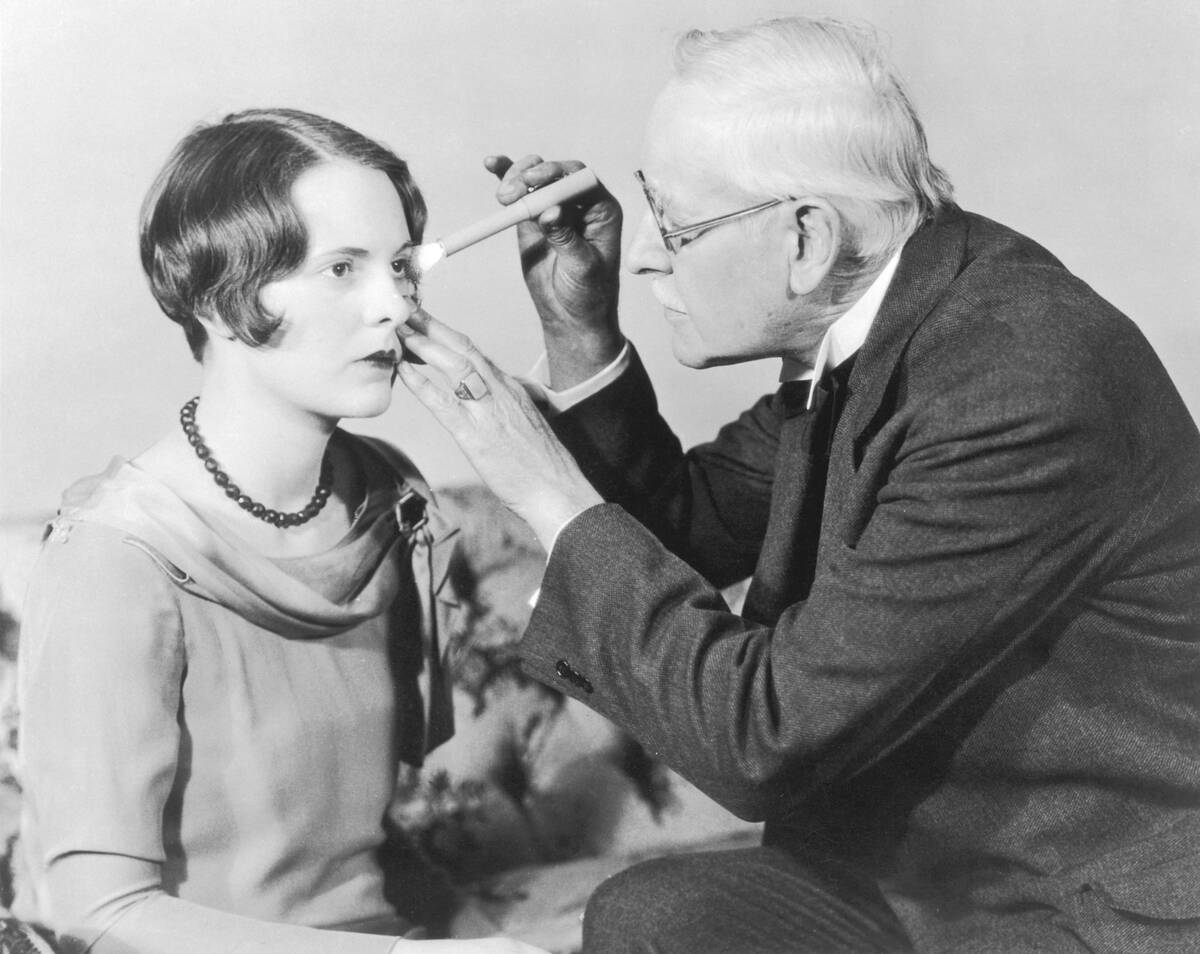
Medicine cabinets mixed science and tradition. A daily spoon of cod liver oil—rich in vitamin D—was the armor against rickets, especially in sooty cities. Country doctors made house calls by buggy or, later, by rattling car, and families sometimes paid in eggs or firewood. Smallpox vaccination was widespread, and a diphtheria toxoid introduced in the 1920s saved countless children.
School nurses checked eyes, ears, and scalps, catching troubles before they knocked weeks out of class.
For colds and coughs, Vicks VapoRub and mustard plasters scented bedrooms, while menthol lozenges and honey-lemon teas soothed sore throats. Epsom salts eased aches; castor oil promised to clear out more than attitudes. The 1916 polio epidemic haunted many parents, and fresh air—open windows and sun on the skin—was a common prescription. Some cities opened free clinics and dental chairs for kids, and convalescence meant quiet, a quilt, and a stack of well-thumbed library books.
Holidays and Hometown Fun: Fairs, Parades, and Porch Parties
County fairs turned hard work into banners and blue ribbons. 4‑H clubs, which took off in the 1910s, showcased calves, canning, and clever handicrafts. On the midway, a Ferris wheel traced slow circles while brass bands sawed through Sousa marches. Parades filled Main Street on the Fourth of July and Armistice Day, with veterans saluted and ice cream dripping in the heat.
A dime could buy a ride, a ribbon candy stick, or a try at the ring toss.
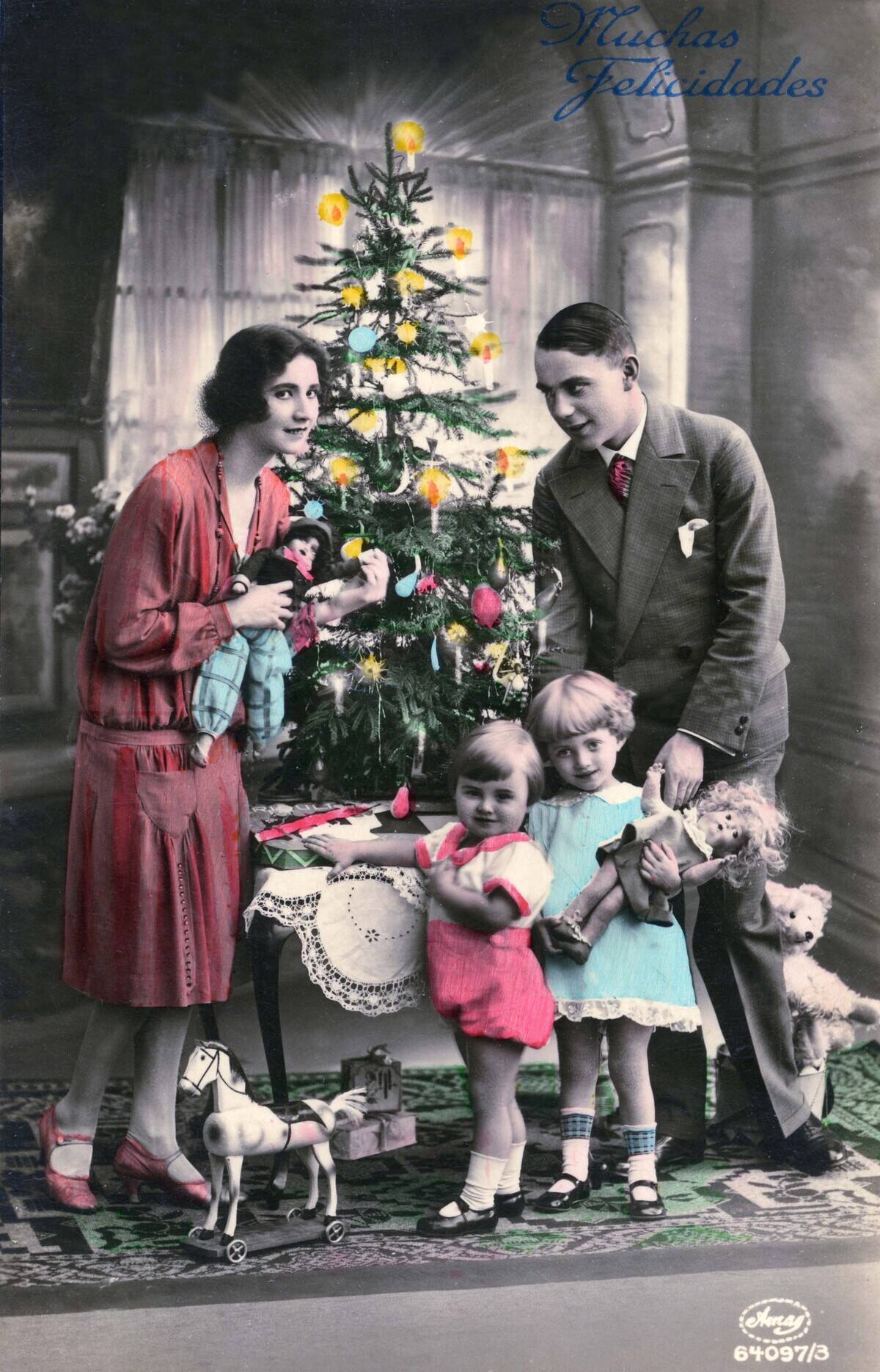
Home put on its own show. Porch parties cooled summer nights with hand‑cranked ice cream, while neighbors traded cakes and strong opinions. Halloween leaned prankish: soap on windows, gates lifted and hidden, squeaky hinges tied shut. Christmas trees glowed first with candles—carefully watched—then with early electric strings that spread quickly in cities by the 1920s. Carolers swapped harmonies for hot cocoa, and churches staged pageants where shepherds wore bathrobes and remembered their lines mostly in the nick of time.
Sports and Playgrounds: Sandlot Baseball and Skipping Ropes
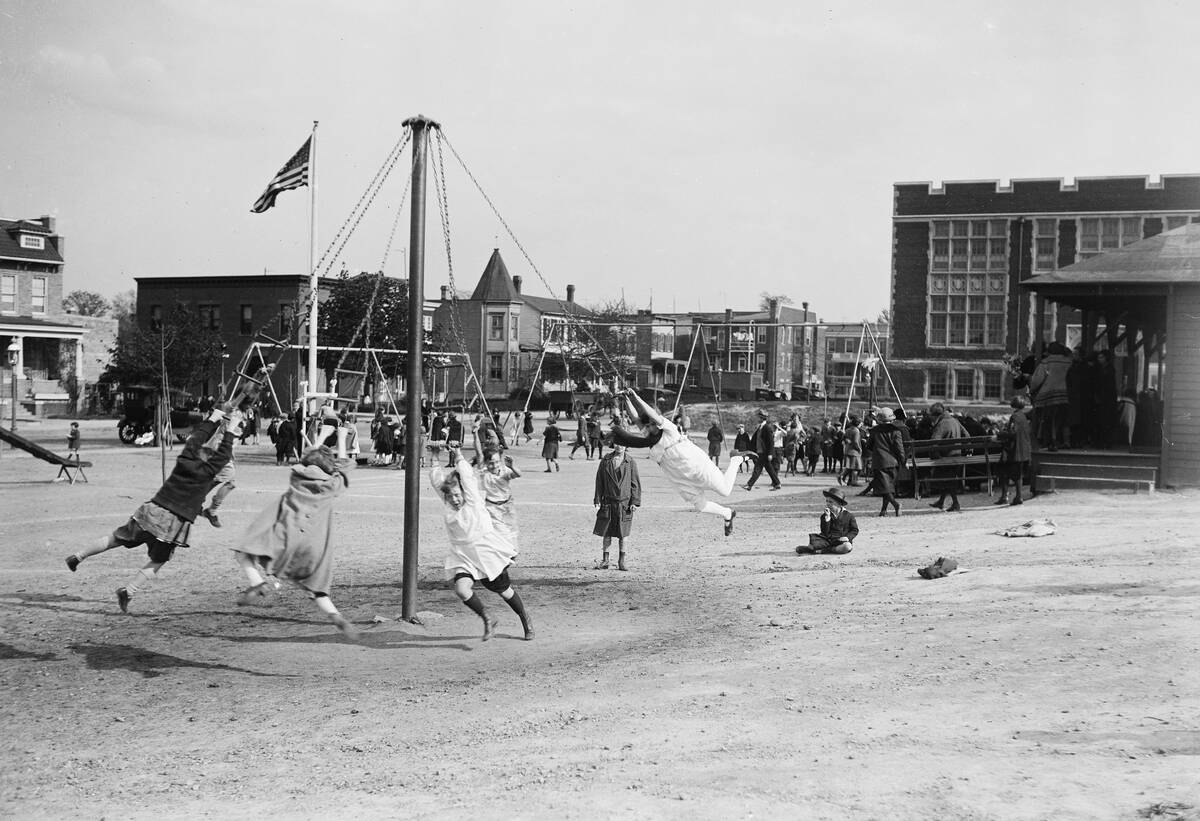
Sandlots taught teamwork long before uniforms. With a taped-up ball and a catcher’s mitt that had seen better days, kids played to Spalding’s printed rules or whatever the block agreed upon. Babe Ruth’s home runs turned a generation into fence-watchers, and radios carried big-game drama to stoops and barns. In tight city grids, stickball set sewer plates as bases and argued fair or foul with more passion than any umpire.
The playground movement reshaped cities.
The Playground Association of America formed in 1906, and by the 1920s, metal slides, see‑saws, and swings anchored many parks. Gym classes drilled calisthenics; girls’ basketball—sometimes played on half courts by local rule—had spirited followings. Jump ropes snapped out double-dutch rhythms, while school fields hosted track days with sack races and broad jumps. YMCA leagues, church basements, and settlement houses ran clubs where whistles, not wallets, organized the fun.
Tech of the Times: Iceboxes, Party Lines, and the Magic of Electricity
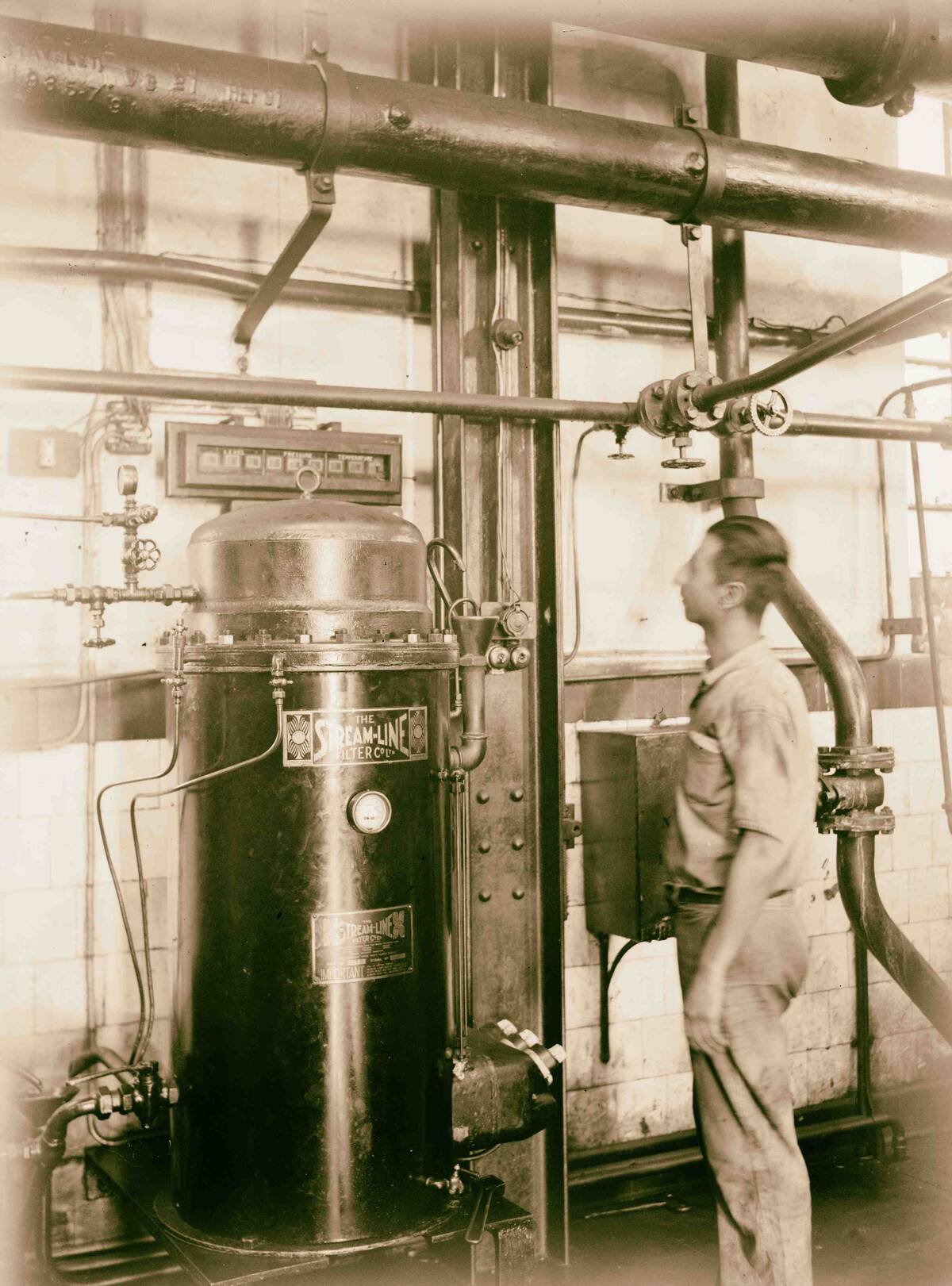
Before humming refrigerators, iceboxes ruled the kitchen corner. The iceman hefted tongs, shouldered 25‑ to 100‑pound blocks, and slid them under burlap; meltwater dripped into a pan that kids remembered—usually after it overflowed. Telephones often shared party lines, each household listening for its distinct ring pattern. Good manners said don’t pick up during a neighbor’s call, though gossip had a way of crossing wires. In small exchanges, you turned a crank and asked the operator to connect you by name.
Electricity felt like wizardry. Incandescent bulbs shoved back the shadows, and plug‑in toasters, irons, and percolators crept into middle‑class kitchens. Crystal radio kits let tinkerers pull music from thin air, and 1920’s KDKA broadcast made the medium feel official. Still, many rural families relied on kerosene lamps into the 1930s, waiting for wiring to reach the fenceline. Between gaslight’s fade and radio’s rise, kids saw technology redraw the map of home, one switch and socket at a time.
Different Childhoods: City vs. Country, Girls vs. Boys, and Who Got What
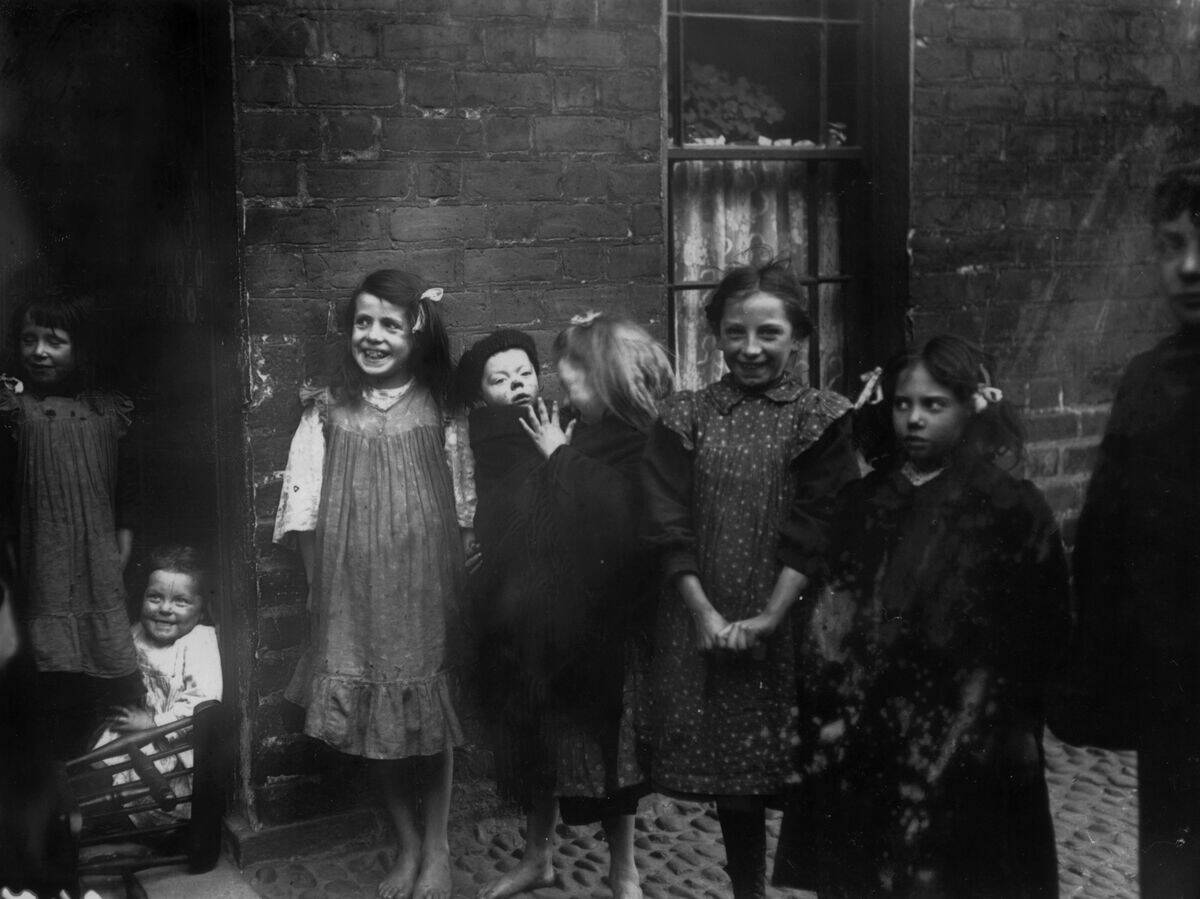
Where you lived shaped your day. City kids threaded crowds, learned streetcar routes, and dodged pushcarts, while country kids walked long roads and counted weather as a classmate. Immigrant neighborhoods layered languages—Yiddish, Italian, Polish—over English, and settlement houses like Chicago’s Hull House offered clubs, classes, and playgrounds. The Great Migration (roughly 1916–1930) brought hundreds of thousands of African American families north, reshaping schools, churches, and music scenes from Chicago to Harlem.
Expectations split by gender and by law. Girls often took domestic science—sewing, cooking—while boys got manual training and shop. Under Jim Crow, Black children in the South faced segregated, underfunded schools, and many Mexican American and Native children encountered separate or unequal classrooms elsewhere. Farm work pulled kids out during planting and harvest; city wages tugged some toward factory or street jobs. Opportunity wasn’t even, but resilience and resourcefulness threaded through childhoods in every zip code’s earlier self.
Big Events in Small Shoes: Prohibition, Boom Times, and Hard Times Through Kids’ Eyes
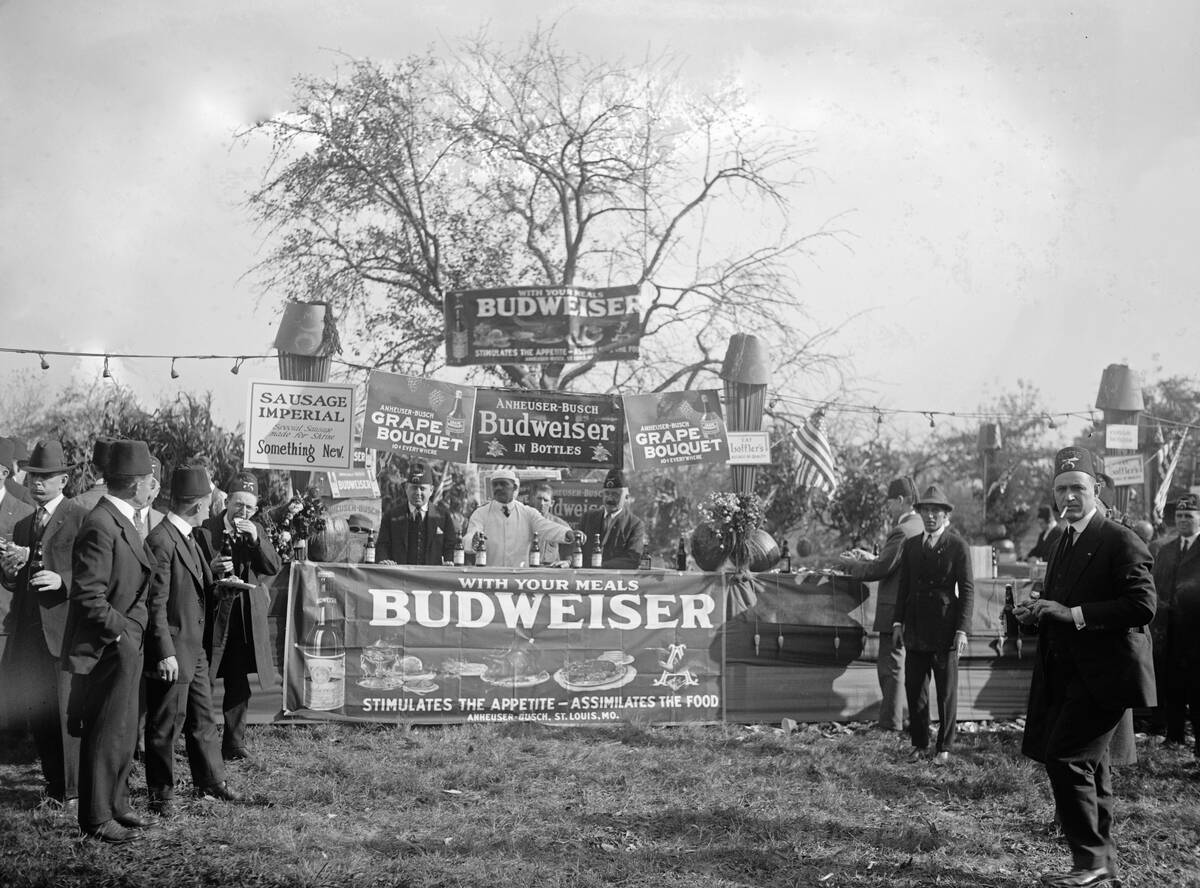
In 1920, the Eighteenth Amendment made alcohol illegal nationwide, closing saloons and pushing soda fountains and candy shops into the social spotlight. Kids saw temperance posters, heard about raids in the papers, and learned to read the word speakeasy without ever stepping inside. Debates ran hot in barber chairs and church pews until 1933, when the Twenty‑First Amendment repealed Prohibition and toasts—root beer for the youngsters—returned to public life.
The 1920s roared with heroes and hardware: radios multiplied, cars crowded streets, and Charles Lindbergh’s 1927 Atlantic flight turned schoolyards into runways of imagination. Then came October 1929. As the economy faltered, soup lines lengthened and piggy banks grew quiet. Families patched clothes, shared rooms, and sometimes sent older kids to work. Dust storms in the 1930s pushed farm families to move, and free libraries and a ten‑cent matinee became bright refuges. Through it all, kids kept whittling joy from slim means.