23 unexpected friendships between historic figures
History books love dates and battles, but friendships are where the people jump off the page. Put a droll humorist next to a lightning-flinging inventor, or a monarch beside a low-ranking clerk, and suddenly the past feels like a chatty group text. These unexpected pairings swapped letters, advice, and sometimes couches, reshaping art, science, and politics along the way. We’ve got 24 duos here, proof that chemistry isn’t just for laboratories—it’s for salons, pubs, palaces, and very persistent pen pals.
What makes these bonds irresistible is how ordinary rituals—midnight visits, long walks, shared manuscripts—end up nudging world-changing ideas. A cozy pub becomes a launchpad for epic fantasy; a White House dinner turns into a night flight; a villa guestroom becomes a cautionary tale about overstaying. Across languages and continents, these friends debated, dared, defended, and occasionally drove each other a little nuts. The footnotes are funny, the stakes are serious, and the humanity is everywhere.
Mark Twain and Nikola Tesla: midnight lab demos and coil-powered punchlines
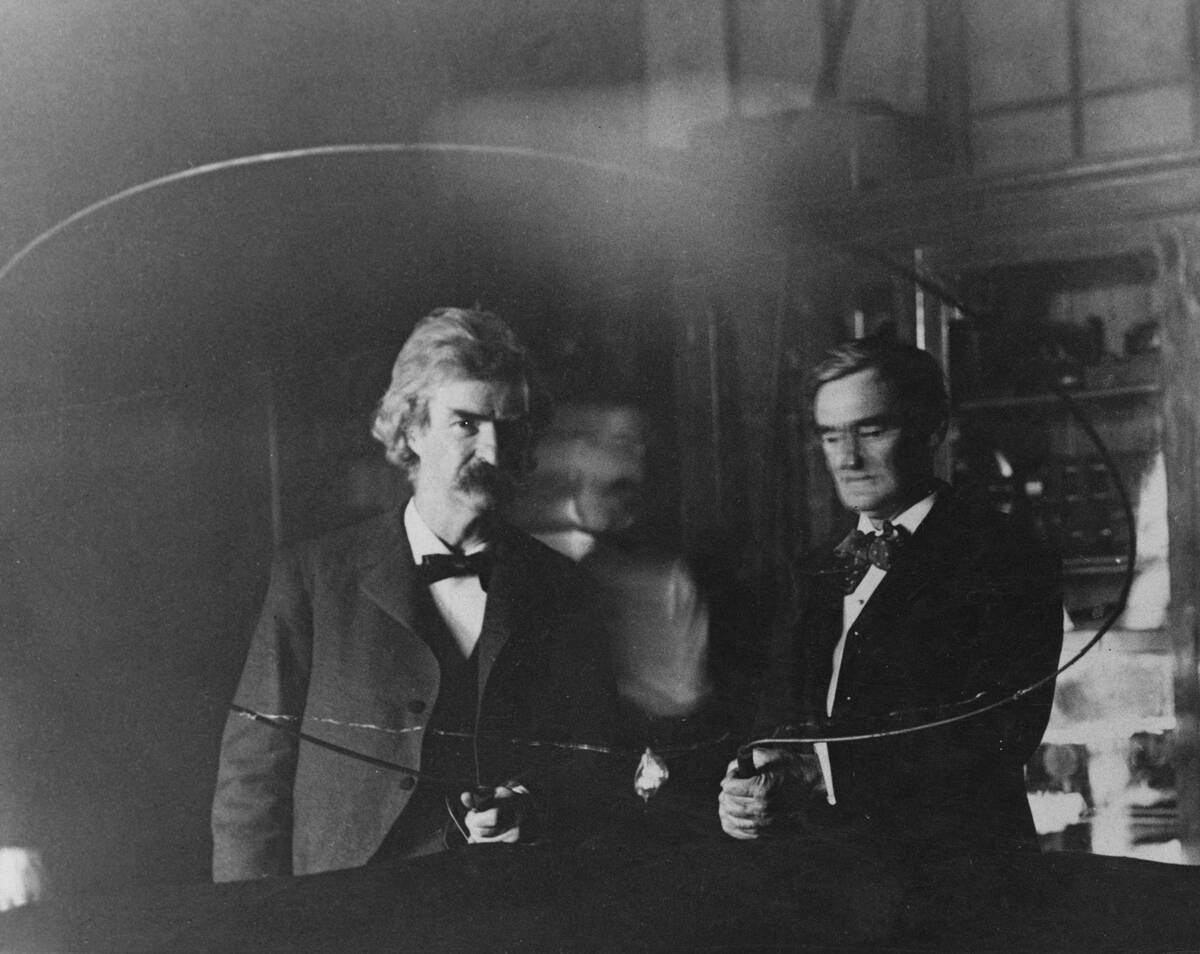
Gilded Age New York had its own after-hours show, and it wasn’t on Broadway—it was in Nikola Tesla’s lab. There, Mark Twain turned up for midnight demonstrations, gleefully posing for 1894 photographs while holding vacuum tubes that glowed by induction from Tesla’s high-frequency currents. Twain, a tech-curious celebrity, marveled as Tesla’s devices lit lamps wirelessly and crackled with blue-white sparks. Their friendship made for great copy: the era’s sharpest wit bantering with the man who basically invented party tricks with physics.
Legend elbows in, too.
Later recollections from Tesla’s circle claim Twain tried Tesla’s mechanical oscillator, a vibrating platform supposed to be therapeutic, only to discover it had, ahem, brisk effects on digestion. True or not, both men admired each other’s craft: Tesla loved literature and showmanship; Twain loved gadgets and modern spectacle. They kept swapping visits and quips, a reminder that science and satire spark even brighter when they share the same socket.
Queen Victoria and Abdul Karim: the monarch and the munshi who shocked the palace
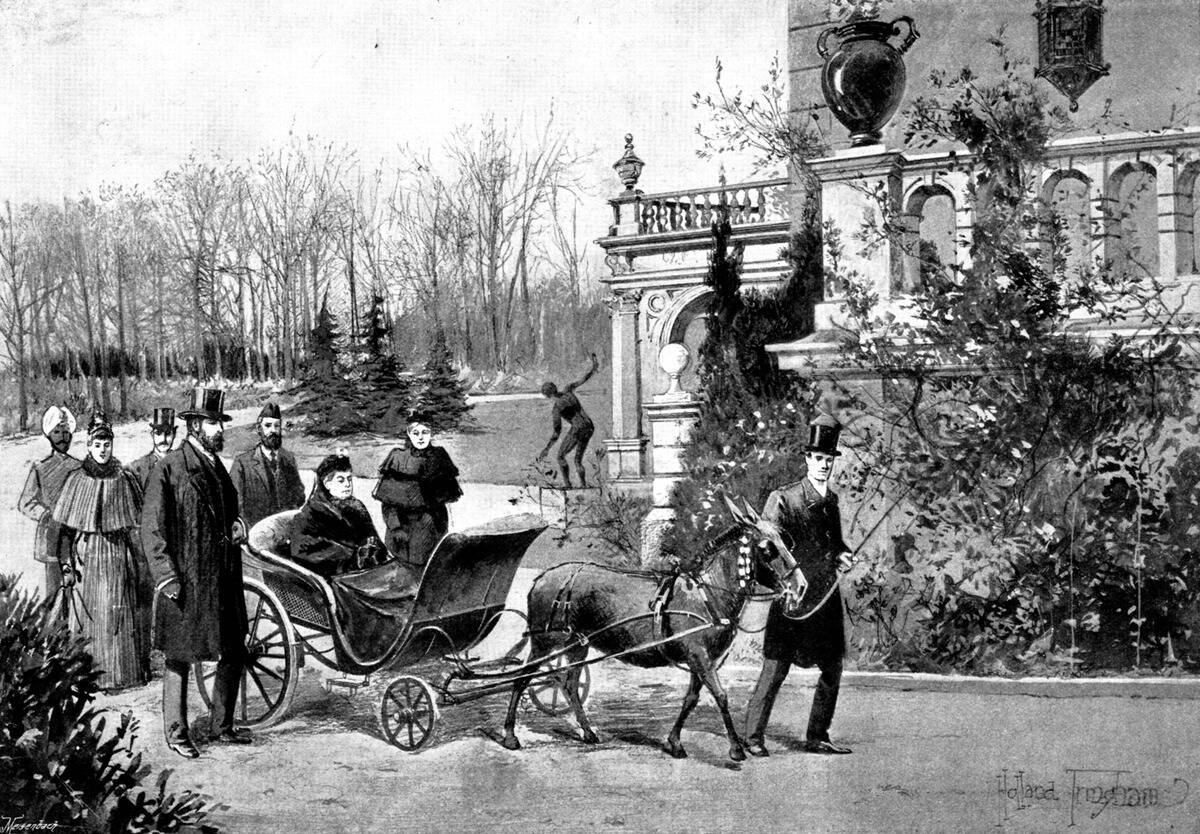
Abdul Karim arrived from India in 1887 for Queen Victoria’s Golden Jubilee and quickly won her favor. Within months, she made him her “Munshi,” teaching her Hindustani and Urdu and guiding her through Indian customs. Victoria noted lessons in her journals and gave him privileges uncommon for a court newcomer—audiences, residences near royal retreats, and a visible role at Osborne and Balmoral.
The relationship humanized empire for the Queen, even as it inflamed whispers among courtiers.
And oh, did the palace whisper. Senior households bristled at Karim’s rapid rise, his access to the monarch, and the cultural pride she took in their exchanges. Victoria stood firm until her death in 1901. Then the backlash hit: Edward VII dismissed Karim, ordered many of their letters and papers destroyed, and sent him back to India. Karim retired near Agra and died in 1909. The friendship survived only in fragments, but those fragments still rattle the silver in royal cupboards.
Voltaire and Frederick the Great: philosopher-king pen pals with sleepover privileges
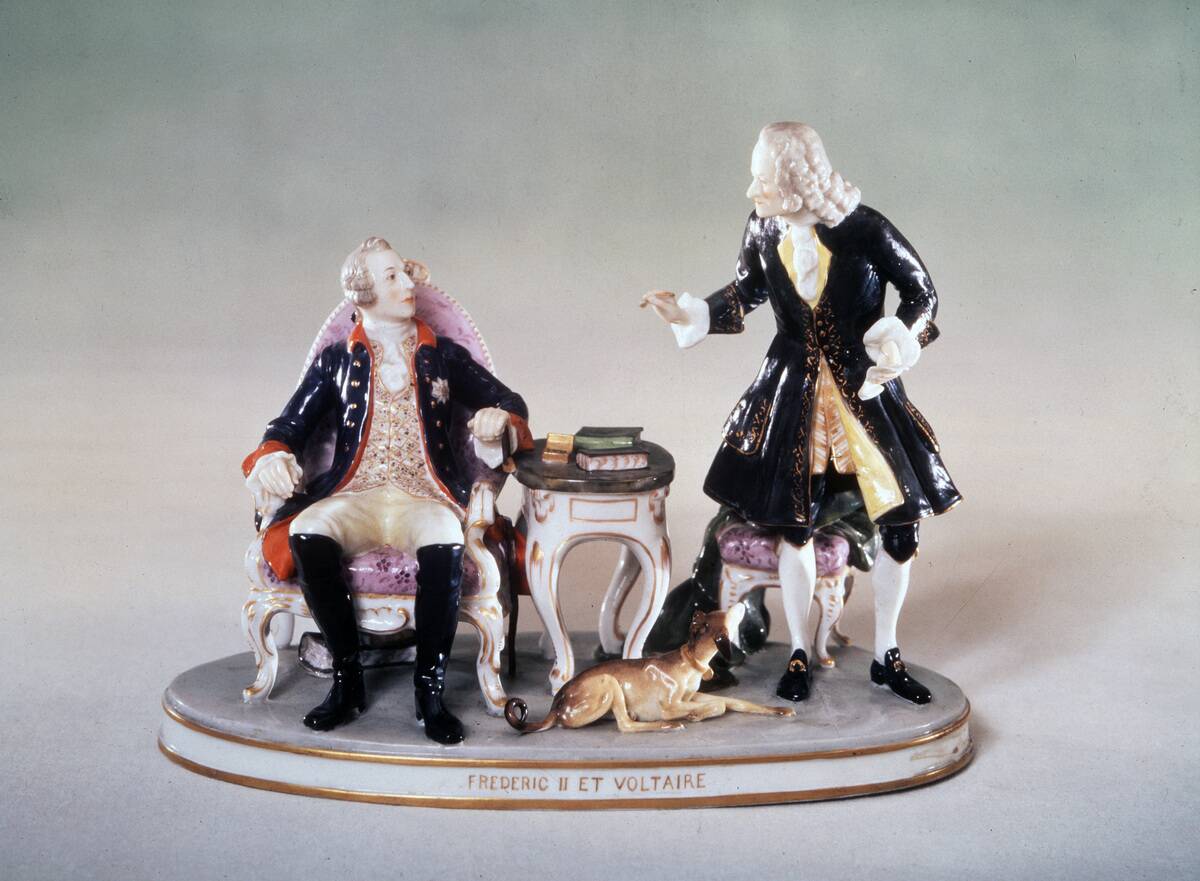
Before he wore the Prussian crown, Frederick wrote to Voltaire in 1736, courting the sharpest pen in Europe. By 1750, Voltaire accepted an invitation to Potsdam and Sanssouci, where flutes, French verse, and philosophical sparring filled the rooms. The king showered him with a stipend and a seat at court; the philosophe supplied wit and edits. It was Europe’s most elite sleepover: candlelit salons, classical music, and a monarch who wanted enlightenment with his evening entertainment.
Then came the breakup tour. Voltaire’s satirical “Doctor Akakia” riled Frederick’s circle, and their quarrels escalated. In 1753, as Voltaire tried to leave, he was detained in Frankfurt and his papers seized—a very un-enlightened exit. They never fully reconciled in person, yet their letters kept smoldering with respect and barbs. Frederick kept governing like a philosopher-king, Voltaire kept needling kings everywhere, and Europe learned that even intellectual dream teams can go off-key.
Frida Kahlo and Leon Trotsky: art, exile, and the world’s most awkward houseguest
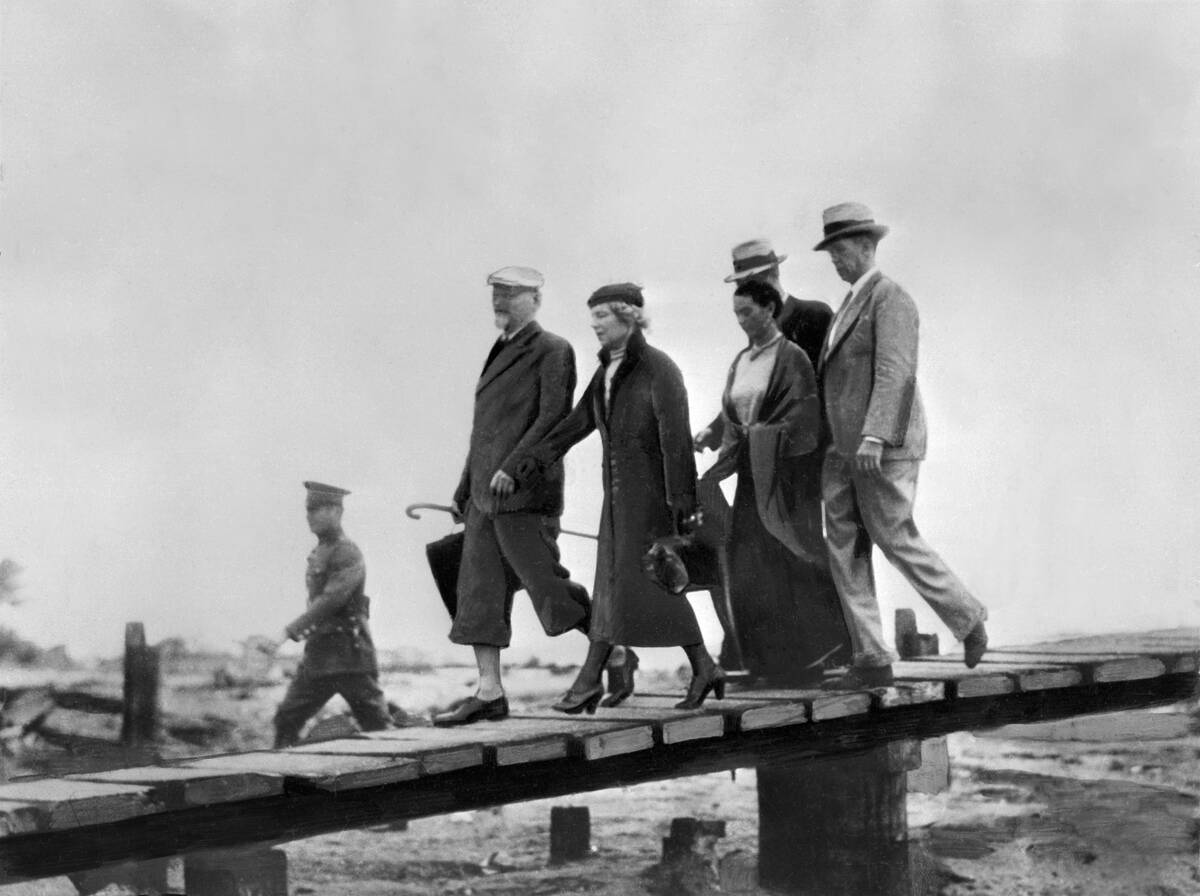
In 1937, Mexico’s President Lázaro Cárdenas granted asylum to exiled revolutionary Leon Trotsky. He and his wife Natalia landed not just in Mexico City but in Frida Kahlo’s Casa Azul, sharing space with Diego Rivera’s murals, loud politics, and brighter-than-life colors. Trotsky thanked his hosts with books and deference; Kahlo returned the favor with hospitality and, in 1937, a painting—Self-Portrait Dedicated to Leon Trotsky—presented with a flourish between curtains.
Rumors of an affair swirled, and by 1939 Trotsky moved to a more fortified house in Coyoacán as security tightened. In August 1940, he was assassinated by Ramón Mercader, an NKVD agent, after a previous failed attempt. Kahlo was briefly questioned and released. The whole episode left paint spatters on world politics: art and revolution bumping elbows in a single courtyard, where canvases dried while guards checked the gates and history tried to get some sleep.
Edith Wharton and Henry James: literary confidantes with razor-sharp wit
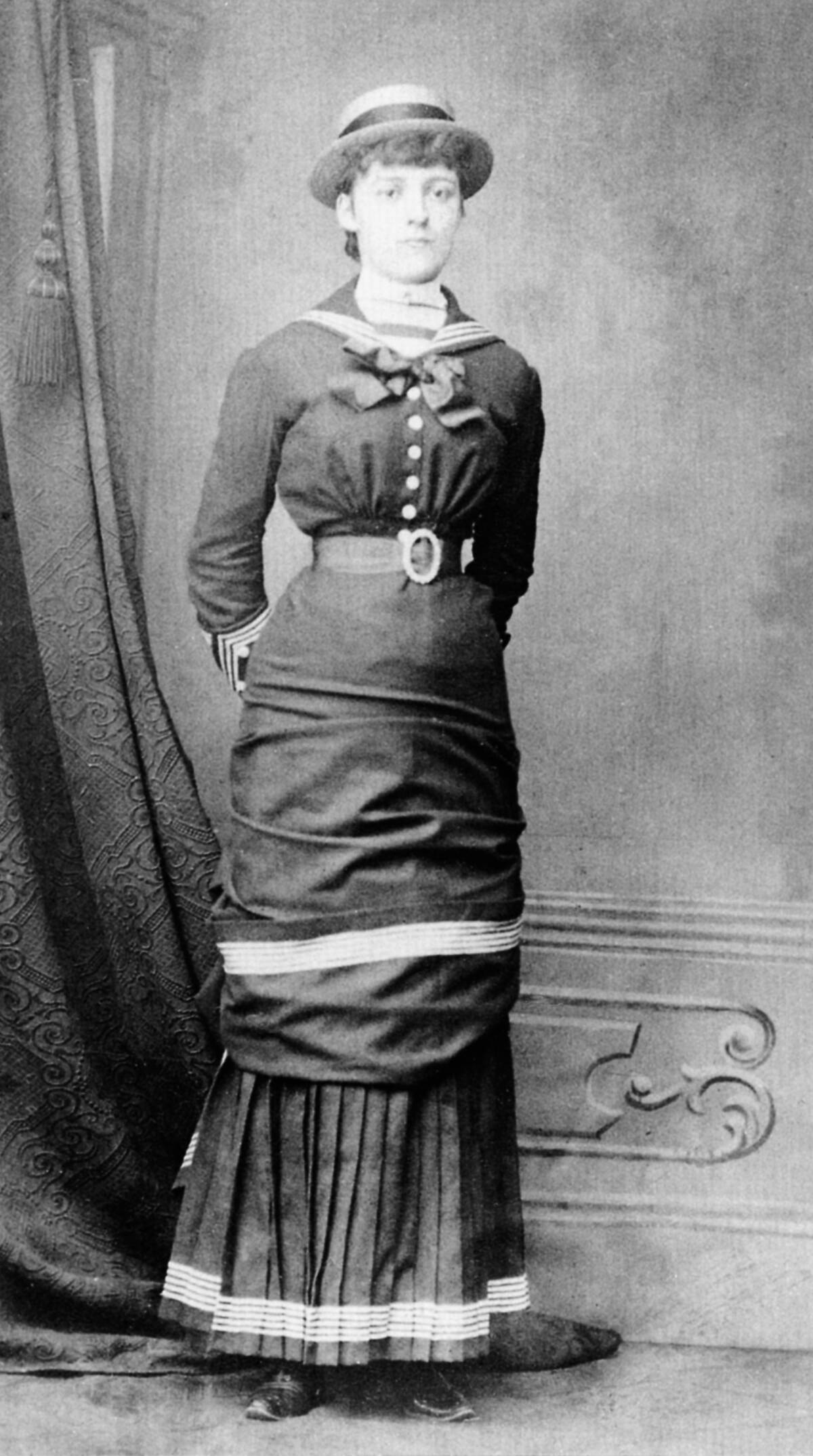
Edith Wharton and Henry James met in the early 1900s and immediately recognized another citizen of that rare country where sentences must be exquisite. They traded drafts, gossip, and jokes across the Atlantic, visiting each other’s homes—her Berkshire estate, The Mount, and his Lamb House in Rye. In letters, they workshopped scenes and sympathies, sharpening each other’s prose like fencing partners who enjoyed the sport as much as the win.
In 1907, Wharton coaxed James into a motor tour of France, comic in its own dignified way: navigating dusty roads, pausing at cathedrals, and puzzling provincial officials. He was charmed and gently baffled; she was delighted to loosen the corset on their reputations. James died in 1916, and Wharton’s memoir A Backward Glance later fixed their camaraderie in amber. Two stylists, two passports, one long-running conversation about how people behave when nobody’s watching.
J.R.R. Tolkien and C.S. Lewis: pub nights that built entire worlds
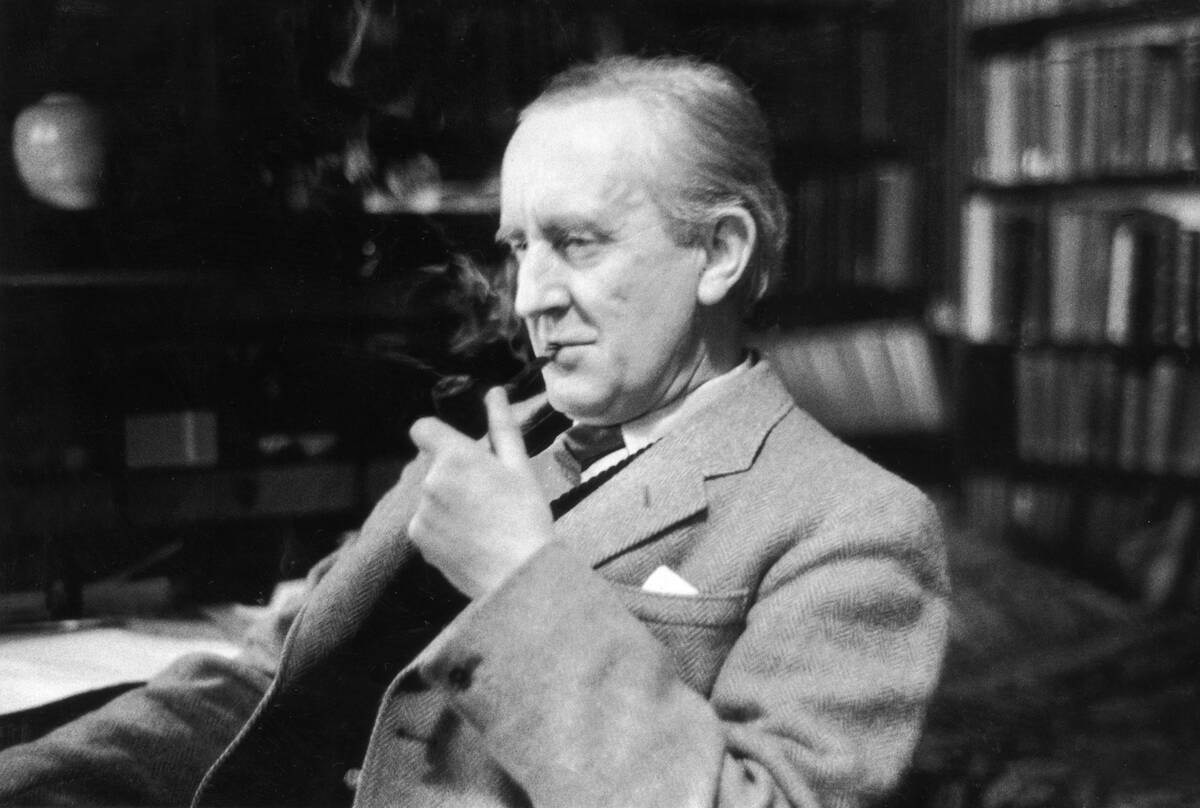
Oxford, 1926: a philologist with a mythic glint meets a literature don with a lion’s roar. J.R.R. Tolkien and C.S. Lewis gravitated toward each other’s tales, convening with friends as the Inklings in college rooms and at a snug pub, the Eagle and Child. Drafts were read aloud, pipes were lit, and someone always asked for just one more chapter. The hobbits and a wardrobe door started, quite literally, at the table.
Their long walk around Addison’s Walk in 1931—joined by William Dyson—nudged Lewis toward Christian belief, an axis for his later fiction. Lewis, in turn, prodded Tolkien to finish The Lord of the Rings when the professor’s perfectionism bogged him down. They disagreed too: Tolkien was cool on Narnia’s jumble of mythologies. But the exchange of pages and arguments did the alchemy: faith and philology, mead and meter, turning shared evenings into whole invented continents.
Susan B. Anthony and Frederick Douglass: steadfast allies who argued like siblings
![[redacted]](https://media.tellmebest.com/wp-content/uploads/2023/08/susan-b.-anthony-87105.jpeg)
Rochester, New York, made neighbors of Susan B. Anthony and Frederick Douglass in the 1840s and 1850s. He ran The North Star; she organized, strategized, and never lost a list. Together they championed abolition and, after the Civil War, universal suffrage, co-founding the American Equal Rights Association in 1866. They shared platforms and parlors, each knowing the other would show up when the hall got rowdy or the funds ran thin.
Then came 1869 and the Fifteenth Amendment, which enfranchised Black men but not women. Douglass, citing deadly violence against Black Americans, argued urgency; Anthony refused to accept a half-measure, co-founding the National Woman Suffrage Association. The fight hurt—and then healed. In February 1895, Douglass spoke at a women’s rights meeting in Washington, D.C., and died that evening. Anthony mourned a comrade who’d debated fiercely, stood steadfastly, and proven that disagreement needn’t dissolve a shared cause.
Mahatma Gandhi and Leo Tolstoy: a world-changing friendship by mail
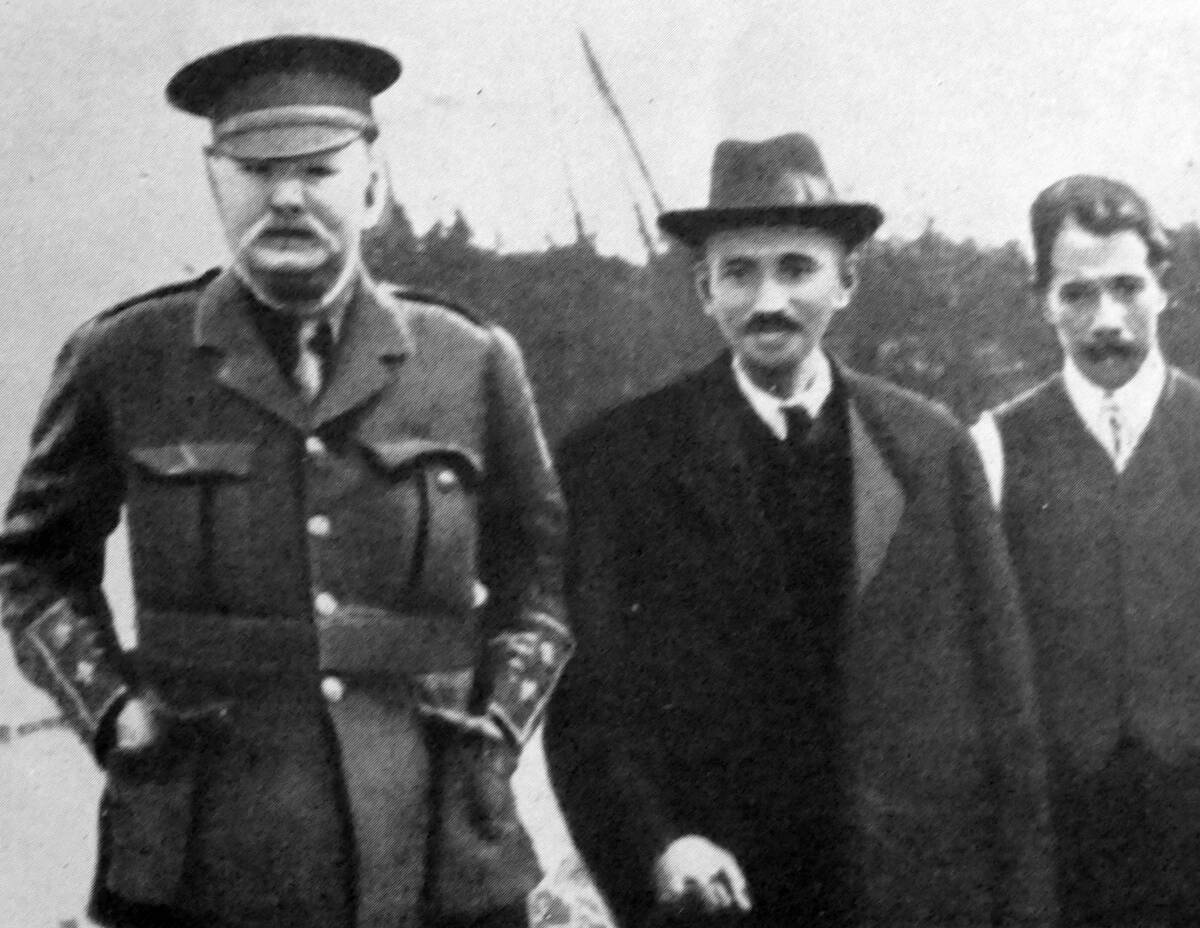
Across continents and decades of age, Gandhi and Tolstoy found each other in 1909 through letters as clean and sharp as winter air. Tolstoy had written A Letter to a Hindu in 1908; Gandhi published it in 1909 in his South African paper, Indian Opinion, with his own introduction. He named Tolstoy Farm, founded in 1910 near Johannesburg, as an homage to the writer whose moral gravity helped steady young satyagrahis.
Their correspondence circled nonviolence, conscience, and the force of love as a political weapon. Tolstoy, in failing health, urged spiritual resistance; Gandhi, building a movement under harsh laws, tested those ideas in practice. Tolstoy died in 1910 at Astapovo station, never meeting Gandhi in person. But the mail had done its work. When Gandhi later led mass noncooperation in India, you could still hear the quiet Russian baritone in the chorus.
Marie Curie and Albert Einstein: brainy boosters through scandal and science
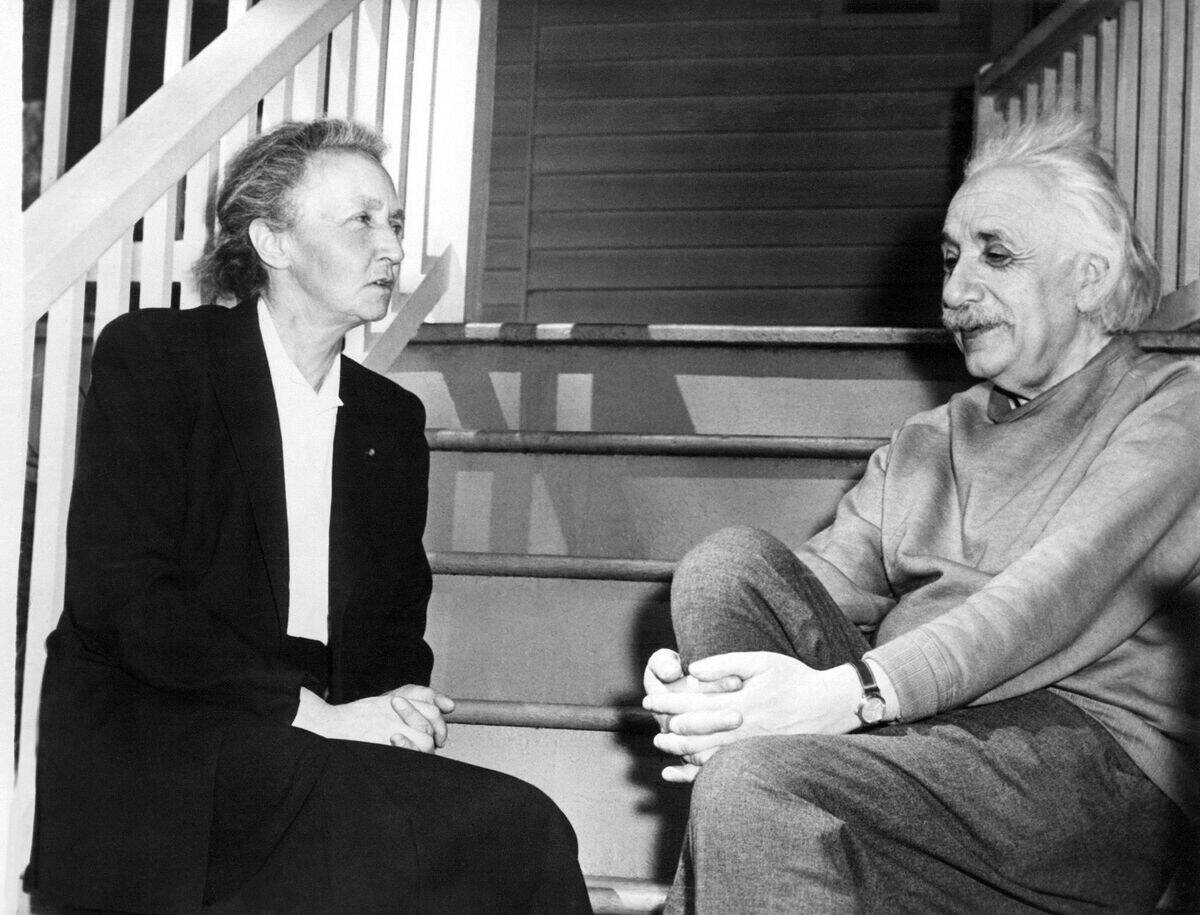
When the world’s top physicists posed at the 1911 Solvay Conference in Brussels, two faces seemed to be thinking three steps ahead: Marie Curie and Albert Einstein. That same year, as gossip swirled around Curie’s relationship with physicist Paul Langevin, Einstein wrote her a calm, bracing letter: ignore the reptiles, he advised, and trust your work. Curie collected her second Nobel (Chemistry, 1911) with dignity; Einstein would receive his in 1921.
Their friendship settled into collegial rhythm—conferences, committees, and stubborn respect. Both returned to Solvay meetings over the next decades, and both served international scientific efforts in the 1920s, including the League of Nations’ intellectual cooperation initiatives. They admired each other’s steel: Curie’s patient radioactivity work built new sciences; Einstein’s relativity bent the cosmos. Through headlines and hard equations, each knew the other would send the right note at the right moment.
Mozart and Haydn: a musical bromance in powdered wigs
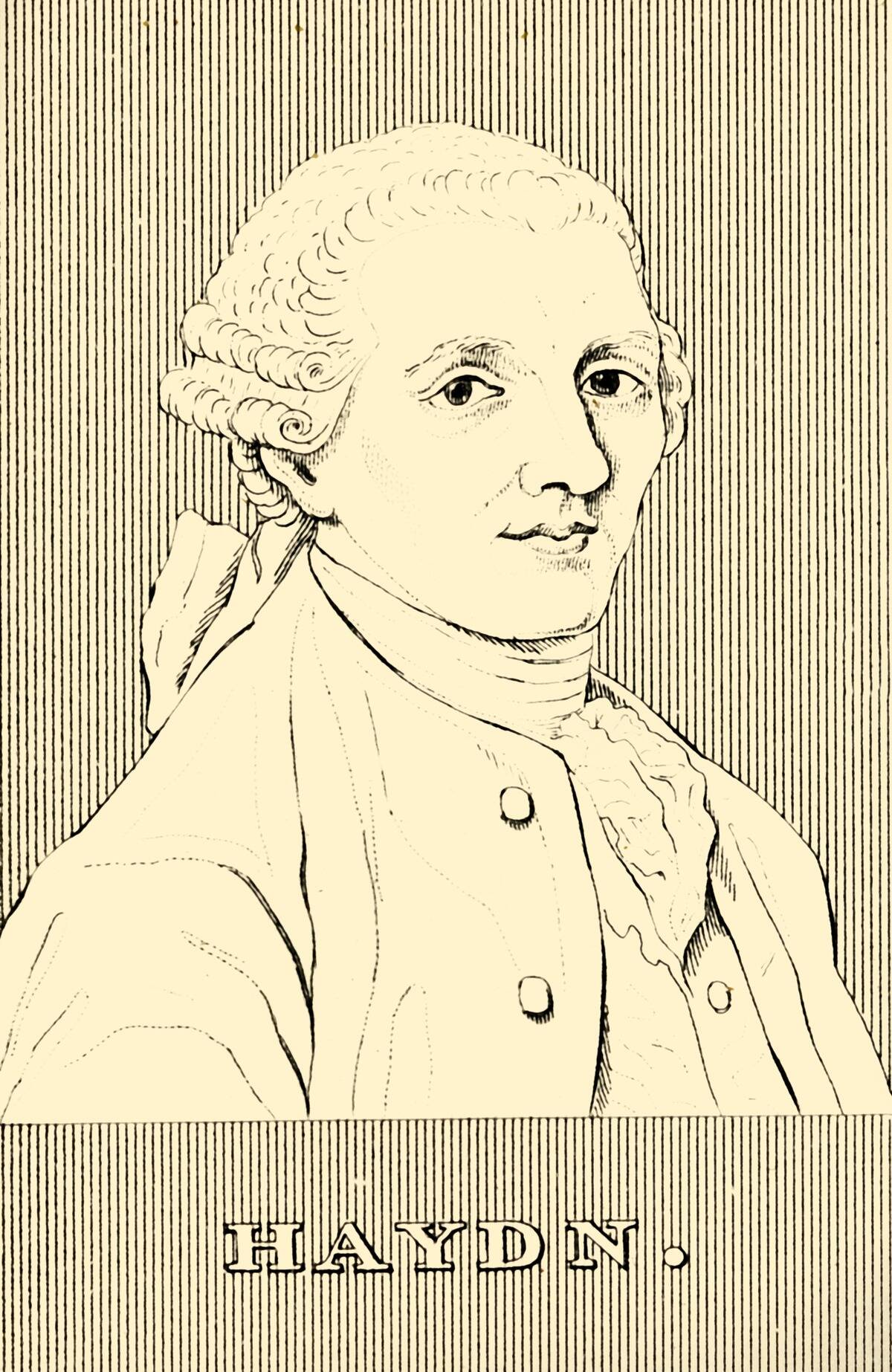
Vienna in the 1780s was a chamber-music dream, and Mozart and Haydn were the first chairs of friendship. Composer Michael Kelly recalled quartet parties where Haydn, Mozart, Dittersdorf, and Vanhal took the stands, trading smiles over tricky passages. In 1785, Mozart dedicated six string quartets to Haydn, works polished over years and presented like jewels in a velvet box. The dedications were public, but the admiration was even more personal.
After hearing the quartets, Haydn told Mozart’s father, Leopold, that his son was the greatest composer known to him—high praise from the father of the symphony. The two traded ideas freely: Haydn’s Op. 33 quartets sparked Mozart’s set; Mozart’s harmonic daring pushed Haydn’s late style. They moved in different circles and careers, yet their scores kept talking to each other, counting time in common language: Allegro friendship, Adagio respect.
Isaac Newton and Edmond Halley: the comet guy who launched Principia
![Sir [redacted] in painted portrait](https://media.tellmebest.com/wp-content/uploads/2022/04/sir-isaac-newton.-38394.jpeg)
In 1684, Edmond Halley knocked on Isaac Newton’s door with a question any good friend might ask: what orbit results from an inverse-square law of gravity? Newton, who had done the math years earlier, produced a proof and then, prodded by Halley, expanded it into something much larger. Halley shepherded the Principia to publication in 1687, paying costs himself because the Royal Society’s purse was famously light—drained by an expensive volume on fish.
Halley did more than bankroll. He edited drafts, smoothed quarrels (including Robert Hooke’s priority claims), and kept the press running. As for the comet that bears his name: in 1705 he predicted its periodic return, correctly forecasting a 1758 reappearance that vindicated Newtonian gravitation after his own death. The Principia’s pages may read like marble, but they stand on friendship’s practical scaffolding: persistence, enthusiasm, and a well-timed knock.
Galileo Galilei and Johannes Kepler: stargazers geeking out across borders
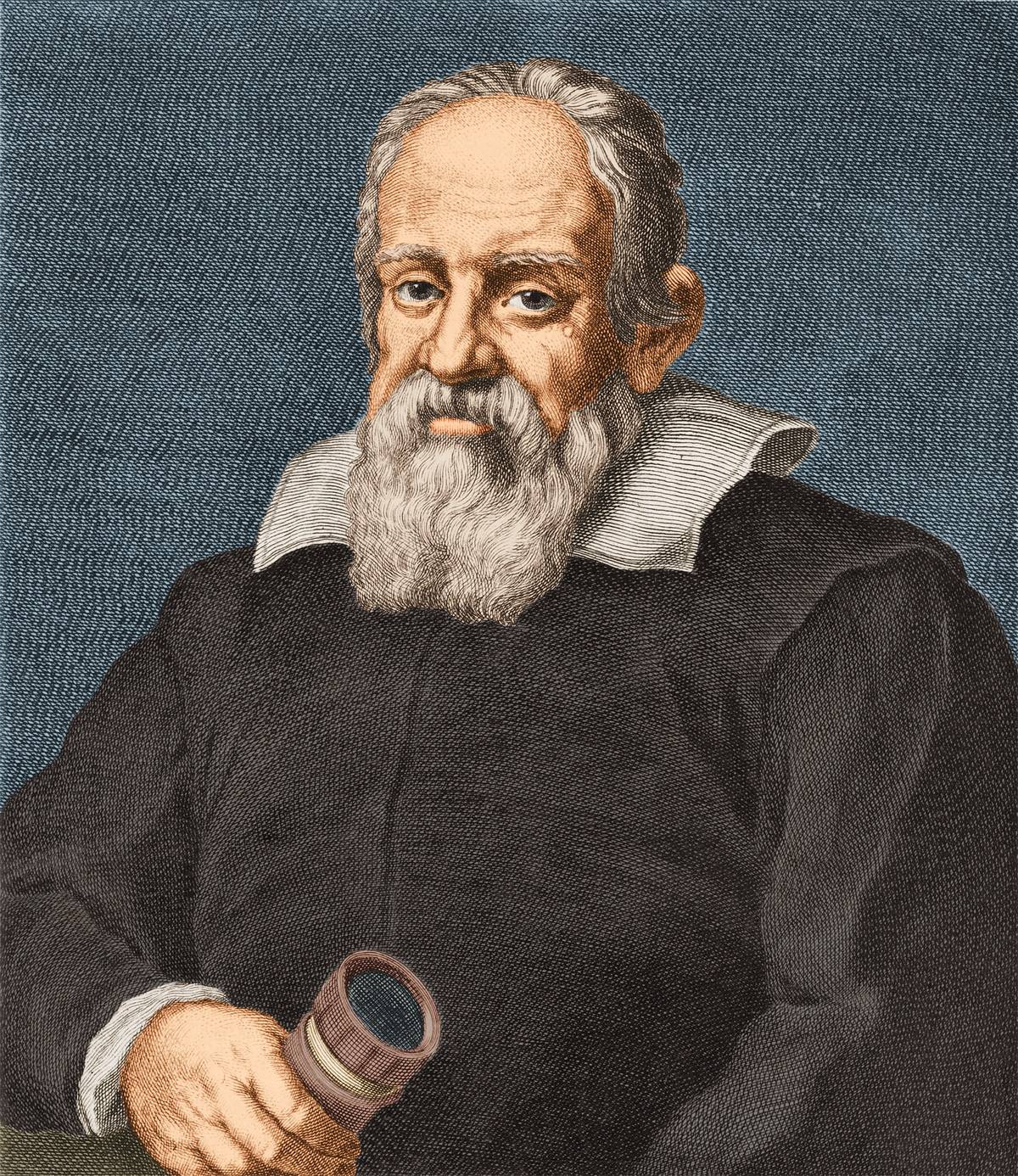
In 1597, Galileo confided to Johannes Kepler that he favored Copernican heliocentrism, a risky admission in Italy. Kepler, already orbiting that sun, urged him on. Over the next decade, each hammered at the heavens from different latitudes: Kepler with imperial data in Prague, Galileo with instruments and intuition in Padua and Florence.
They wrote with collegial warmth, sharing the sense that math and sky had secrets meant to be pried loose together.
When Galileo announced telescopic discoveries in 1610—Jupiter’s moons, rough lunar surfaces—Kepler sprinted to defend him in his Dissertatio cum Nuncio Sidereo, embracing the new evidence despite not yet owning a good telescope. Galileo’s Sidereus Nuncius and Kepler’s Astronomia Nova (1609) sometimes ran on parallel tracks, but they converged on a bolder cosmos. They never met in person; no matter. Their letters did what good telescopes do: made far things feel close.
Hans Christian Andersen and Charles Dickens: a houseguest tale gone hilariously long
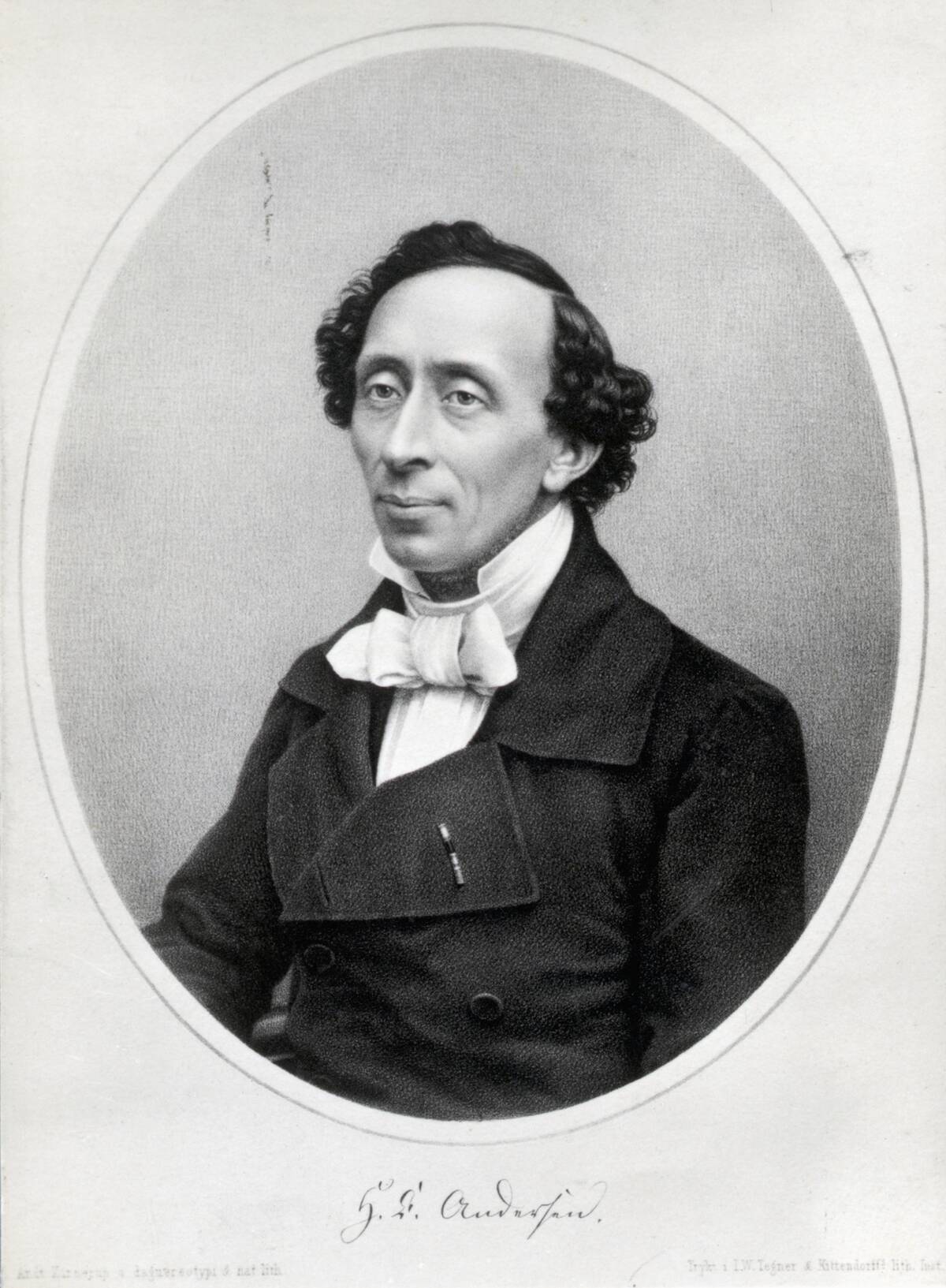
Hans Christian Andersen idolized Charles Dickens after meeting him in 1847 and, a decade later, asked to visit. Dickens agreed to host him at his home—by 1857, the family was at Gad’s Hill Place—and expected a short stay. Andersen arrived anxious, effusive, and not terribly fluent in English. Domestic comedy ensued: mismatched manners, creaky small talk, and the uneasy awareness that hero worship is a heavy housecoat to wear.
Two weeks stretched into five, to the family’s frayed patience. After Andersen finally departed, Dickens supposedly posted a note in the guest room: “Hans Andersen slept in this room for five weeks—which seemed to the family ages.” The friendship cooled. Dickens’s own life was entering a turbulent phase; Andersen shuffled back across the Channel, chastened. It’s a fairy tale of etiquette gone wrong, minus the magic, plus a stern reminder about return tickets.
Harriet Tubman and John Brown: brave comrades in a dangerous cause
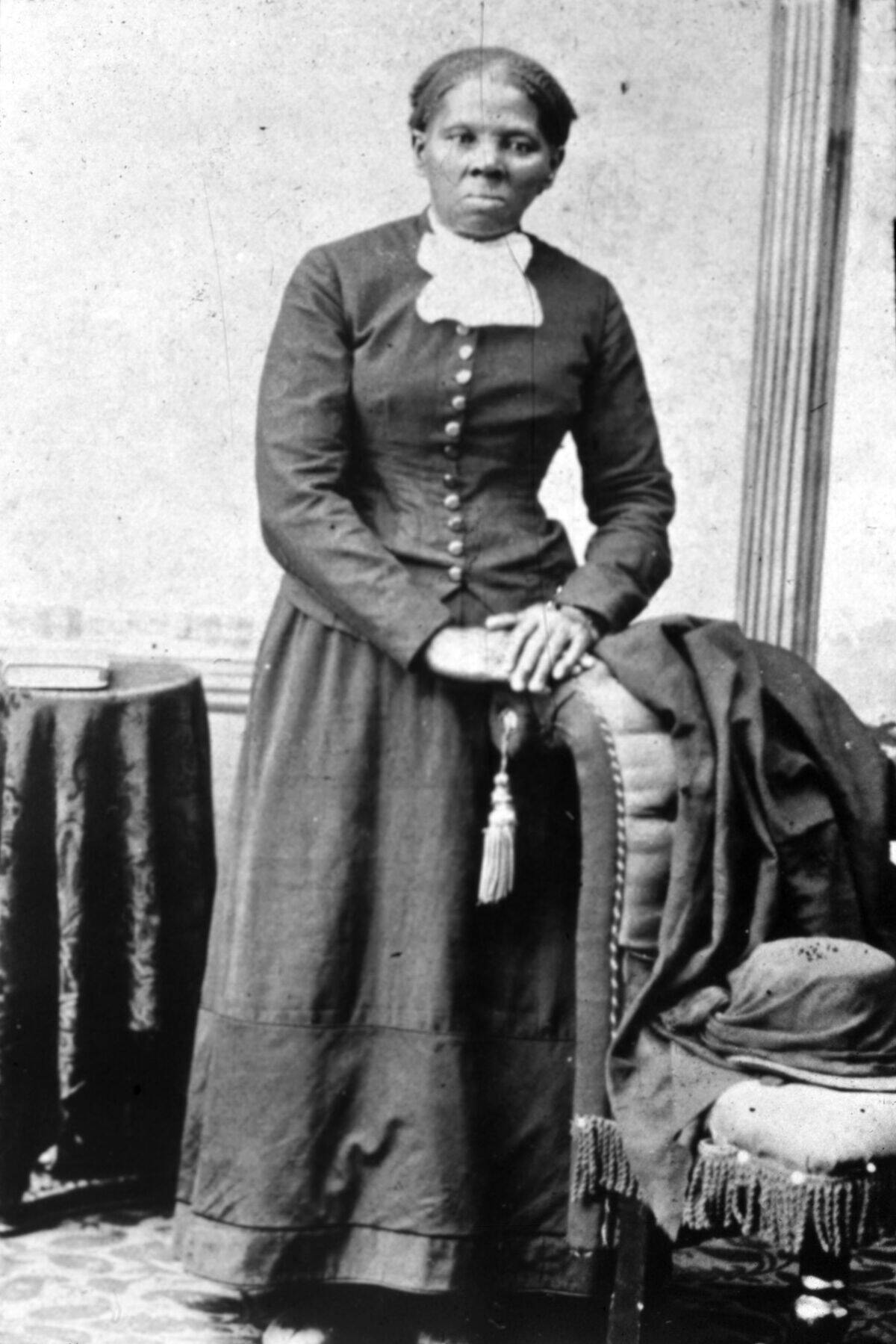
John Brown met Harriet Tubman in 1858 and instantly recognized a field general in a small frame, calling her “General Tubman.” He asked her help recruiting supporters for his audacious plan to strike at slavery’s heart. Tubman, with deep contacts among Black communities in the North and Canada, spread word and advice, wielding strategy honed on the Underground Railroad. They shared more than zeal; they shared a cool eye for logistics under fire.
Illness kept Tubman from joining the 1859 Harpers Ferry raid, which ended in Brown’s capture and execution.
She grieved—and kept working. During the Civil War, she served the Union as a scout and in 1863 helped lead the Combahee River Raid in South Carolina, liberating hundreds. Brown’s letters praised her courage; Tubman’s life proved the point. Their alliance was brief, their aim the same: break the machinery of bondage, no matter the risk.
Ada Lovelace and Charles Babbage: the original code-collab
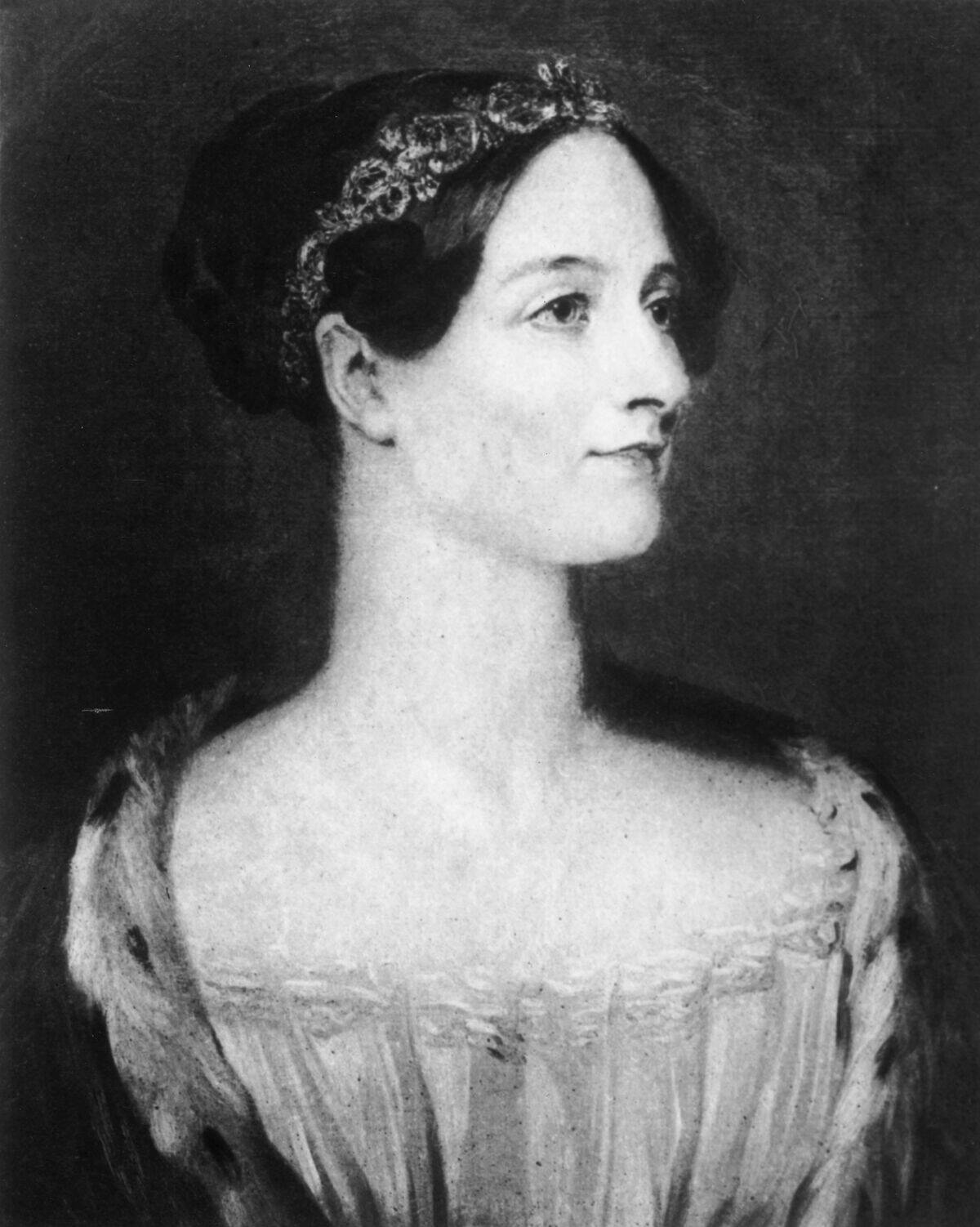
When teenaged Ada Byron (later Lovelace) met Charles Babbage in 1833 and saw his Difference Engine in action, she saw further than the brass. A decade later, she translated Luigi Menabrea’s paper on Babbage’s Analytical Engine (1842) and added Notes longer than the original. In them, she described how the engine could manipulate symbols and included a step-by-step method to compute Bernoulli numbers—often cited as the first published computer algorithm.
Babbage, dazzled, dubbed her the “Enchantress of Number.” Lovelace’s vision—that a general-purpose machine might one day compose music or graphics—leapt past calculation to computation. The Analytical Engine was never built in their lifetimes; Lovelace died in 1852 at 36. But their correspondence reads like a modern engineering thread: ambitious specs, edge cases, and the thrill of getting an abstract machine to do concrete work on paper.
Charlie Chaplin and Albert Einstein: slapstick meets relativity on the red carpet
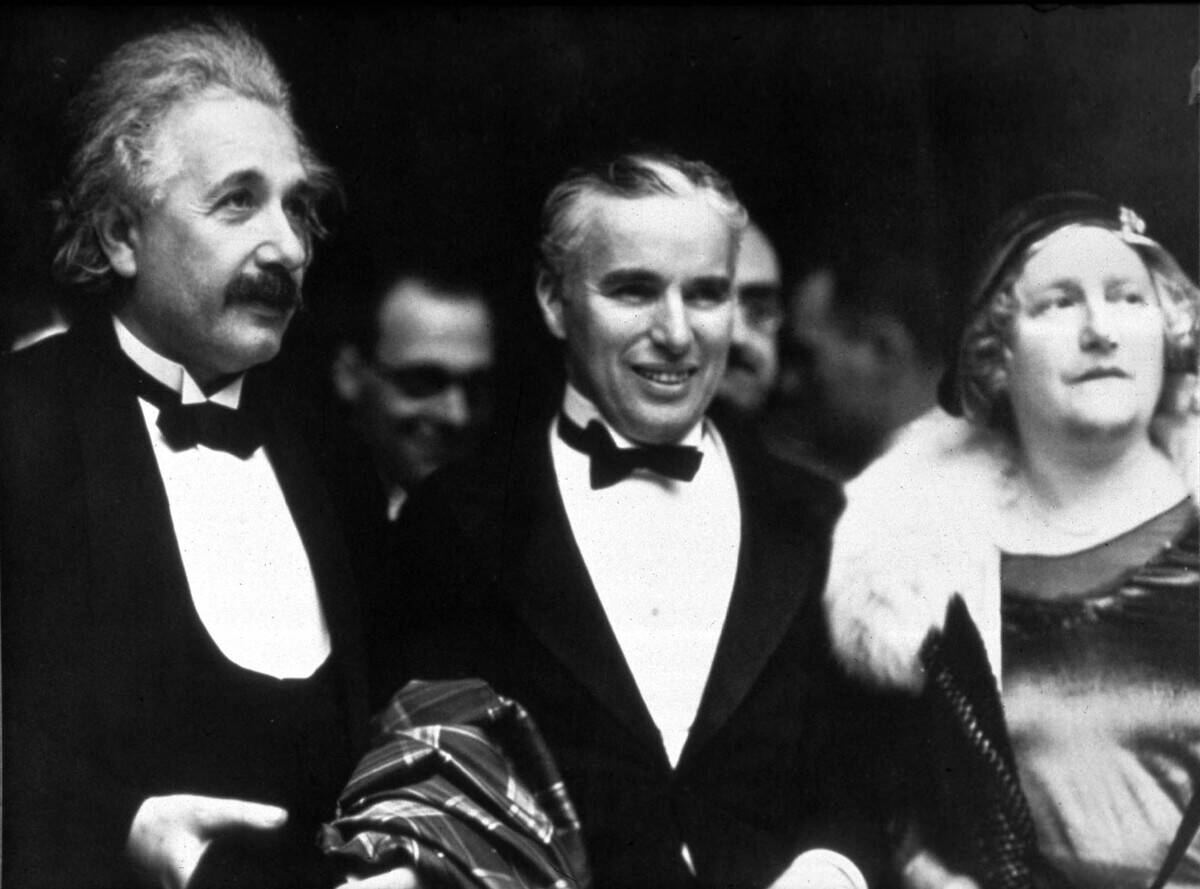
In 1931, Los Angeles witnessed a summit of celebrity and cerebrum: Albert Einstein, in California for a Caltech visit, attended the City Lights premiere with Charlie Chaplin. Flashbulbs popped; headlines giggled at the odd yet perfect pairing—one man’s silent films moved millions; the other’s equations rattled the universe. Photographs from the night fixed an evergreen image: genius recognizing genius across very different stages.
A quip from Chaplin is often recalled: people cheer me because they understand me; they cheer you because nobody understands you. True or embellished, it captured the mood. The two met more than once during Einstein’s stay, mutual admirers comfortable in each other’s orbit. Chaplin would face political storms later; Einstein, too, would be pulled by history’s tides. For a night, though, they shared applause, tuxedos, and a sense that wonder comes in many dialects.
Eleanor Roosevelt and Amelia Earhart: night flights and fearless friendship
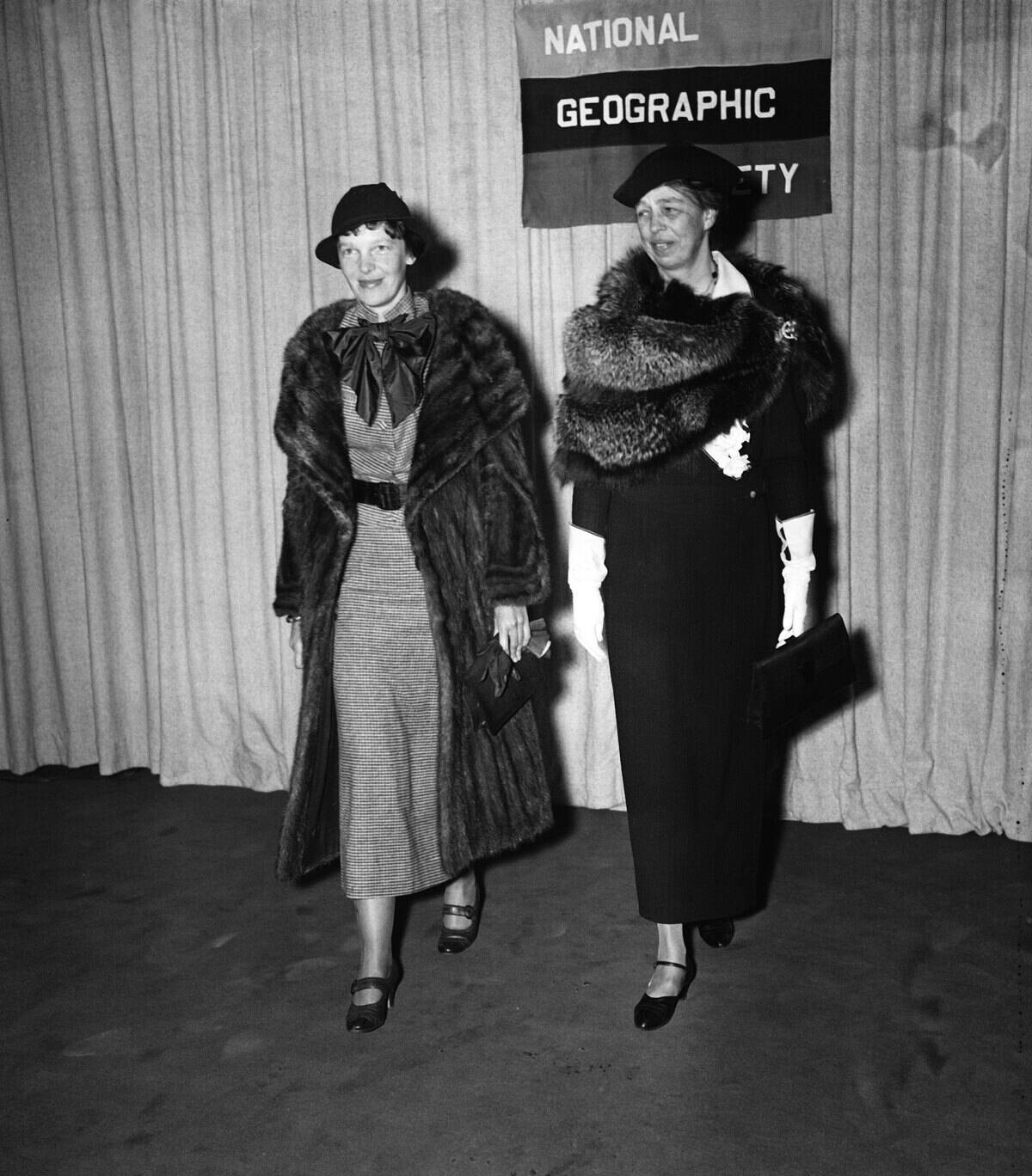
On April 20, 1933, a White House dinner detoured skyward when Amelia Earhart invited Eleanor Roosevelt on a night flight. They drove to Hoover Field, boarded an Eastern Air Transport Curtiss Condor, and flew to Baltimore and back. Roosevelt, still in her evening gown and wearing Earhart’s coat, signed the flight log like a kid sneaking into a movie twice. The First Lady found in the cockpit what she loved in life: altitude and perspective.
Roosevelt later obtained a student pilot certificate in 1933, though duties kept her from completing a license. She championed civil aviation and women fliers, backing Earhart’s Ninety-Nines organization and using her column, “My Day,” to normalize women in the air. After Earhart vanished in 1937, Roosevelt pressed for a robust search and kept advocating for aviation. The friendship was brief in years, long in courage, and permanently airborne in spirit.
Thomas Jefferson and John Adams: political frenemies who found their way back
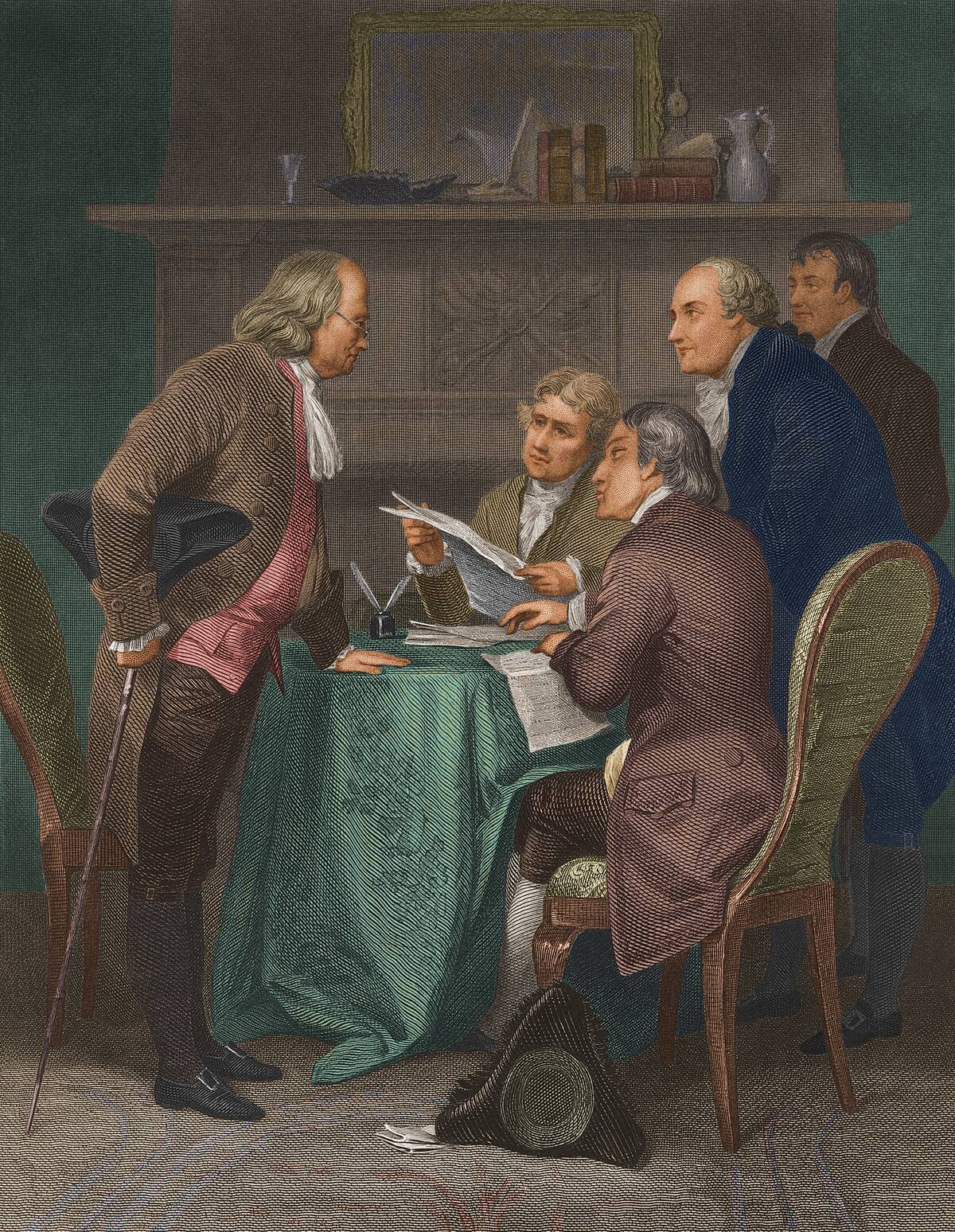
Thomas Jefferson and John Adams built a republic together, then nearly broke their friendship trying to run it. Allies in independence, they soured in the partisan storms of the 1790s—Adams as Federalist president, Jefferson as his Republican vice president, then opponent in the bruising election of 1800. Their letters went quiet as they nursed principles and grievances the way only old friends can: thoroughly.
Enter Dr. Benjamin Rush, peacemaker. In 1812 he nudged them back into correspondence that blossomed into a masterclass on life, books, faith, and gardening. For fourteen years they wrote across the miles, two retired revolutionaries turning politics into philosophy again. On July 4, 1826, they died hours apart—Adams’s reported last words, “Thomas Jefferson survives,” a final mix of irony and affection. The experiment endured; so, at last, did the friendship.
Max Brod and Franz Kafka: the friend who wouldn’t burn the masterpieces
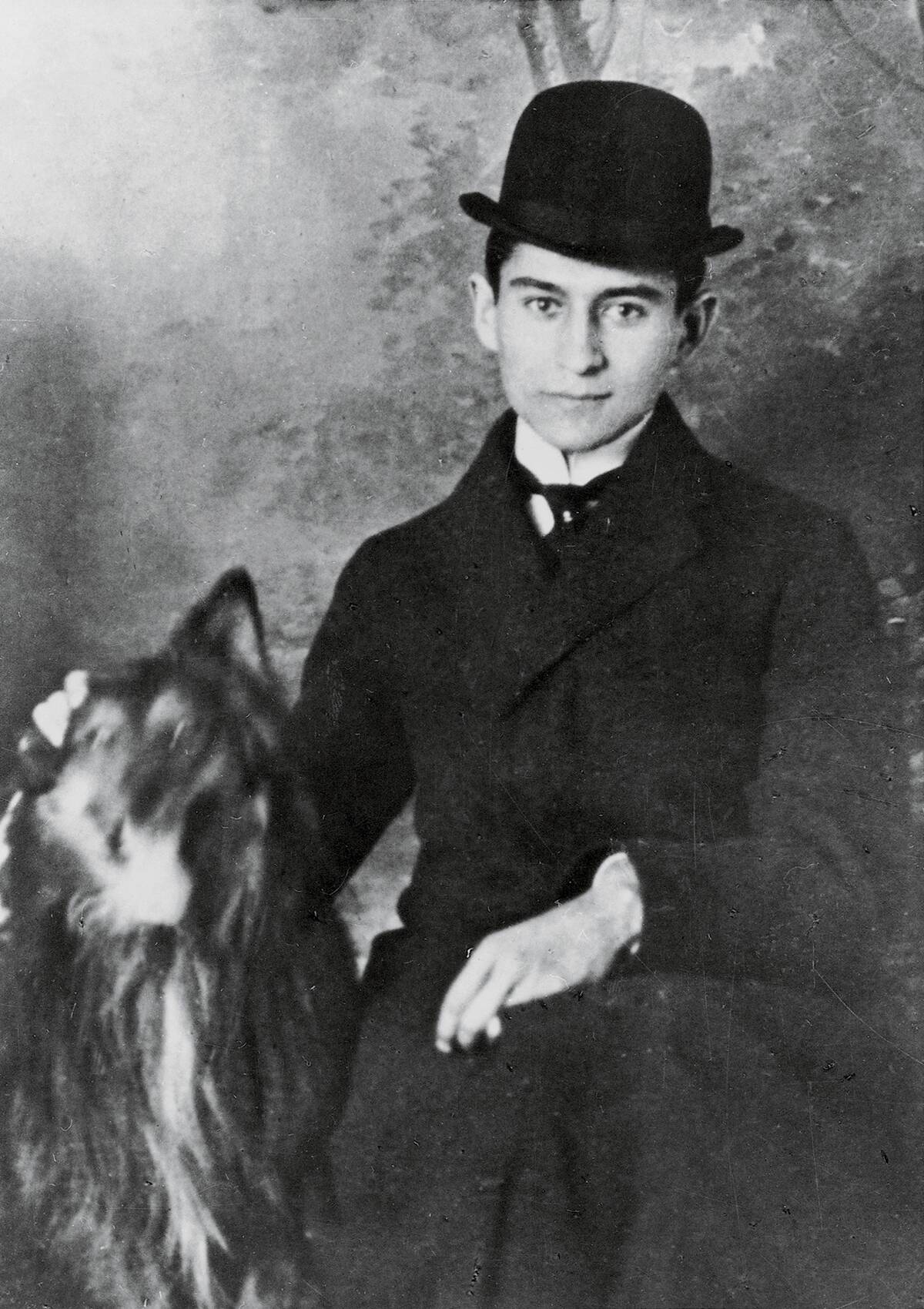
Franz Kafka asked Max Brod to burn his unpublished manuscripts. Brod, a literary friend with a sturdy conscience, declined to make a bonfire of brilliance. After Kafka’s death in 1924, Brod edited and published The Trial (1925), The Castle (1926), and Amerika (1927), arranging fragments into legible forms while telling the world to keep its matchbook closed. The decision transformed Kafka from a near-secret into a pillar of modernism.
History wasn’t gentle with the papers, either.
In 1939 Brod fled Prague ahead of the Nazis, carrying a suitcase of Kafka’s writings to Tel Aviv. After Brod’s death in 1968, a long legal saga over his literary estate wound through courts. In 2016, Israel’s Supreme Court ordered the remaining papers to the National Library of Israel, where the pages now rest—read, argued over, but unburned, as one good friend intended.
Pablo Picasso and Henri Matisse: competitive comrades who made each other bolder
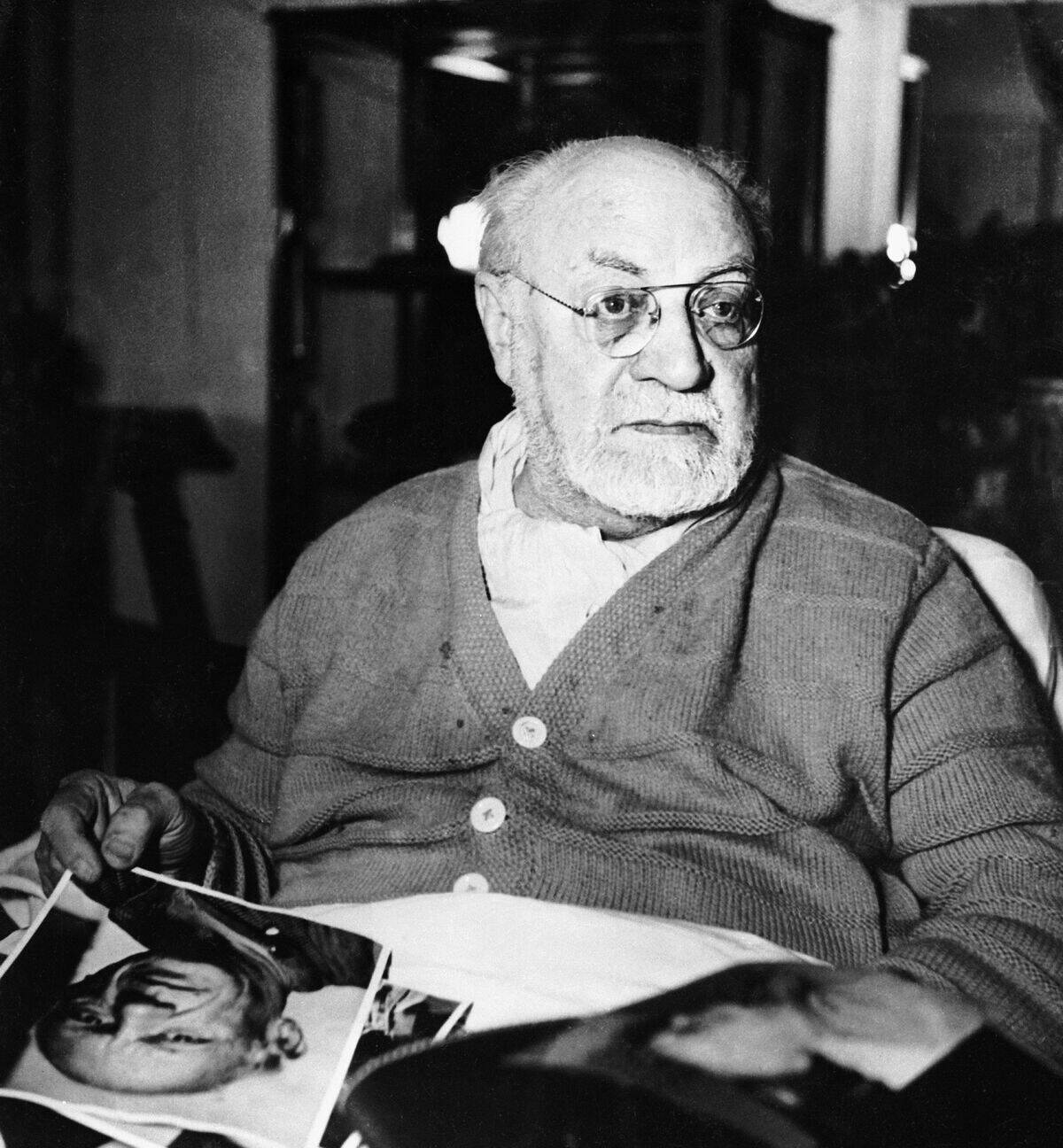
Picasso and Matisse met in Paris around 1906 amid Gertrude Stein’s salons, immediately sensing a rival worth watching. Matisse’s Fauvist color shocked; Picasso’s restless line prowled. When Matisse showed African sculptures and masks he’d encountered, Picasso’s imagination detonated—Les Demoiselles d’Avignon (1907) carried the blast. Their studios became mirrors that argued back: you can go further, said each reflection, and then they did.
They traded works, visited each other’s rooms, and kept one another’s art on the walls like friendly trophies. Picasso reportedly said, “We must always see Matisse,” and Matisse returned the esteem. Decades later, one painting with scissors and paper, the other with cubist shards, they still chased the same question: how to make a picture alive. The competition was real; so was the care. Iron sharpens iron; brush sharpens brush.
Vincent van Gogh and Paul Gauguin: nine intense weeks that changed art
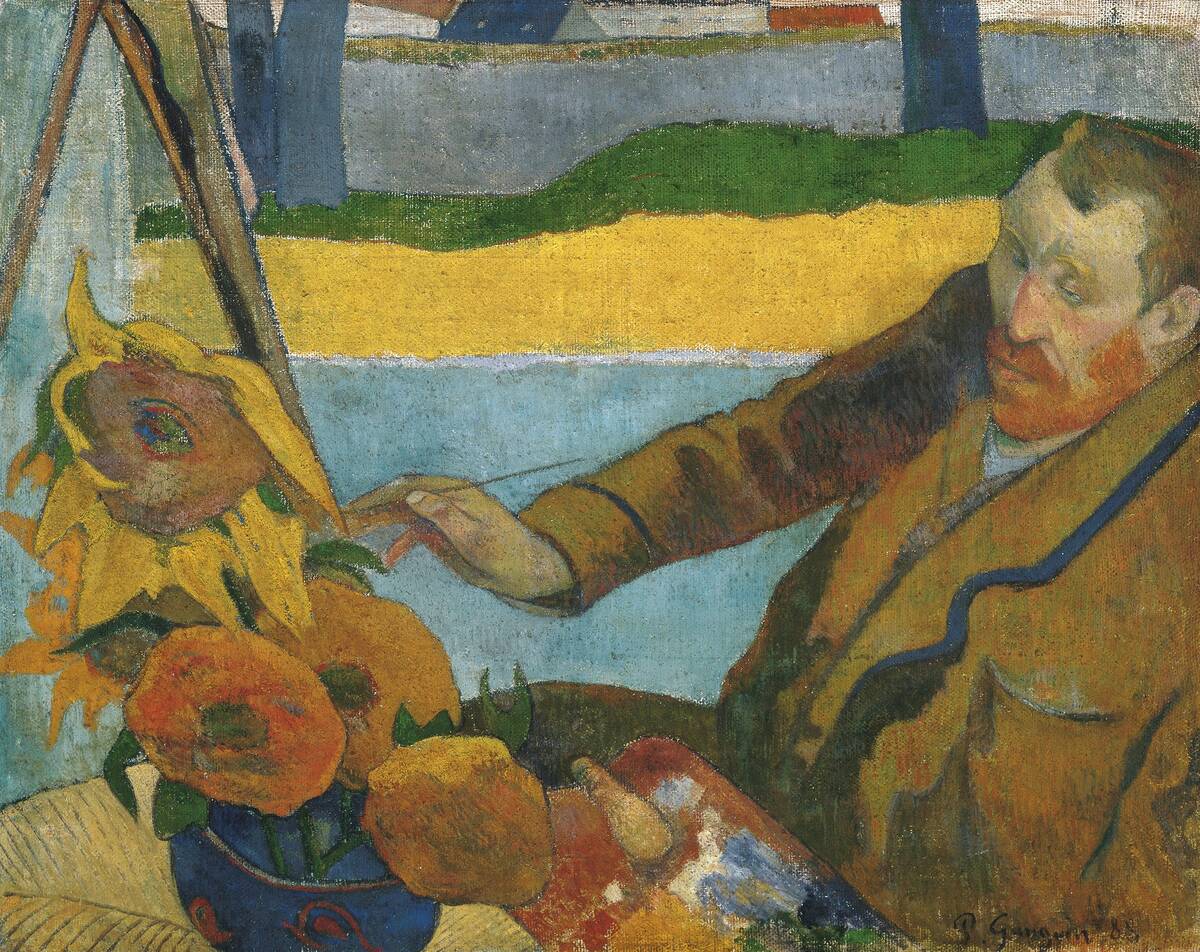
In October 1888, Gauguin arrived in Arles to join van Gogh in the Yellow House, a sunlit hothouse of ambition. They painted side by side for about nine weeks, arguing theories and swapping canvases across bare floors. Van Gogh hung Sunflowers to welcome his guest; Gauguin pushed hard on structure and memory. The studio smelled of turpentine and stubbornness, the kind of place where breakthroughs and blowups share a coffee mug.
By December, quarrels had sharpened to a razor’s edge. On the night of December 23, after a confrontation, van Gogh mutilated his ear and was hospitalized; Gauguin left Arles the next day. The aftermath scarred them both, yet the work from that season—van Gogh’s night visions, Gauguin’s bold forms—reshaped modern painting. Letters to Theo van Gogh record the fervor and the fracture, proof that artistic chemistry can be volatile and still brilliant.
Sigmund Freud and Carl Jung: a mind-bending friendship turned complicated
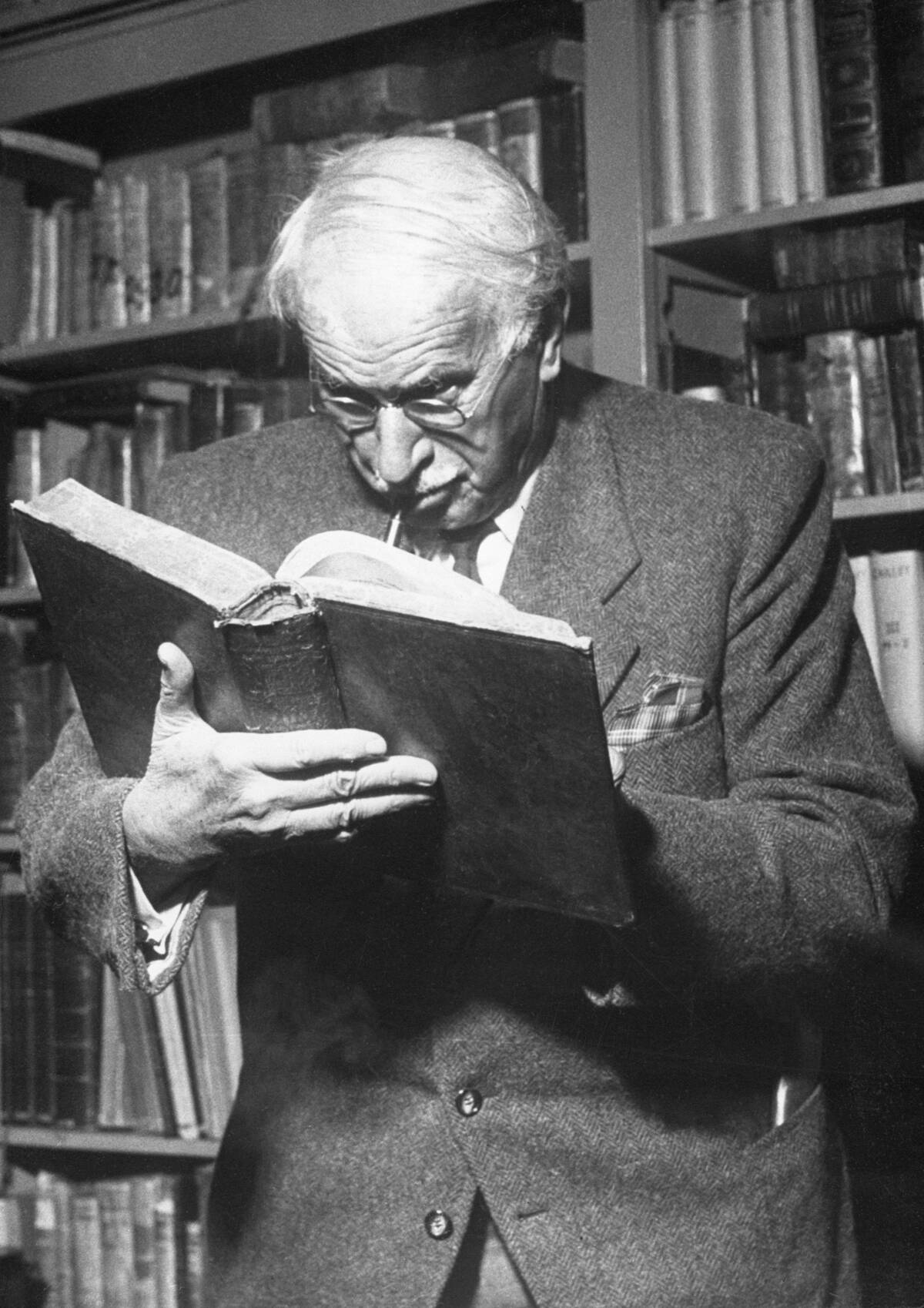
When Freud and Jung met in 1907, they reportedly talked for thirteen hours straight, a marathon that made intellectual sparks feel like fireworks. Freud, seeking a successor beyond Vienna, saw in Jung a creative clinician from Zurich who could carry psychoanalysis into new rooms. In 1909 they crossed the Atlantic together to lecture at Clark University, exporting Viennese couch talk to American chairs.
By 1913, the tectonic plates had shifted. Jung resisted Freud’s focus on romantic drives and developed his own analytical psychology—archetypes, the collective unconscious, a wider psychic map. The professional break was sharp, the personal one painful. Both kept writing case histories and big books, stubborn in their own right. If their friendship began like a shared dream, it ended like a classic analysis: two patients cured of each other, theories intact and incompatible.
Josephine Baker and Grace Kelly: a snub, a princess, and an unshakable bond
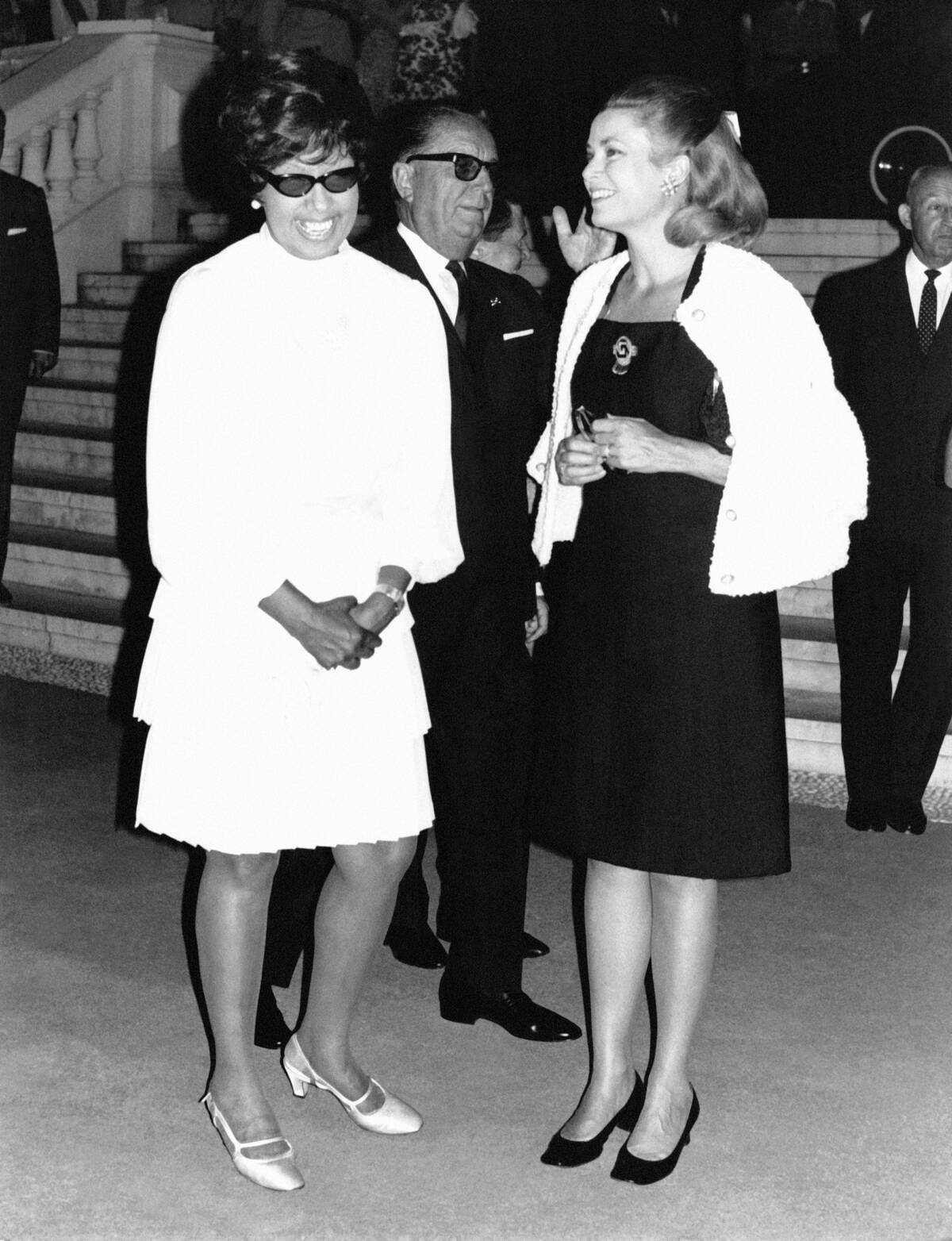
In 1951 at New York’s Stork Club, Josephine Baker was reportedly refused service. Grace Kelly—then a rising actress—walked out in protest with her party, a small act that made a very public point. The two women struck up a friendship that crossed fame and race at a time when both mattered sharply. Baker, a Black American superstar in France, had long leveraged her spotlight for civil rights; Kelly simply brought her own light to the table.
Years later, as Princess of Monaco, Kelly offered Baker support—and a temporary home—when finances and politics pinched. In 1975, Kelly helped back Baker’s Paris comeback revue at the Bobino theater, a roaring success that drew standing ovations and celebrity crowds. Days later, Baker died of a cerebral hemorrhage; Kelly assisted with funeral arrangements. It began with a snub and ended with a princess’s abrazo, loyalty stitched into every seam.




