The story behind McDonald’s very first location
Ask three McDonald’s fans where the first location was and you’ll likely get four answers. There’s the 1940 San Bernardino barbecue stand, the 1953 Phoenix franchise, the 1953 Downey spot that still stands, and the 1955 Des Plaines, Illinois, restaurant Ray Kroc called “Store No. 1.” Each claim is true—depending on what you mean by “first.” This is a story with multiple on-ramps, a few neon signs, and a lot of french fries. What keeps the debate sizzling is how each milestone shaped the brand.
The brothers in San Bernardino invented the system; early franchisees spread the arches; Kroc built the corporation. Over time, company timelines spotlight 1955 as the founding year, while local markers and museums champion 1940. If you came for one clean origin point, consider this your friendly heads-up: McDonald’s history is more like a combo meal.
Meet Dick and Mac: Two brothers, one barbecue stand (San Bernardino, 1940)
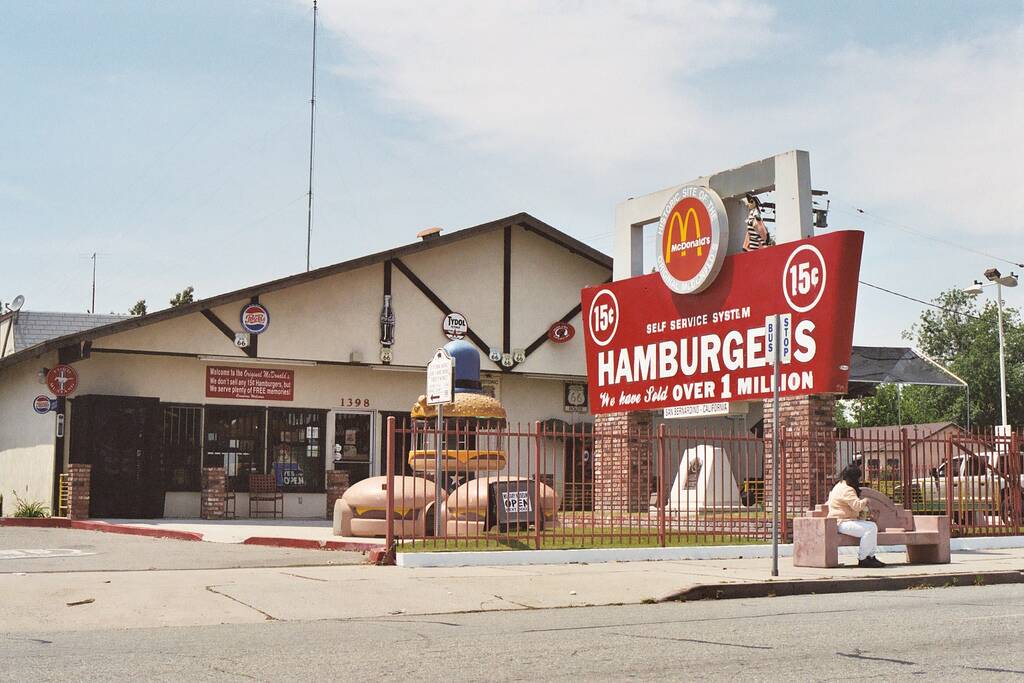
Richard “Dick” and Maurice “Mac” McDonald opened McDonald’s Bar-B-Q in 1940 in San Bernardino, California. Transplants from New Hampshire with Hollywood experience, they leaned into the booming car-culture drive-in scene. The original menu had about two dozen items, heavy on barbecue and sandwiches, and carhops delivered food to parked cars. Business was good—but the brothers noticed their hamburgers and fries were the real traffic magnets.
By watching workflows and tallying sales, they realized volume, not variety, would win. In 1948, they shuttered the drive-in to rethink everything. Out went the slower-selling barbecue and the carhops. In came a radical idea: cook a few items incredibly fast, keep them consistent, and make the price irresistible. That insight—born on a busy corner at E Street and 14th—set the table for a fast-food revolution.
The great reboot: How carhops vanished and Speedee showed up (1948)
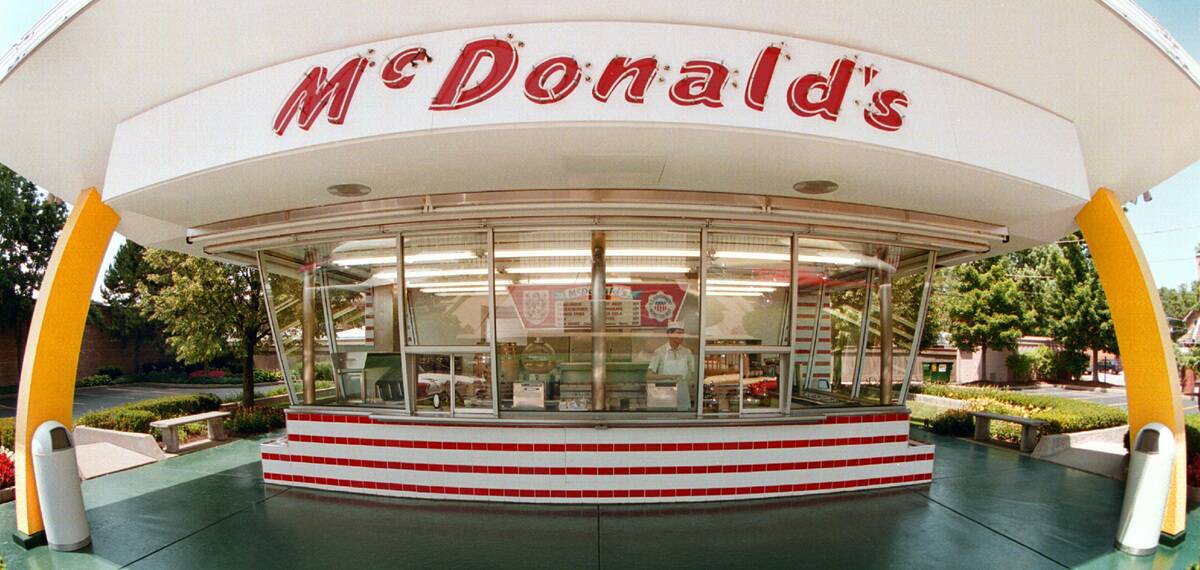
After a months-long closure in 1948, the brothers reopened with their “Speedee Service System.” The menu shrank to nine items, centered on a 15-cent hamburger, fries for 10 cents, and a 20-cent “triple-thick” shake. Carhops disappeared; customers walked up to the window, placed their order, and watched an assembly-line kitchen make it in seconds. The gamble? Trade sit-and-stay service for speed, price, and ultra-consistency.
It worked. Specialized stations handled patties, buns, condiments, and fries with near-military precision. The switch also nudged out rowdy cruise-night crowds and courted families with clean counters and quick meals. The smiling, chef-hatted “Speedee” mascot—signaling service in a flash—soon appeared on signs. The blueprint, from tile to timing, would become fast food’s operating manual long before the arches spanned the world.
What does "first" even mean here?
There’s "first" as in the original McDonald brothers’ restaurant (San Bernardino, 1940). There’s "first franchise" outside California (Phoenix, 1953). There’s "oldest surviving" classic store (Downey, also 1953). And there’s "first of the modern corporation" (Des Plaines, 1955). Same brand family, different birth certificates. If you’re keeping score, all four milestones matter—and they answer different questions.
Legally and narratively, McDonald’s Corporation pegs 1955 as its founding year, when Ray Kroc created McDonald’s System, Inc. and opened in Illinois. Historically, the operating method fans recognize—the Speedee Service System—arrived in 1948, with roots back to 1940. That’s why plaques, museums, and timelines don’t always match.
Enter Ray Kroc: A salesman, some milkshake mixers, and a lightbulb moment
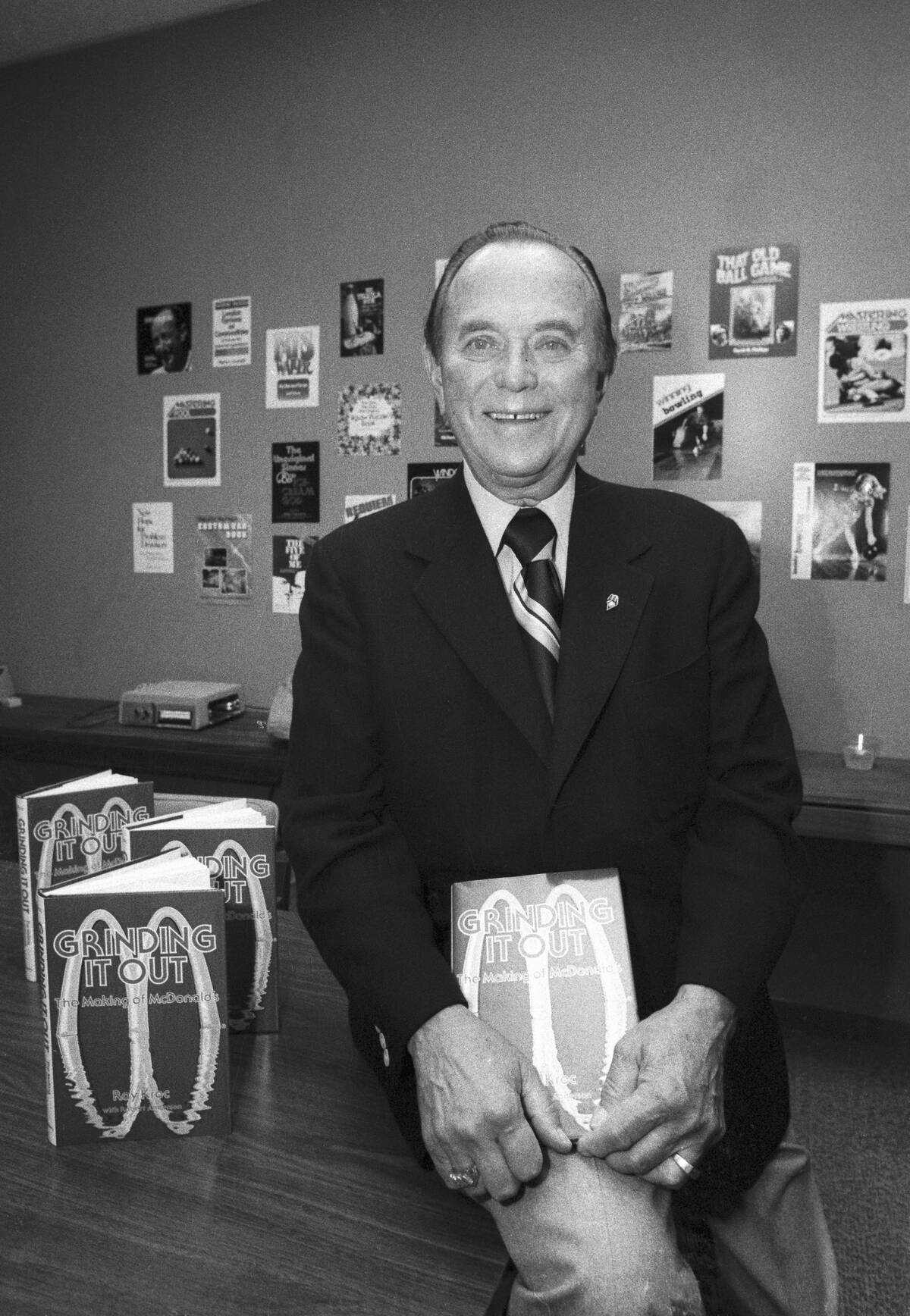
Ray Kroc was a traveling salesman for Prince Castle Multimixers when one extraordinary order came in: the San Bernardino stand wanted eight machines. Curious, he visited in 1954 and found a line out the door for 15-cent burgers delivered at astonishing speed. He saw a system that could scale—and a brand that could travel far beyond one California corner.
Kroc pitched national franchising and formed McDonald’s System, Inc. in 1955. Early deals routed about 1.9% of gross sales to his company, with a slice—commonly cited as 0.5%—to the McDonald brothers. On April 15, 1955, he opened his own store in Des Plaines, Illinois, replicating the red-and-white tile building, slanted roof, and shining arches he’d admired out west.
Phoenix rising: The little-known first franchise outside California (1953)
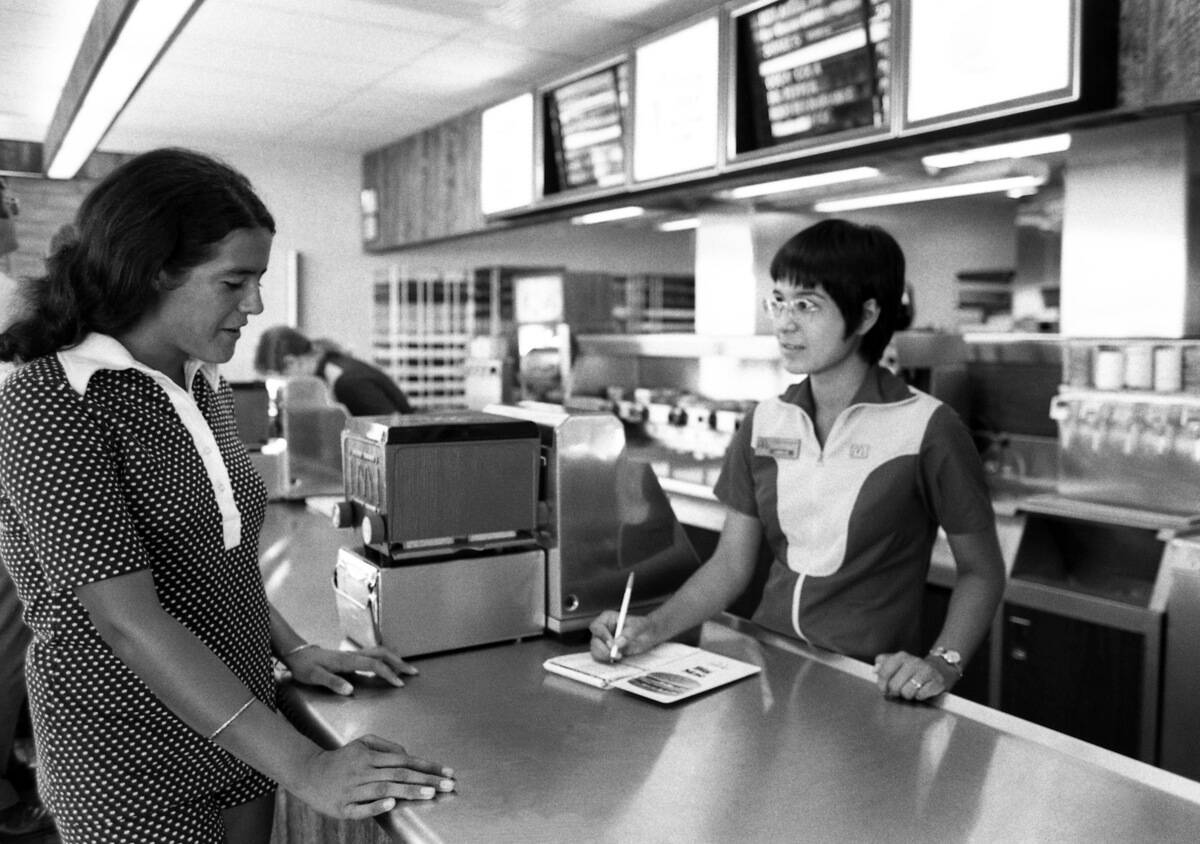
Before Kroc entered the picture, the brothers tested franchising on their own. In 1953, Neil (often spelled "Neal") Fox, an advertising man, opened a McDonald’s on North Central Avenue in Phoenix, Arizona. It’s widely credited as the first McDonald’s franchise outside California. The restaurant sold the now-familiar 15-cent hamburger under a bold new look.
That look—architect Stanley Clark Meston’s red-and-white porcelain enamel tiles and those sweeping yellow arches—helped the stand pop along a sunbaked boulevard. The Phoenix store set a visual template that Downey and others followed. Though the building is gone today, it marked the moment McDonald’s leapt from a single-state sensation to a budding interstate brand.
Downey’s claim to fame: The oldest surviving McDonald’s with the single arch
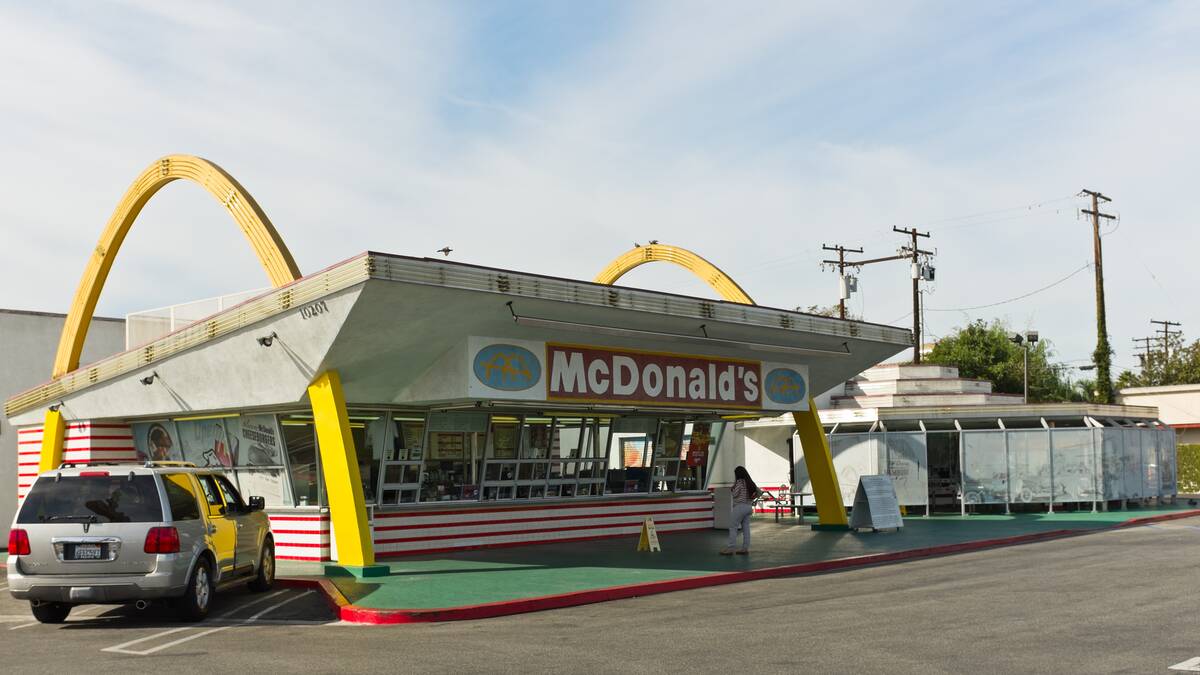
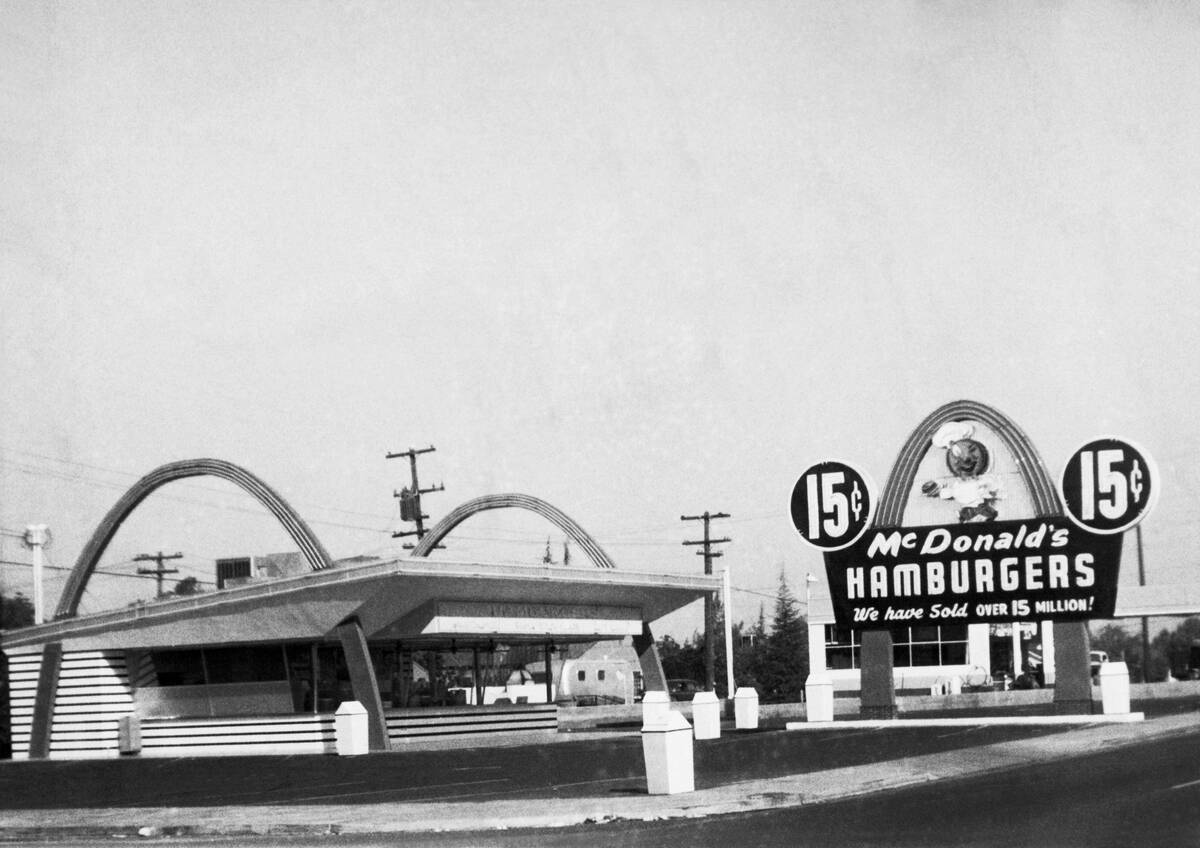
Open since 1953 at 10207 Lakewood Boulevard, the Downey, California, location is the oldest surviving McDonald’s. Built by franchisees Roger Williams and Bud Landon, it sports the classic road sign topped by a single golden arch and a neon “Speedee.” The building reflects the early walk-up design—no indoor seating, just a kitchen built for hustle. Downey’s story has detours.
It operated for decades under a pre-Kroc franchise agreement, closed temporarily in 1994 amid earthquake damage and declining sales, then reopened in 1996 after preservation efforts. Today, a modern McDonald’s sits alongside a preserved original structure and mini-museum, making it a pilgrimage site for fans of midcentury roadside architecture.
Des Plaines, 1955: "Store No. 1" that wasn’t actually the first
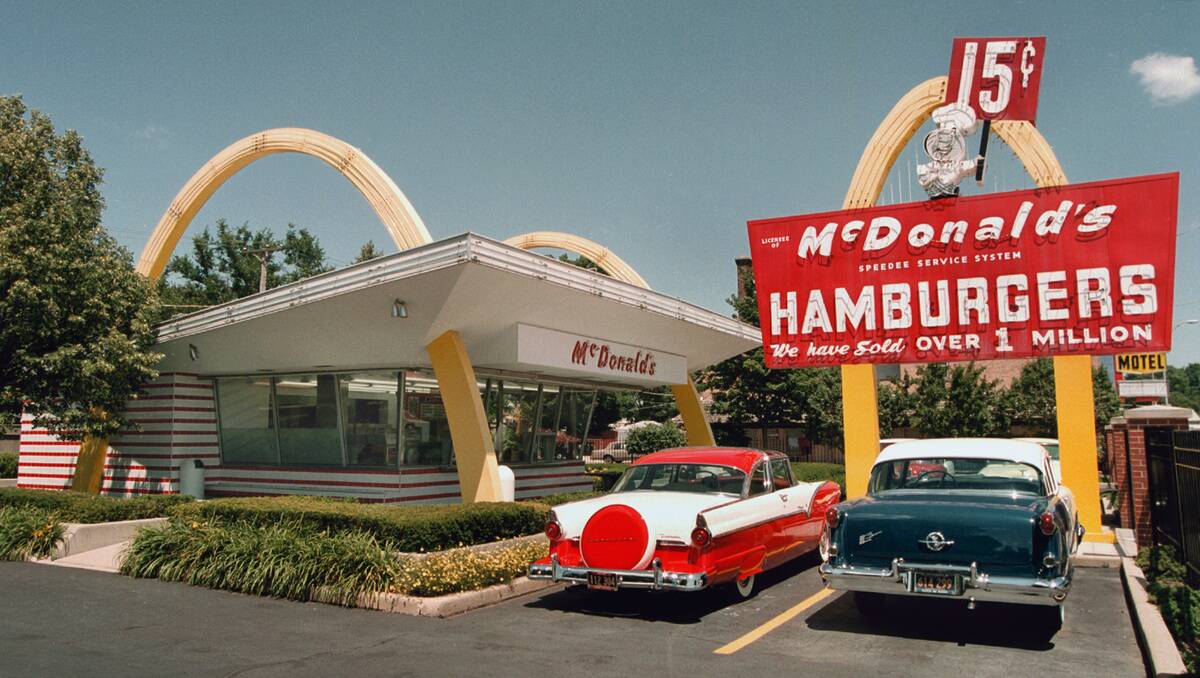
Ray Kroc’s Des Plaines restaurant opened on April 15, 1955, and he labeled it "McDonald’s Store No. 1." It wasn’t the first McDonald’s in existence, but it was the first for the new corporate system he built. The building closely followed Meston’s design: red-and-white tiles, a glass-walled kitchen, and two showpiece arches framing the structure like parentheses.
Des Plaines became the corporation’s symbolic starting line. The original structure was eventually demolished in 1984. A faithful replica—complete with period equipment and the Speedee sign—rose on the site in 1985 and operated as a museum for years, drawing fans who wanted to see where Kroc’s expansion kicked off.
Speedee before the clown: Meet the original mascot of fast food fast
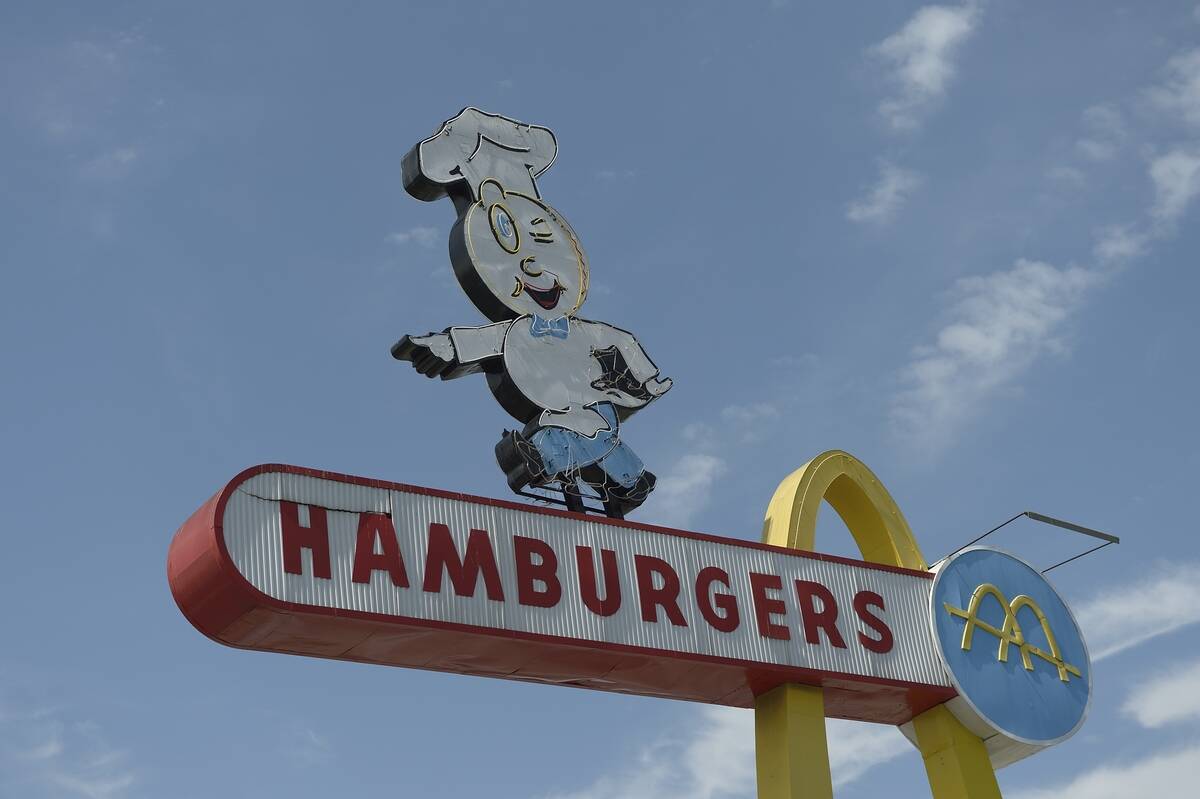
Before Ronald McDonald grabbed the spotlight, Speedee was the face of the brand. Debuting with the Speedee Service System era, the character—often depicted as a chef-hatted, round-faced figure—telegraphed quick, efficient service. You could spot him on neon signs and packaging through the 1950s, often alongside the 15-cent price that made wallets smile.
Ronald arrived later, debuting in 1963 on Washington, D.C., TV, and gradually took over national marketing as the chain pivoted to kid-centric advertising. By the late 1960s, Speedee’s presence faded from corporate materials. One glorious exception: Downey’s single-arch roadside sign, where Speedee still beams in vintage neon.
The golden arches, singular to double: How the sign shaped a brand
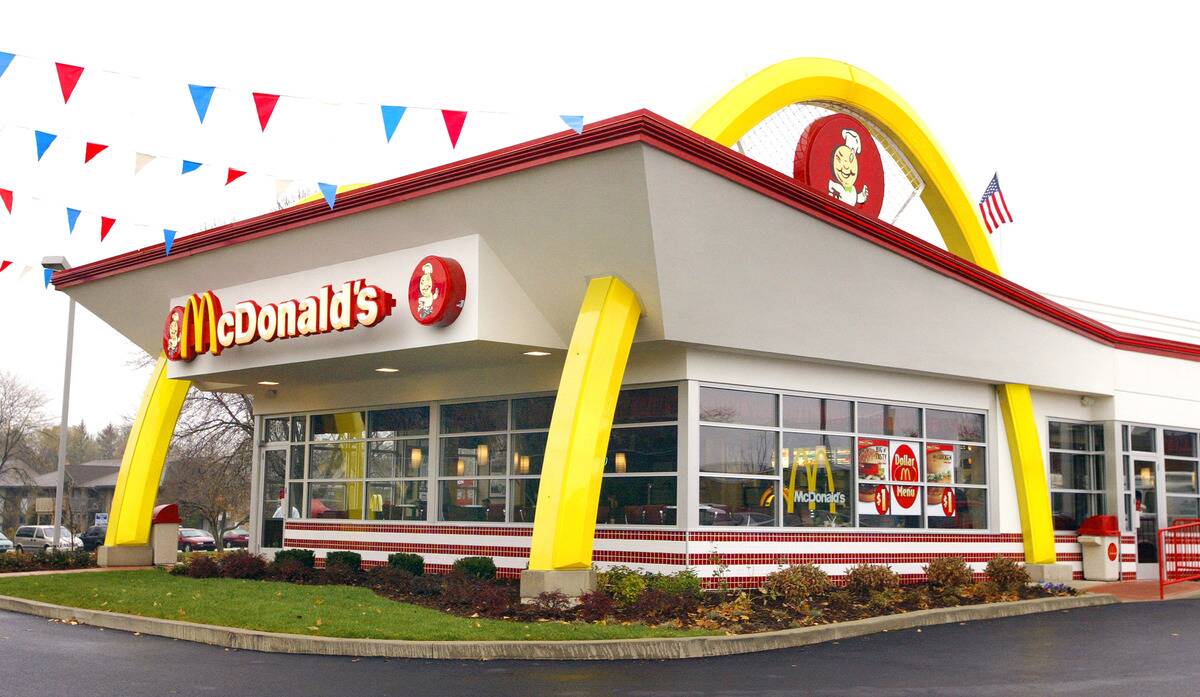
Architect Stanley Clark Meston and designer Charles Fish transformed Richard McDonald’s arch idea into two gleaming parabolic arches that bracketed the building itself. Early roadside pylons sometimes used a single arch to pierce the sky, while the building sported the twin flanking curves. The color?
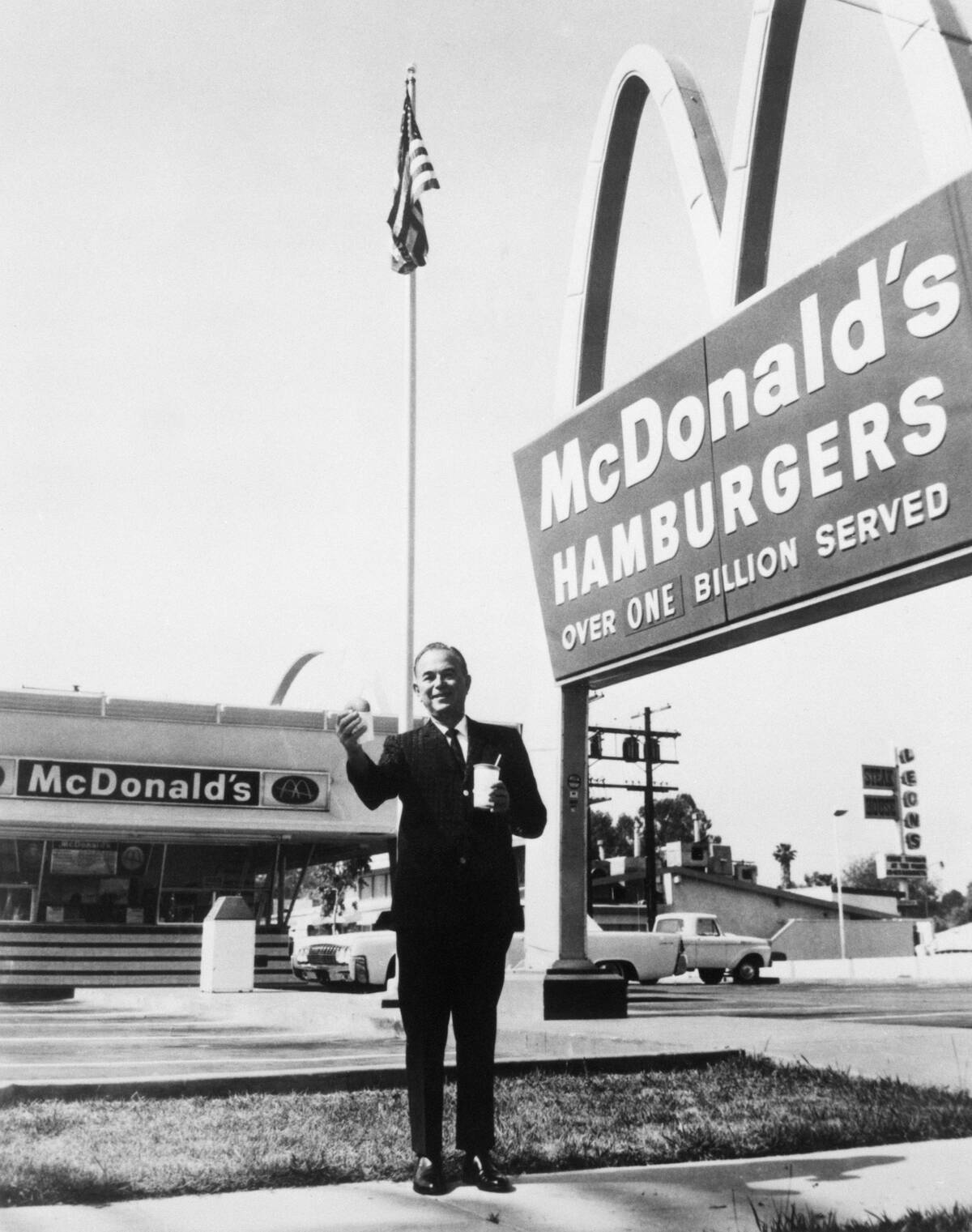
A bright, buttery yellow built to command attention at 35 miles per hour. In 1962, designer Jim Schindler sketched a stylized "M," merging the two arches into one graphic mark with a crossbar echoing the roofline. By 1968, the double-arch "M" had become the standard corporate logo. Over time, single-arch pylons disappeared from most sites—except treasures like Downey that still tell the earlier story in neon and steel.
Assembly-line burgers: Inside the Speedee Service System
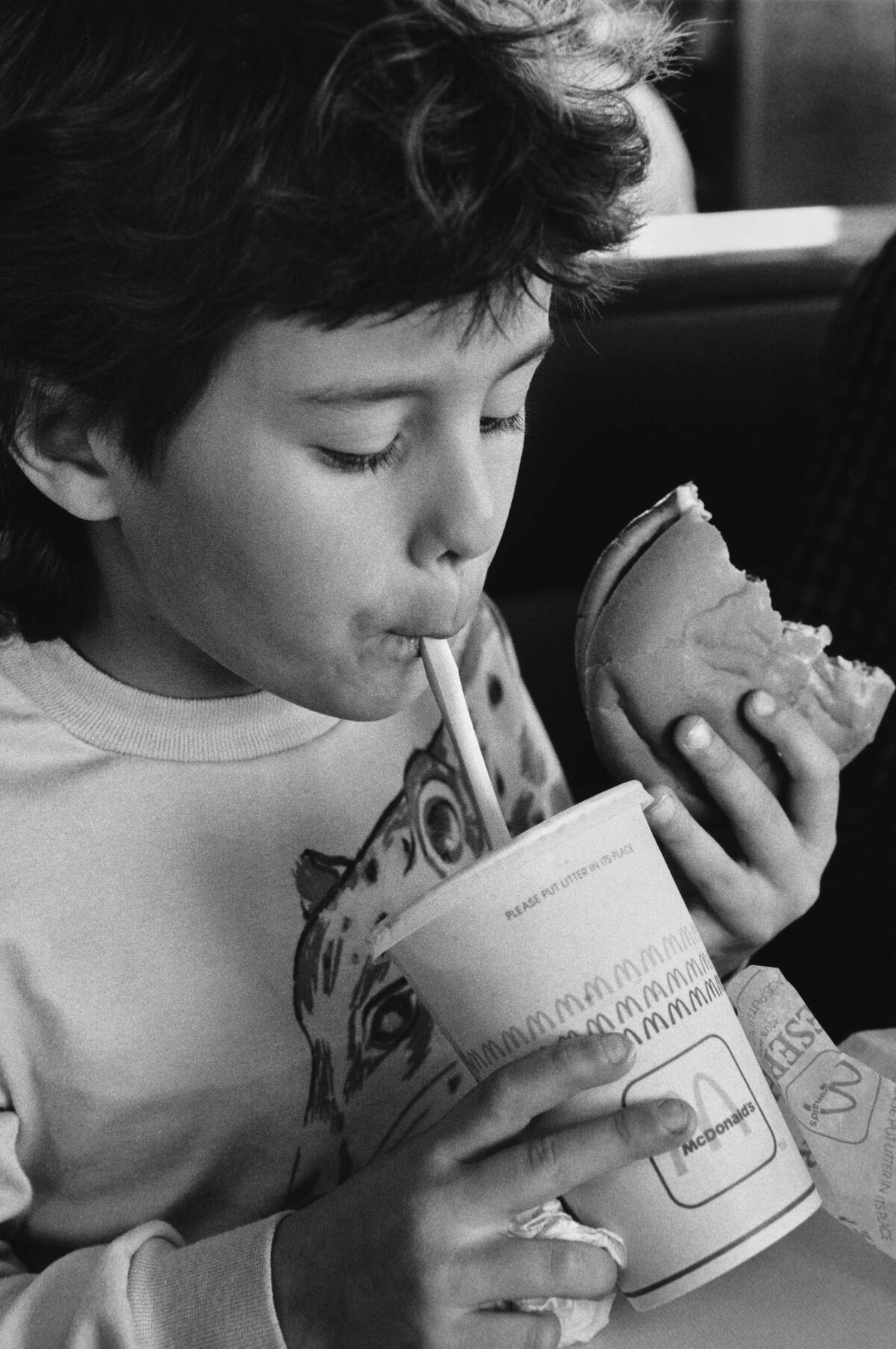
The genius wasn’t just a cheaper burger—it was process. Patties of about 1.6 ounces hit a flat-top grill in regimented rows. Buns toasted while a measured shot of ketchup and mustard, a sprinkle of rehydrated onions, and two pickle slices waited on the crown. Fries were cut from potatoes in-house, then rinsed and cooked to a crisp, all queued by timers and trays. Paper wrappers replaced plates to save seconds and dishes.
Stainless-steel counters, heat lamps, and strict station roles kept food moving in a straight line. At peak, crews could turn out hundreds of burgers an hour with astonishing uniformity. The 15-cent price tag wasn’t magic; it was the dividend of a kitchen choreographed to the second.
The handshake and the heartburn: Brothers vs. Kroc, the deal that soured
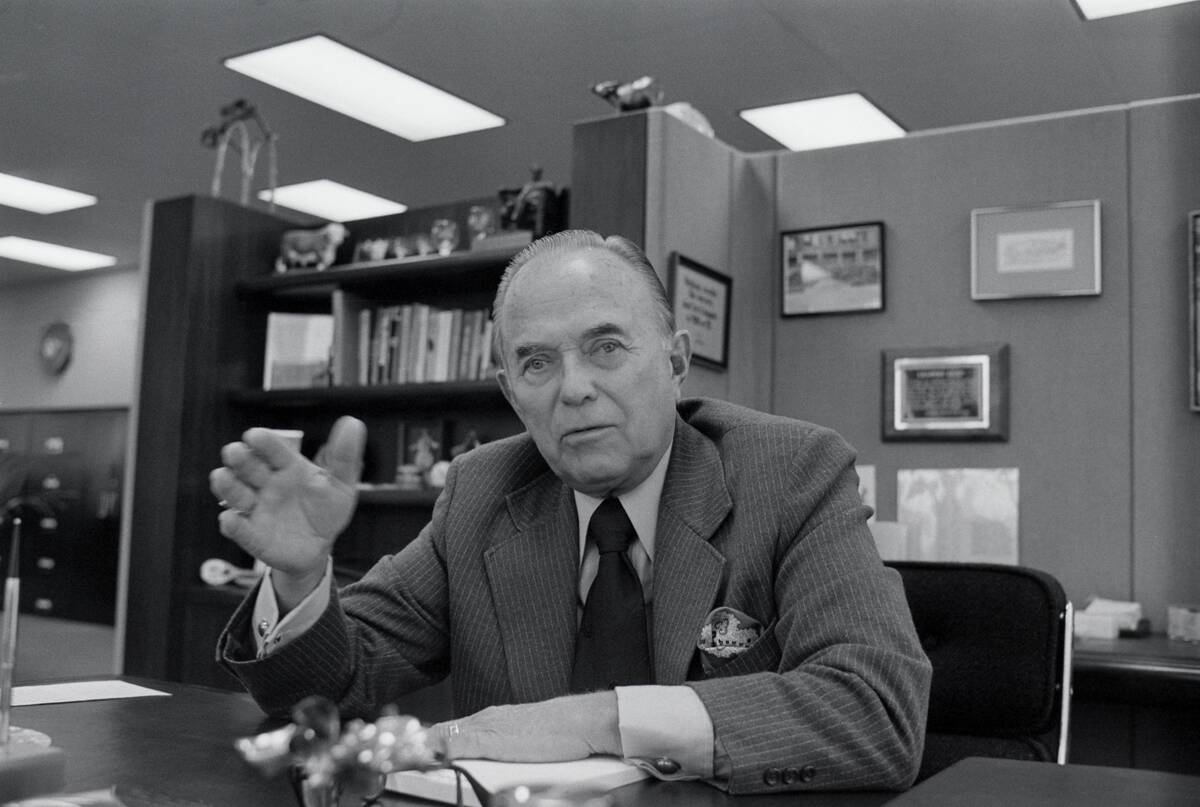
In 1961, Ray Kroc bought the McDonald brothers’ rights and the name for $2.7 million, a sum large enough to allow each brother a comfortable exit after taxes. The brothers kept their original San Bernardino site but, under the deal, had to rename it. Out went “McDonald’s”; in came “The Big M,” serving the same speedy staples minus the famous surname. Then came the lore.
A widely repeated story claims the parties shook hands on a continuing 0.5% royalty for the brothers—never written into the contract and never paid. The claim remains disputed. What isn’t disputed: relations soured, and Kroc soon opened a corporate McDonald’s nearby, siphoning business from The Big M.
San Bernardino’s twist: From McDonald’s to the Big M to bulldozers
After the 1961 sale, the brothers’ restaurant continued as The Big M, but it struggled once a new McDonald’s opened close by. The original building was eventually demolished. The corner where hamburgers went from popular to planetary didn’t stay empty, though—the site found a second life telling its own story.
Today, 1398 North E Street in San Bernardino hosts the privately run Original McDonald’s Museum, created by Juan Pollo founder Albert Okura. It isn’t affiliated with McDonald’s Corporation, but inside you’ll find Multimixers, vintage packaging, photos, and an outline marking where the historic kitchen once stood.
Museum pieces: Where the artifacts (and stories) ended up
For decades, the Des Plaines replica museum displayed a 1950s kitchen—milkshake mixers, heat lamps, and the Speedee sign—before closing. After the 2018 teardown, McDonald’s stored artifacts, while the site kept a small marker. In Downey, a mini-museum showcases period uniforms, menus, and signage beside the preserved 1953 structure and its single-arch roadside icon.
San Bernardino’s Original McDonald’s Museum houses an extensive private collection spanning trays to tiles, gathered from former employees and fans. Corporate archives—now based at McDonald’s headquarters in Chicago—preserve documents, photos, and early marketing, though they aren’t a public museum. Roadside-history exhibits at various institutions occasionally feature golden-arch signage from the chain’s midcentury heyday.
Menu time travel: 15-cent burgers, paper wrappers, and no drive-thru
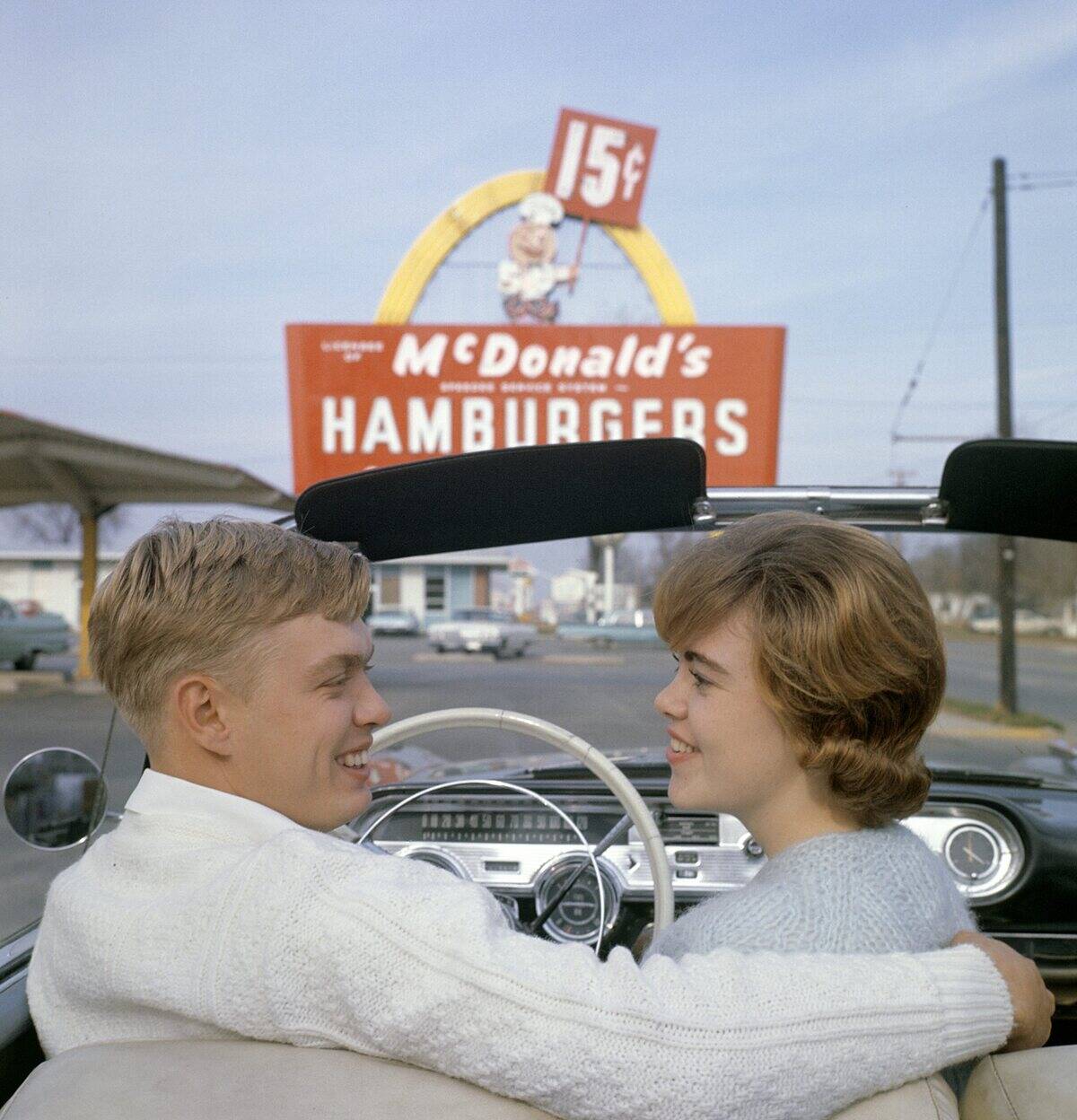
The pared-down 1948 menu is fast-food poetry: hamburger 15¢, cheeseburger 19¢, French fries 10¢, “triple-thick” shake 20¢, root beer 10¢, orange drink 10¢, Coca-Cola 10¢, coffee 5¢, and milk 12¢. No salads, no sundaes, no breakfast—just hits. Orders came in paper wrappers and cups to keep the line moving and the kitchen spotless.
If you’re scanning for a drive-thru, keep scanning. McDonald’s didn’t add one until 1975 in Sierra Vista, Arizona, to serve soldiers who couldn’t leave cars while in uniform at nearby Fort Huachuca. The early stands also avoided jukeboxes and cigarettes—part of a family-friendly stance that paired clean counters with quick meals.
Road trip tips: The spots you can still visit to chase the origin story
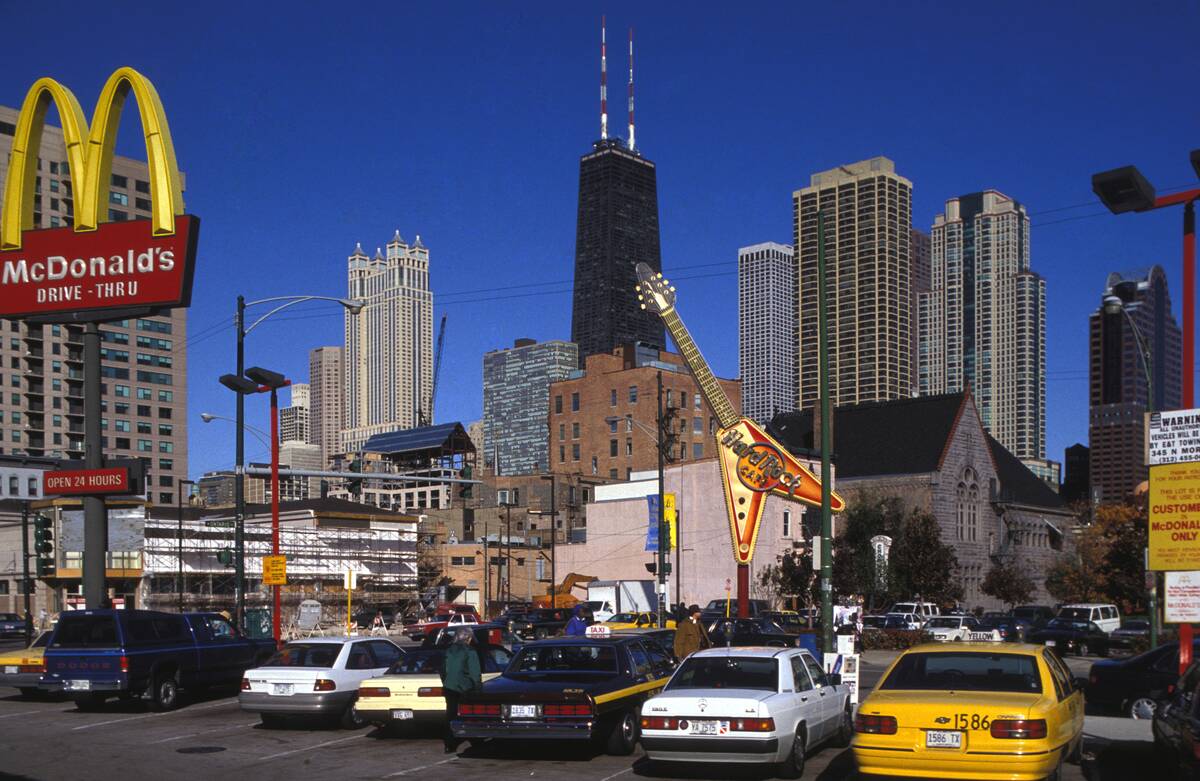
Aim your GPS at 10207 Lakewood Boulevard in Downey to see the oldest surviving McDonald’s, its single-arch sign, and a compact museum. You can grab lunch at the adjacent modern restaurant, then stroll past midcentury details that survived both fashion and earthquakes. It’s the rare place where fries and folklore share the same lot.
In San Bernardino, the Original McDonald’s Museum at 1398 North E Street preserves the brothers’ tale with walls of memorabilia. Near Chicago, swing by Lee Street in Des Plaines to find the marker where Kroc’s “Store No. 1” stood. Phoenix’s first-franchise site on North Central Avenue is gone, but local histories and photos keep its arches aglow.
Why this weird origin tale still flavors your fries today
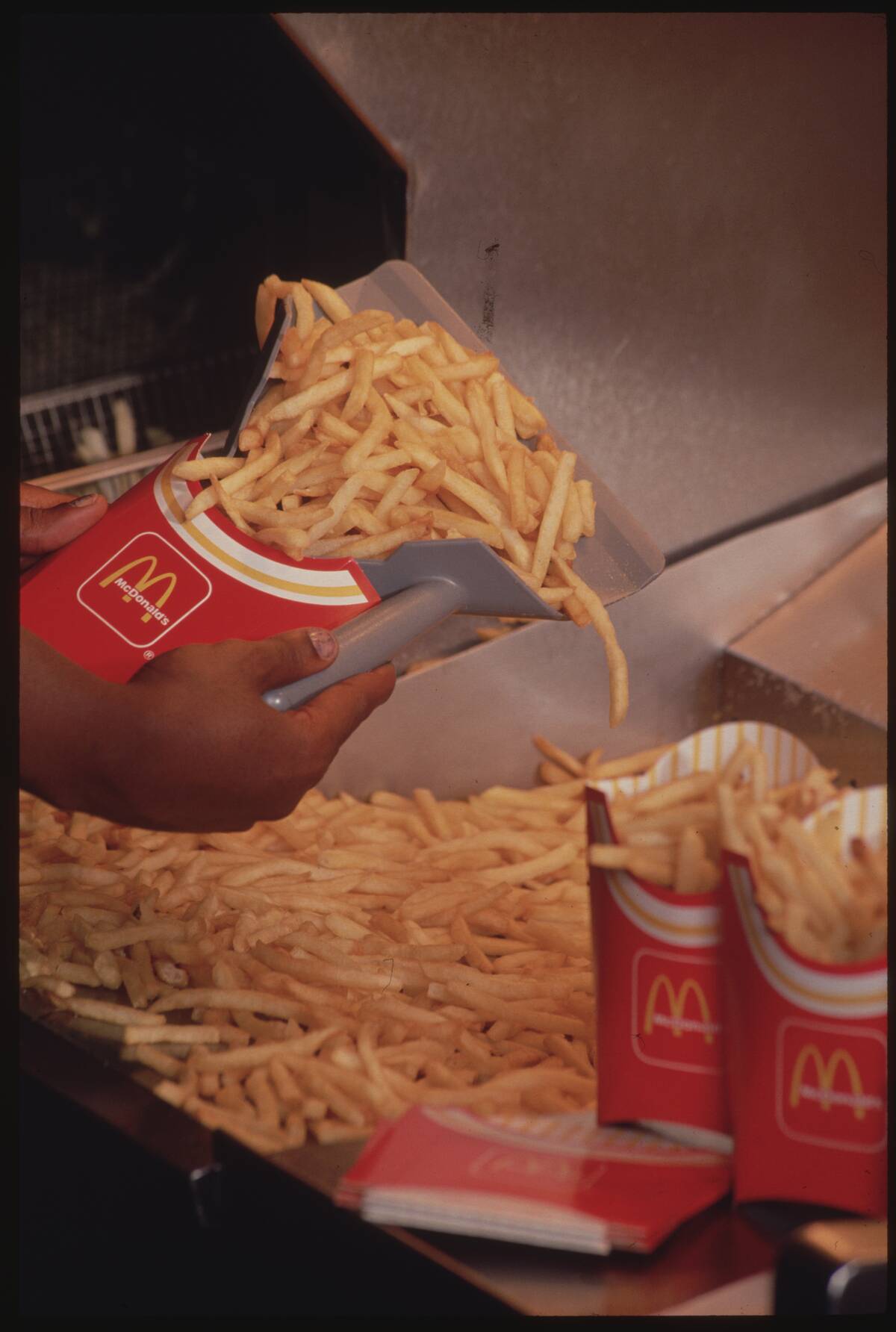
McDonald’s DNA blends the brothers’ choreography with Kroc’s scale. The Speedee Service System lives on in timers, portion tools, and kitchen layouts; Kroc’s mantra—Quality, Service, Cleanliness, and Value—still anchors training. Hamburger University, founded in 1961 near Chicago, turned those lessons into a curriculum that has graduated thousands of operators and managers. Even the fries carry history.
A 1960s partnership with J.R. Simplot helped McDonald’s shift to high-quality frozen potatoes in 1966, locking in consistency year-round. The chain fried in beef tallow for decades before switching in 1990. From arches to onions, the “first”s weren’t just dates—they were decisions that still ripple through every paper-wrapped burger.




